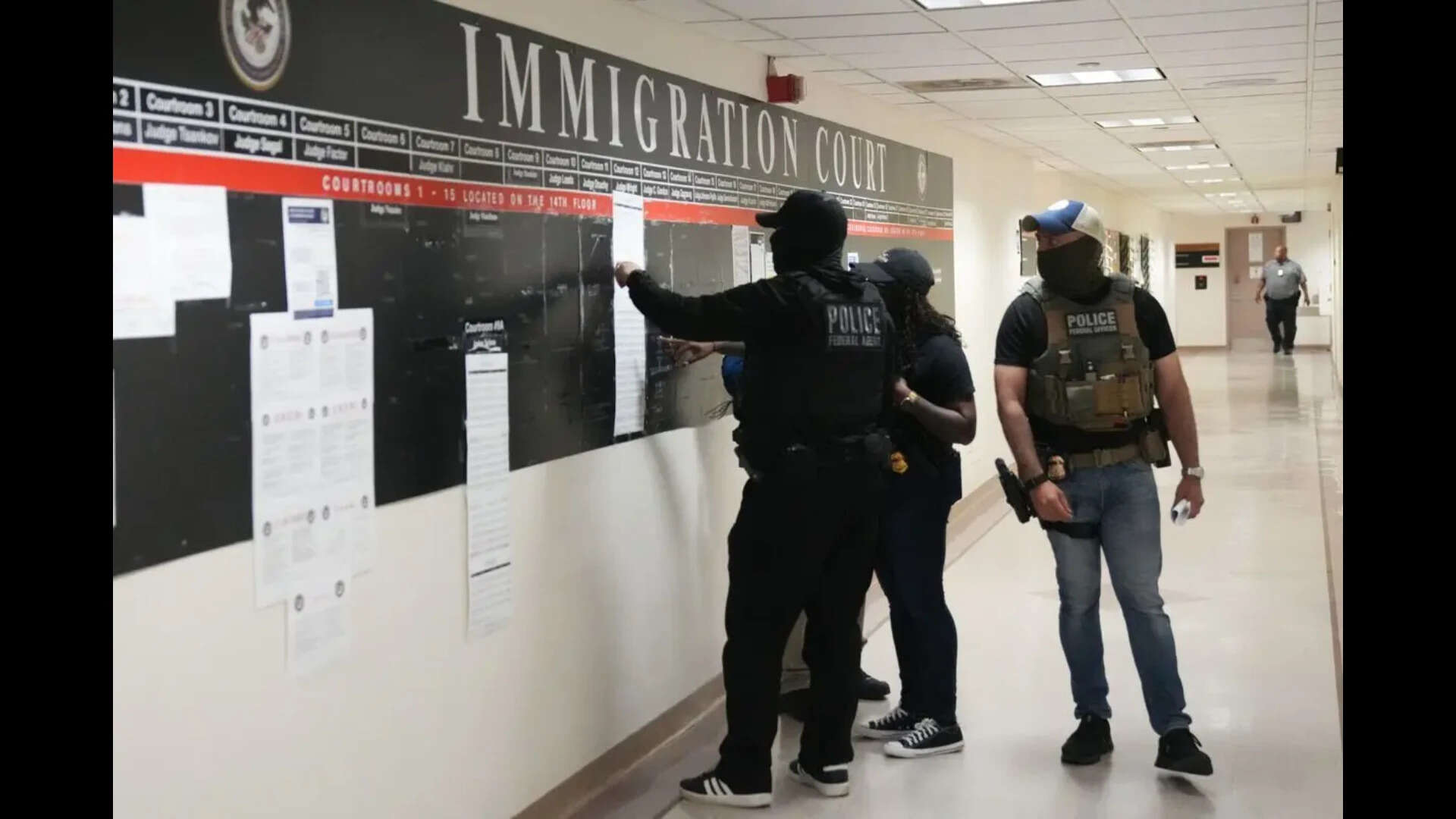
The headlines are screaming about a "confession." They want you to believe that because the Department of Justice (DOJ) admitted Immigration and Customs Enforcement (ICE) lacked a specific, inherent power to arrest people inside federal immigration courts, the system is undergoing a seismic shift.
It isn’t.
This isn't a victory for the rule of law; it’s a masterclass in bureaucratic rebranding. The "admission" is a tactical retreat to higher ground, designed to preserve the broader machinery of deportation while tossing a bone to the critics. If you think this stops the knock at the door or the cuffing of a respondent after they step off federal property, you haven't been paying attention to how power actually functions in the 21st century.
The Myth of the Sacred Courtroom
The core argument from the "lazy consensus" is that courtrooms are—or should be—sacctuaries. Civil rights groups and the recent DOJ filing suggest that ICE overstepped by claiming a blanket authority to snatch individuals while they were appearing for their own hearings. The logic follows that by admitting this lack of authority, the DOJ has restored some semblance of "due process."
That is a fantasy.
Federal immigration courts are not independent judiciaries. They are administrative entities under the Executive Office for Immigration Review (EOIR), which lives inside the DOJ. When one arm of the DOJ (the lawyers) says another arm (the enforcers) shouldn't be grabbing people in the hallway, it isn't a constitutional epiphany. It’s a management memo.
I’ve seen this play out in corporate restructuring for decades: when a department gets caught "over-performing" in a way that creates a PR nightmare, the CEO issues a public apology, clarifies the "scope of work," and then ensures the same results are achieved through a different cost center.
The Jurisdiction Shell Game
Let’s dismantle the mechanics of this supposed "admission." The DOJ didn't say ICE can't arrest these people. They said ICE doesn't have the automatic authority to do it inside the specific confines of the court under the guise of "inherent" power.
This is a distinction without a difference.
- The Sidewalk Strategy: If ICE can’t grab you at the defense table, they will grab you at the curb. The deterrent effect is identical. If an undocumented individual knows that appearing for a hearing results in a high-probability arrest within 50 feet of the building, the "sanctity" of the courtroom is a semantic joke.
- Administrative vs. Judicial: Real courts have "contempt" power. Immigration "judges" are essentially high-level managers. They don't have the same protections as Article III judges. The DOJ knows this. By narrowing the definition of where ICE can operate, they are actually reinforcing the legitimacy of ICE operations everywhere else. It’s the "Small Target" strategy—admit a tiny fault to make the rest of the massive, flawed operation look disciplined and legal.
Data Doesn't Care About Your Sanctuaries
The outrage machine ignores the numbers. Arrests in or near courthouses surged under previous administrations because it was efficient. It’s the one place an officer knows an individual will be at a specific time.
The DOJ’s admission effectively trades efficiency for optics.
But here is the counter-intuitive truth: pushing arrests out of the courtroom and into the "landscape" of the community is actually more dangerous for everyone involved.
Imagine a scenario where an arrest happens in a controlled, metal-detector-screened hallway versus a high-speed stop on a busy residential street or a chaotic workplace raid. By "protecting" the court, the DOJ is essentially forcing enforcement into the wild. It increases the risk of collateral damage, mistaken identity, and violent escalation.
We are trading a PR problem for a public safety gamble.
The Digital Invisible Fence
While everyone is arguing about physical hallways, they are missing the real shift: The Algorithmic Arrest.
The DOJ can afford to give up "inherent power" in physical courtrooms because physical proximity is becoming obsolete for tracking. We are entering an era of "Geofence Enforcement." With the integration of license plate readers (ALPRs), facial recognition, and data brokers selling location pings from weather apps, ICE doesn't need to sit in the back row of a courtroom.
They already know where you live, where you work, and which bus you took to get to the hearing. The DOJ’s legal hair-splitting about "courtroom authority" is like arguing over who owns the rights to a horse and buggy while the other guy is building a fleet of autonomous drones.
If the government admits they "lied" about one specific power, it’s usually because they’ve perfected three more that are twice as effective and half as visible.
Why the "Lied" Narrative is a Distraction
The competitor’s title uses the word "lied" to trigger a moral response. It suggests a breach of trust.
Trust in what?
The federal government operates on the principle of Chevron deference (though currently under fire) and the presumption of regularity. They don't "lie" in the way a person does; they "interpret" until a court tells them to stop. Then they "re-interpret."
Calling it a lie implies there was a set of rules that were broken. In reality, the rules are whatever the current administration’s lawyers can defend in a memo. This latest move is simply a pivot. They are clearing the decks of a losing legal argument so they can focus on more "robust" (to use their favorite term) methods of surveillance that don't require standing in front of a judge.
Stop Asking if it’s Legal—Ask if it’s Functional
People keep asking: "Is it legal for ICE to be there?"
The better question is: "Does this admission change the outcome for the 1.3 million people currently facing final orders of removal?"
The answer is a flat no.
The DOJ is clearing a backlog of bad optics. They are making the system look "fairer" without making it any more functional. It’s the legal equivalent of a "Terms of Service" update that you click "Accept" on without reading, only to find out later you’ve signed away even more privacy.
The Professional’s Take on Bureaucratic Survival
In my years of analyzing high-stakes organizational behavior, I’ve learned that an admission of guilt from a federal agency is almost always a survival mechanism.
When a CEO admits a product was "flawed," they are usually prepping for a pivot to a new, more profitable subscription model. When the DOJ admits ICE overreached in courts, they are prepping for a more digitized, decentralized enforcement model that bypasses the need for courtroom drama entirely.
- The Admission buys political capital.
- The Pivot moves enforcement to the shadows.
- The Result remains a 100% enforcement rate for those the system has already flagged.
Don't celebrate a "win" for due process when all the government did was move the goalposts to a field where you can’t see them.
The Actionable Reality
If you are an advocate or a legal professional, don't waste your breath on the "sanctity of the court." That battle is a distraction.
Focus on the data. Focus on the digital trail. The DOJ just told you they don't need the courtroom anymore. Believe them. They've found a better way to do the same job, and it doesn't involve a bailiff or a bench.
The courtroom is a stage. The real enforcement is happening in the servers.
Go find the servers.
Would you like me to analyze the specific data privacy laws that allow ICE to bypass these courtroom restrictions?