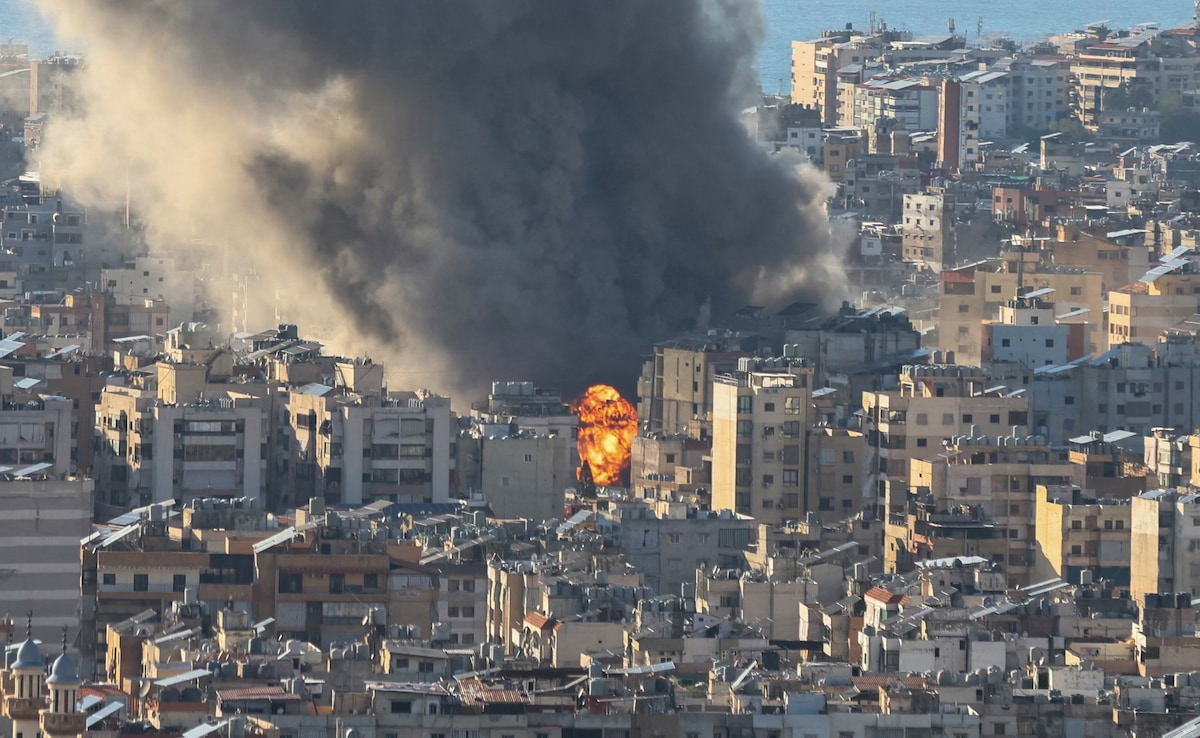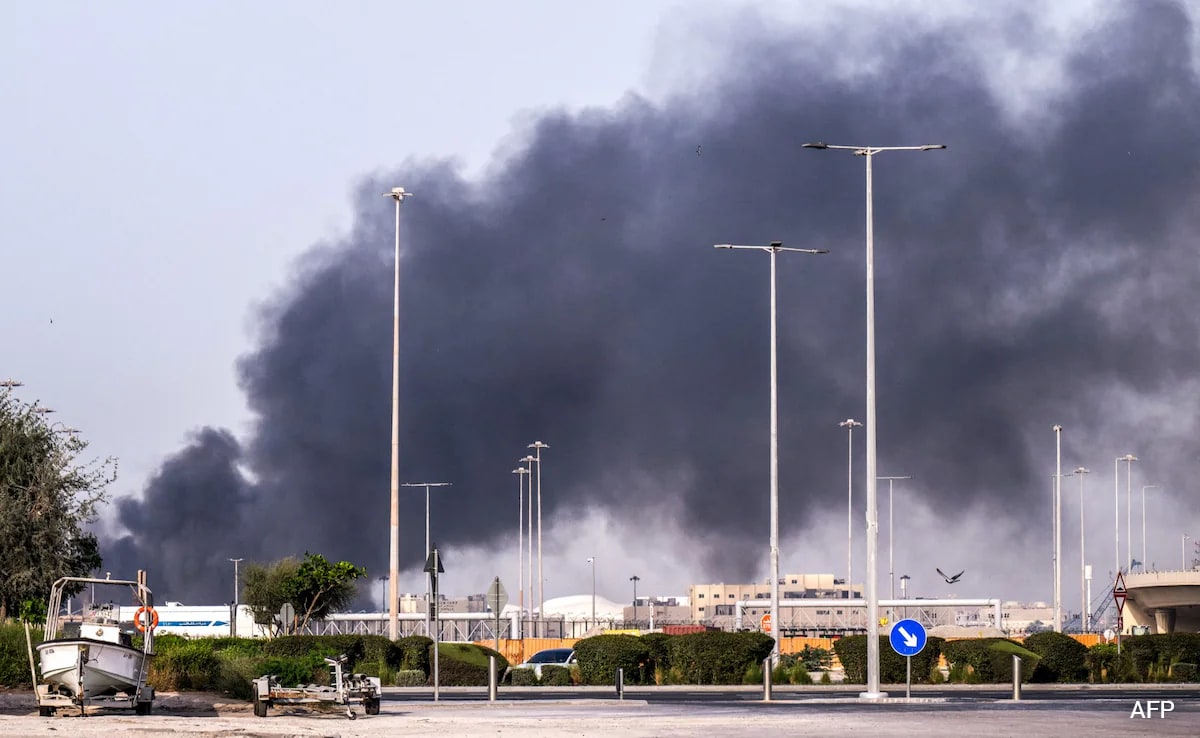
The headlines are predictable, sanitized, and fundamentally dishonest. They speak of "interceptions" as if war is a game of Tetris where the blocks simply vanish once they align. They don't. When a missile meets an interceptor over a crowded city like Abu Dhabi, the laws of physics don't pause for a press release. Mass and velocity dictate that what goes up must come down—usually in thousands of jagged, red-hot pieces.
To call the death of an innocent civilian "collateral damage from debris" is a linguistic sleight of hand designed to protect the reputation of defense contractors and the ego of sovereign states. It frames the tragedy as an unavoidable act of God rather than a predictable outcome of urban kinetic warfare.
We need to stop pretending that missile defense is a shield. It is a blender.
The Myth of the Clean Intercept
The public has been fed a diet of CGI simulations where an incoming threat is vaporized into harmless dust. This is a fairy tale. In the real world, an interception is a high-velocity collision. If a Terminal High Altitude Area Defense (THAAD) or a Patriot PAC-3 missile hits its target, you are looking at a closing speed often exceeding $Mach 5$.
When two objects weighing hundreds of kilograms collide at those speeds, they do not disappear. They fragment.
Most people assume that "intercepted" means "neutralized." To a ballistics expert, it simply means the trajectory was altered or the primary warhead was triggered prematurely. The kinetic energy doesn't evaporate; it disperses. This is the nuance the mainstream media misses because it complicates the "good guys with shields" narrative. If you intercept a missile at 30,000 feet directly over a financial district, you haven't saved the city; you’ve just turned one large problem into ten thousand small, lethal ones.
I have spent years looking at post-kinetic analysis reports. The "debris" mentioned in the reports about the Abu Dhabi incident isn't just twisted scrap metal. It is often unspent propellant—essentially sticky, toxic fire—and heavy tungsten pellets designed to shred airframes. When these rain down on a civilian population, the lethality is high, yet the political accountability is zero because the "interception was successful."
The Geography of Negligence
Why are we intercepting missiles over downtown hubs anyway?
The lazy consensus says, "Because that's where the target is." This ignores the strategic failure of placement. Sophisticated defense involves layers. You engage at the "boost phase" or the "mid-course phase" over uninhabited territory. If you are forced to engage in the "terminal phase" over a residential block in a Gulf metropolis, the defense system has already failed its primary mission.
By the time an interceptor fires in a terminal defense scenario, the risk-to-reward ratio has shifted dramatically. Military planners know this. They weigh the value of the targeted infrastructure against the "acceptable" loss of life from falling debris. They just never share that math with the people living in the apartments below.
The Math of Kinetic Energy
Let's look at the actual physics. The kinetic energy ($E_k$) of a falling fragment is calculated by:
$$E_k = \frac{1}{2}mv^2$$
Even a relatively small piece of a booster casing, weighing perhaps 5kg, falling from the upper atmosphere, can reach terminal velocity or maintain significant horizontal momentum from the blast. If that piece strikes a human being or a vehicle, the result is identical to being hit by a direct artillery strike.
Labeling this "debris" makes it sound like falling autumn leaves. It’s not. It’s supersonic junk.
The Defense Industry’s Greatest PR Triumph
The military-industrial complex has successfully rebranded "shrapnel rain" as "successful defense."
If a car manufacturer sold a car where the airbag successfully deployed but simultaneously shot a bolt into the driver's chest, we wouldn't call that a "successful safety intervention." We would call it a lethal product defect. Yet, when a missile defense system saves a refinery but kills a migrant worker on the ground, the stock prices of the aerospace giants remain unshaken.
They leverage the "lesser of two evils" argument to stifle any criticism of system accuracy or engagement protocols. The argument goes: "The whole warhead would have been worse."
Maybe. But that binary choice is a false one. It ignores the possibility of better electronic warfare, better long-range strikes to prevent the launch, or more honest urban planning that doesn't put high-value military targets next to labor camps.
Why the "Debris" Narrative Persists
The reason you see the same "Indian National Killed by Debris" headline across every major outlet is that it satisfies every stakeholder except the victim.
- The Host Government: It proves their expensive defense systems "work."
- The Defense Contractor: It validates their tech without highlighting the lethal side effects.
- The Aggressor: They get to claim a kill without being directly blamed for the specific casualty (since the "interceptor" caused the final fall).
- The Media: It’s an easy, low-effort story that doesn't require questioning the morality of urban warfare.
If we were honest, the headline would read: "Military Miscalculation Results in Kinetic Shrapnel Showering Civilian Zone." But that would require a level of transparency that doesn't exist in the defense world.
The Wrong Questions
People often ask: "Was the missile defense system effective?"
That is the wrong question. It’s a distraction. The real question is: "At what altitude and coordinates did the interception occur, and was the fallout zone cleared?"
In the Abu Dhabi case, as in many others in the region, the answer is usually that the fallout zone was a parking lot or a residential street. If the system is designed to protect "assets" (oil, gold, power) but considers the people living around those assets as an acceptable casualty variable, then the system isn't for defense. It’s for insurance.
I’ve watched these systems evolve from the early Patriot days in the 90s to the current multi-layered grids. The tech has improved, but the honesty hasn't. We still treat the sky as a vacuum where explosions happen in a digital void.
Stop Calling It an Accident
An accident is something you couldn't see coming. Falling debris from an interception is a mathematical certainty.
When a commander hits the "fire" button on an interceptor over a city, they are making a conscious decision to trade the lives of whoever is below for the safety of the target. We should demand they own that decision.
We need to stop using the word "debris" as a cushion for the hard truth. We are seeing the normalization of atmospheric combat over civilian heads. If you live in a "protected" city, you aren't living under a shield. You are living under a minefield that hasn't been triggered yet.
The next time you see a report about a "successful interception," don't look at the explosion in the sky. Look at the holes in the roofs.
The debris is the message. The message is that your life is a rounding error in a trajectory calculation.
Demand the telemetry. Question the engagement zone. Stop accepting the "clean intercept" lie.
If the defense was truly successful, everyone would still be breathing.
The debris didn't kill that man. The policy of urban kinetic engagement did.