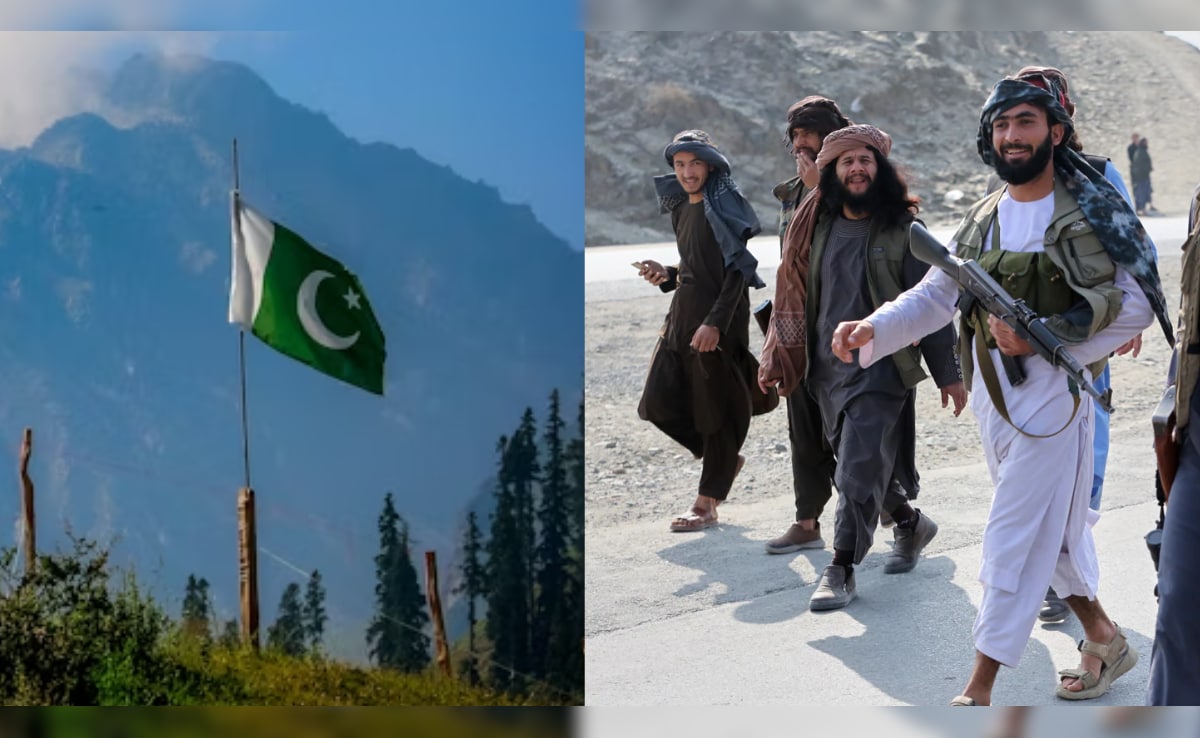
The media loves a predictable script. For decades, the narrative on the Durand Line has been a lazy loop of "terrorist hideouts," "border incursions," and the inevitable "post-Eid ceasefire collapse." Most analysts look at the recent flare-up between Pakistan’s military and the Afghan Taliban and see a broken relationship.
They are wrong. This isn't a breakup. It is a violent, necessary equilibrium.
The standard view—that Pakistan is "surprised" by the Taliban’s defiance or that the Taliban is "losing control" of the Tehrik-i-Taliban Pakistan (TTP)—ignores the fundamental physics of the region. Peace is not the goal for either side. Stability is a threat to their respective business models. If you want to understand why blood is spilling across the border again, stop looking at maps and start looking at the internal fragility of two regimes that need an external enemy to survive.
The Durand Line is a Feature Not a Bug
Western observers treat the Durand Line as a "problem to be solved." They suggest bilateral commissions, technical surveys, and international mediation. These are fantasies.
The 2,640-kilometer border is intentionally kept in a state of flux. For the Taliban, rejecting the Durand Line isn't just about Pashtun nationalism; it’s about legitimacy. A Taliban government that accepts a colonial-era border drawn by the British is a government that loses its "pure" Islamic and nationalist credentials to more radical elements like ISIS-K.
Conversely, the Pakistani military establishment—often referred to as the "Establishment" in Islamabad—needs a porous, volatile border to justify its outsized share of the national budget. In a country facing a 20% inflation rate and a crumbling civilian infrastructure, the "Afghan Threat" is the only currency that still buys domestic compliance.
The TTP is Pakistan’s Self-Inflicted Wound
The current clashes are frequently blamed on the TTP, the Pakistani Taliban operating from Afghan soil. The mainstream consensus is that Kabul is "harboring" these militants.
I’ve watched this play out for twenty years. The TTP isn't an external invader; it is the logical byproduct of Pakistan's "Strategic Depth" policy. You cannot breed "Good Taliban" to fight in Kabul and expect the "Bad Taliban" not to catch the same fever in Peshawar.
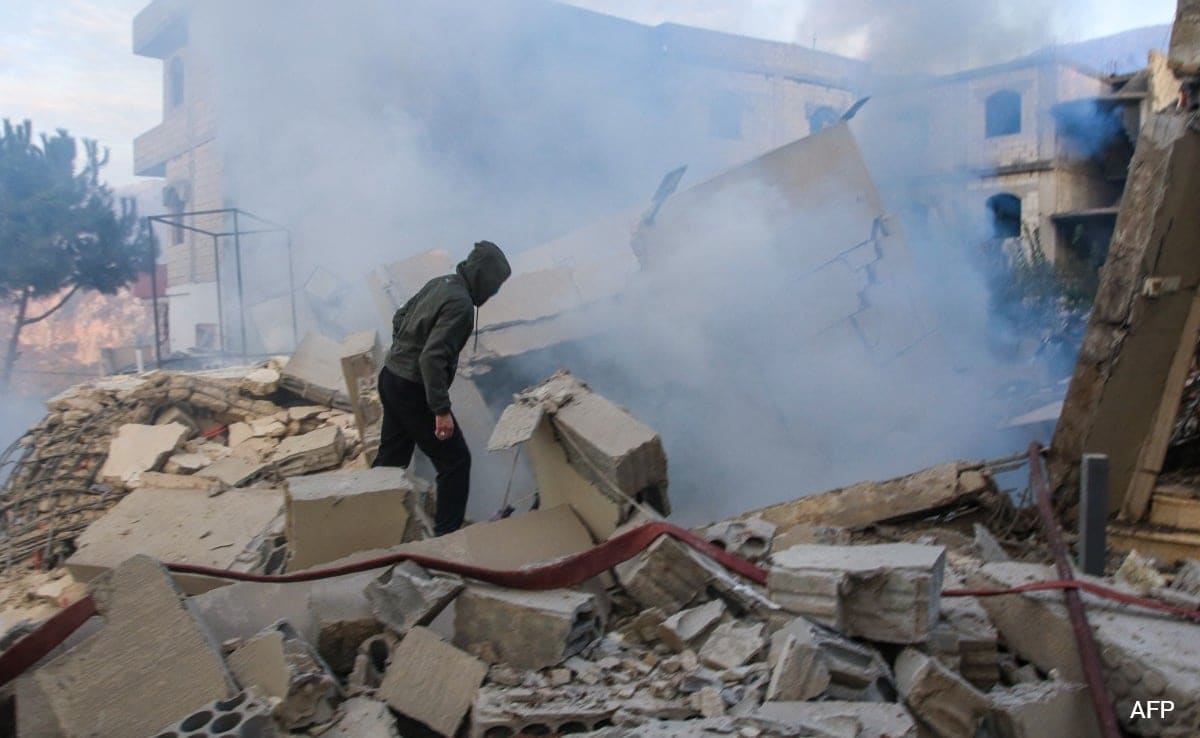
The Pakistani military is now trapped in a sunk-cost fallacy. They spent billions fencing the border—a project that has proven about as effective as a screen door on a submarine. The fence doesn't stop militants; it only provides stationary targets for snipers. Every time a Pakistani soldier is killed at a checkpoint, the response is a predictable artillery barrage into Khost or Kunar.
Does this stop the TTP? No. It radicalizes the local tribes who see their homes destroyed by "Muslim brothers" from across the line. The TTP thrives on this friction. They don't want the ceasefire to hold. They want Pakistan to overreact.
The Sovereignty Trap
When the Taliban took Kabul in 2021, the "experts" predicted a new era of Pak-Afghan synergy. They fundamentally misunderstood the nature of the Taliban.
The Taliban are not a proxy; they are a government with an identity crisis. To govern, they need revenue. To get revenue, they need trade. But to maintain the loyalty of their commanders, they must never appear to be puppets of Rawalpindi.
This leads to the "Sovereignty Trap." Every time Pakistan demands that Kabul "do more" against the TTP, the Taliban must do less to prove they aren't taking orders. The border clashes are theater designed to show the Afghan public that the Taliban are the true defenders of the soil.
Why the "Ceasefire" was a Lie
The Eid ceasefire was never about peace. It was about logistics.
Both sides needed a breather. The Pakistani military is overstretched, dealing with a simmering insurgency in Balochistan and political chaos at home. The Taliban are busy trying to keep their economy from total collapse while fighting off ISIS-K. A ceasefire allows both sides to rotate troops, resupply outposts, and fix the optics.
Ending the ceasefire isn't a "failure of diplomacy." It’s the resumption of the status quo.
The Economic Reality of Conflict
If you want to know why the border stays hot, follow the trucks.
The transit trade between Karachi and Kabul is a multi-billion dollar engine of corruption. When the border is "stable," trade flows, and the central governments collect duties. When the border is "volatile," the black market takes over. Smuggling—everything from Japanese electronics to diverted wheat—skyrockets.
Local commanders on both sides of the line get rich when the official crossings are closed. They have zero incentive to support a lasting peace. Every clash provides a pretext to shut down the main gates at Torkham or Chaman, driving traffic toward the illegal mountain passes where the tolls go directly into the pockets of the men with the guns.
The China Factor
We need to address the elephant in the room that the competitor’s article likely ignored: Beijing.
China wants a Silk Road through the Khyber Pass. They want the China-Pakistan Economic Corridor (CPEC) to extend into Afghanistan to tap into trillions in unmined minerals. For China, the border clashes are an annoyance.
But here is the counter-intuitive truth: China’s pressure for stability actually increases the violence.
As Islamabad feels the heat from Beijing to secure the region, it lashes out at Kabul. Kabul, sensing Pakistan’s desperation to please its Chinese benefactors, raises the stakes to extract more concessions. The border becomes a bargaining chip in a game of regional poker where the stakes are Chinese investment dollars.
Stop Asking for De-escalation
The most common question from "People Also Ask" is: How can Pakistan and Afghanistan achieve lasting peace?
The question itself is flawed. It assumes that "peace" is a desired outcome for the stakeholders involved.
In a traditional state-on-state conflict, peace is achieved through treaty and trade. But these aren't traditional states. One is a nuclear-armed country with a military that owns a shopping mall empire; the other is a literal insurgency-turned-government that doesn't recognize the concept of a nation-state border.
You don't "fix" this with a treaty. You survive it through management.
What You Should Be Asking Instead
- Does the Pakistani military actually want the TTP eliminated? If the TTP vanished tomorrow, the military would lose its primary justification for the "security state" model that keeps them in power.
- Can the Taliban survive without an external enemy? The Taliban is a movement built for war. In peace, they fracture. The border conflict provides the necessary "other" to keep the ranks unified.
The Strategy for the Pragmatist
If you are an investor, a diplomat, or a student of history, stop waiting for the "final settlement." It’s not coming.
The border will continue to bleed because the bleeding is functional. It’s a pressure valve for internal tensions in both Islamabad and Kabul.
The real risk isn't the border clashes—it's the potential for a total collapse of one of the players. If the Pakistani state fractures under economic weight, or if the Taliban undergoes a bloody internal schism, the border will become the least of the world's worries.
Until then, the intermittent shelling and the tactical "ceasefires" are just the cost of doing business in a region where conflict is the most stable form of government.
Expect more "Eid ceasefires." Expect them to break every single time. And expect the people in charge to keep cashed up and well-armed as long as the cycle continues.
Stop looking for the exit. This is the room.
Buy the volatility. It’s the only thing you can count on.
Would you like me to analyze the specific economic impact of the Torkham border closures on regional trade prices?