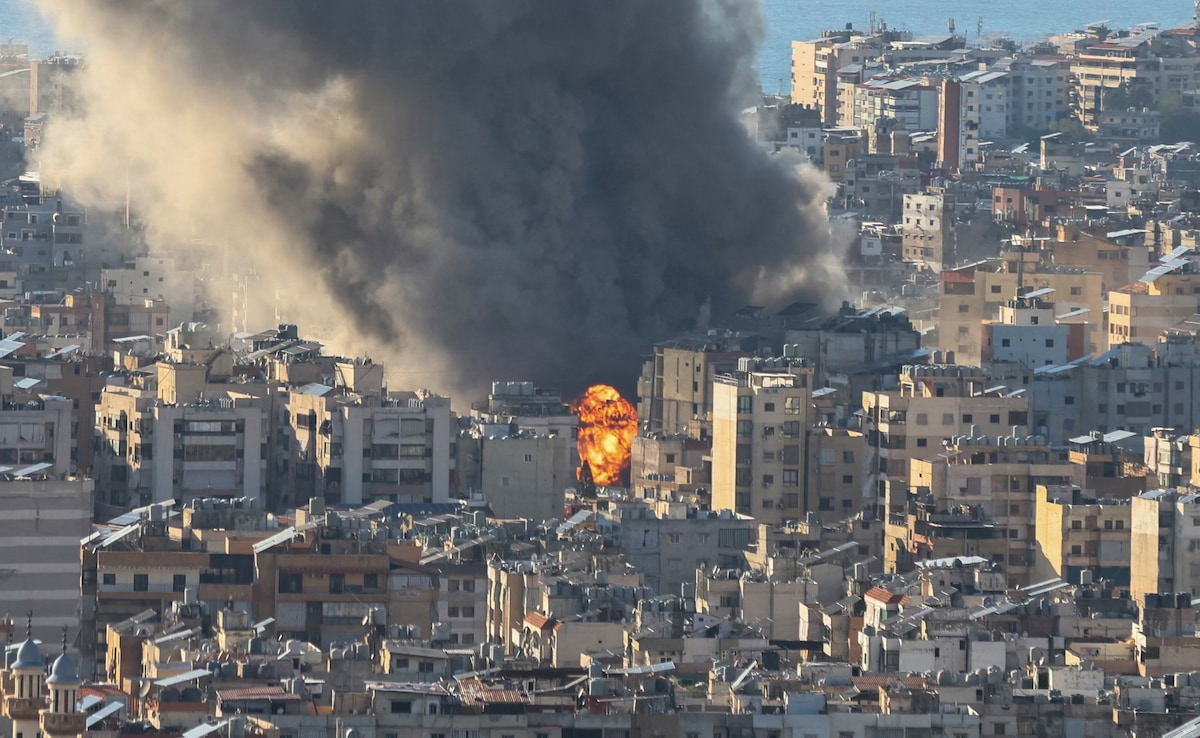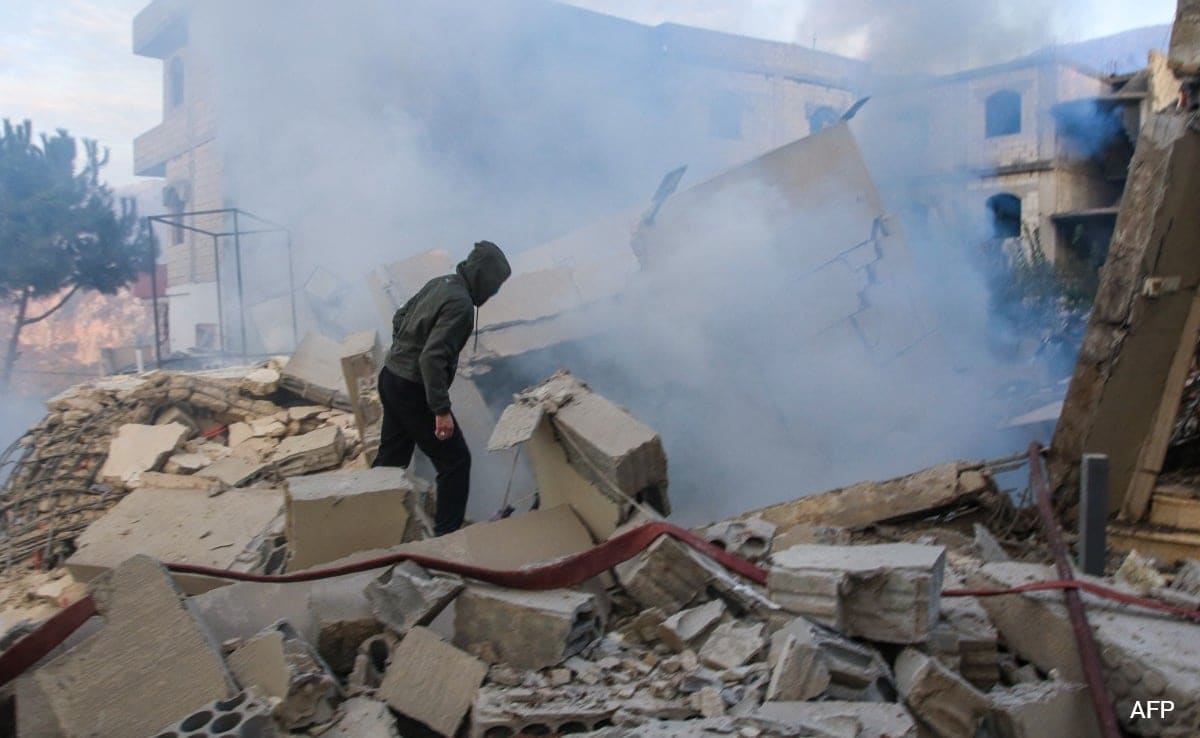
The sound of a city collapsing is not a single crash. It is a layered, textured roar—a thousand domestic lives being pulverized into a singular gray dust. When a missile strikes a residential block, it doesn't just destroy a structure. It destroys the memory of where the keys were kept, the specific dent in the hallway from a tricycle, and the smell of tomorrow’s breakfast.
In the high-stakes rooms where generals trace maps with steady fingers, this is not called a tragedy. It is called a doctrine. Specifically, the Dahiya Doctrine. It is a strategy named after a suburb in Beirut, but its shadow now stretches across the scorched Earth of Gaza and toward the vibrating horizons of Iran.
To understand the modern face of war, you have to look past the "precision" of the strikes. You have to look at the wreckage.
The Birth of a Ruin
In 2006, the Dahiya neighborhood of Beirut was a stronghold for Hezbollah. It was also a home for tens of thousands of people who had nothing to do with rockets or subterranean tunnels. During the conflict between Israel and Hezbollah, the Israeli military leveled entire blocks. They didn't just target the gunmen. They targeted the neighborhood itself.
General Gadi Eisenkot, who later became the Chief of General Staff, was the architect of this logic. He was blunt. He suggested that in any village from which shots are fired at Israel, the military would use "disproportionate force" and cause "immense damage and destruction."
The goal was simple. Brutal. Effective.
By destroying the civilian infrastructure—the power plants, the sewage systems, the apartment complexes—the military seeks to turn the local population against the militants living among them. It is a strategy of collective exhaustion. It posits that if the price of resistance is the total erasure of your physical world, eventually, you will stop resisting.
Imagine a man named Elias. He isn't a fighter. He’s a tailor. He has spent thirty years perfecting the stitch on a suit jacket. One afternoon, the "doctrine" visits his street. In twenty seconds, his shop, his sewing machines, and the fabric he bought on credit are converted into a pile of jagged limestone. Elias is not a "target" in the traditional sense. But his poverty, his displacement, and his despair are the intended products of the mission.
The Geometry of Disproportion
We often talk about "proportionality" in war as if it were a mathematical equation. We assume it means an eye for an eye. In international law, however, proportionality is about the balance between military advantage and civilian suffering.
The Dahiya Doctrine flips the table on this balance.
It argues that the military advantage is the civilian suffering—or rather, the pressure that suffering creates. When we see the current satellite imagery of Gaza, where over half of the buildings have been damaged or destroyed, we aren't seeing a series of accidents. We are seeing a deliberate architectural choice.
The strategy has migrated. It is no longer just a Lebanese footprint. It has become the blueprint for how the Israeli Defense Forces (IDF) handle asymmetric threats. Whether it is the dense urban corridors of Gaza City or the potential targeting of industrial hubs in Iran, the logic remains: strike the heart of the society so hard that the body can no longer support the arm that holds the sword.
The numbers are numbing. Tens of thousands of tons of explosives. Percentages of "habitable units" falling into the single digits. But numbers are a mask. They hide the reality of a mother trying to find a clean gallon of water in a landscape that has been returned to the Stone Age.
The Invisible Stakes of the Rubble
There is a psychological dimension to this kind of warfare that rarely makes it into the evening news. It is the destruction of "home" as a concept.
When a military employs the Dahiya Doctrine, they are engaging in "topocide"—the deliberate killing of a place. When you destroy a university, a bakery, and a municipal records office, you aren't just hitting tactical nodes. You are erasing the future. You are ensuring that even if the war ends tomorrow, the "victory" for the survivors is a decades-long sentence of rebuilding among the ghosts.
Consider the ripple effect in Iran. As tensions escalate, the rhetoric of "disproportionate response" looms over Tehran’s aging infrastructure. If the doctrine is applied there, it wouldn’t just be about missile silos. It would be about the power grids that keep hospitals running and the refineries that keep the economy breathing.
The fear is the weapon. The explosion is just the delivery system.
The Flaw in the Concrete Logic
The proponents of this doctrine argue that it saves lives in the long run. They claim that by being "disproportionately" terrifying, they prevent future wars. They call it deterrence.
But history is a messy witness.
When you take everything from a person—their home, their livelihood, their sense of safety—you don't always create a submissive neighbor. Often, you create someone with nothing left to lose. Ruin is a fertile soil for radicalism. You can't "deter" someone who is standing in the ashes of their life, because they have already experienced the worst thing imaginable.
The doctrine assumes that the civilian population will blame the militants for bringing the destruction upon them. Sometimes they do. But more often, the anger is directed at the hand that pulled the trigger. The "success" of 2006 in Lebanon is still debated; while it bought years of relative quiet, it also allowed the adversary to entrench deeper, build better tunnels, and wait.
The Morality of the Machine
We live in an era of "smart" bombs and "surgical" strikes. This terminology is designed to make us feel that war has become a clean, scientific endeavor. The Dahiya Doctrine is the honest, ugly cousin of these terms. It admits that war is not surgical. It is a blunt instrument.
The ethical vacuum here is terrifying. If we accept that destroying a civilian's life is a legitimate way to pressure a government or a militia, where does the line move next? If the "cost" to the civilian is the point of the exercise, then the civilian is no longer a protected bystander. They are a hostage to the strategy.
The world watches these conflicts through a screen. We see the gray plumes of smoke rising over a skyline and we move on to the next headline. But for the people under that smoke, the doctrine is not a theory. It is the weight of a ceiling falling. It is the silence of a phone that will never ring again.
We are witnessing the normalization of total urban erasure. We are watching the rules of engagement being rewritten in real-time to prioritize the psychological collapse of entire populations over the traditional capture of territory.
The rubble of Gaza and the threats toward Iran are not just news cycles. They are a question posed to the collective conscience of the world: At what point does "defense" become the very thing it claims to fight?
The tailor Elias doesn't care about the doctrine’s name. He doesn't care about the geopolitical shifts between Jerusalem and Tehran. He only knows that the sun is setting, and he has nowhere to sit that isn't made of broken glass. He is the human collateral of a logic that views his life as a variable in an equation of pain.
As long as the world accepts the "necessity" of the Dahiya Doctrine, the architecture of our future will continue to be built out of the dust of our past.
The silence after the blast is the loudest part. It is the sound of a world that has decided that some people’s homes are merely obstacles in the way of a more convenient peace. It is a silence that should keep us all awake.
Would you like me to analyze the specific international legal frameworks that the Dahiya Doctrine potentially violates?