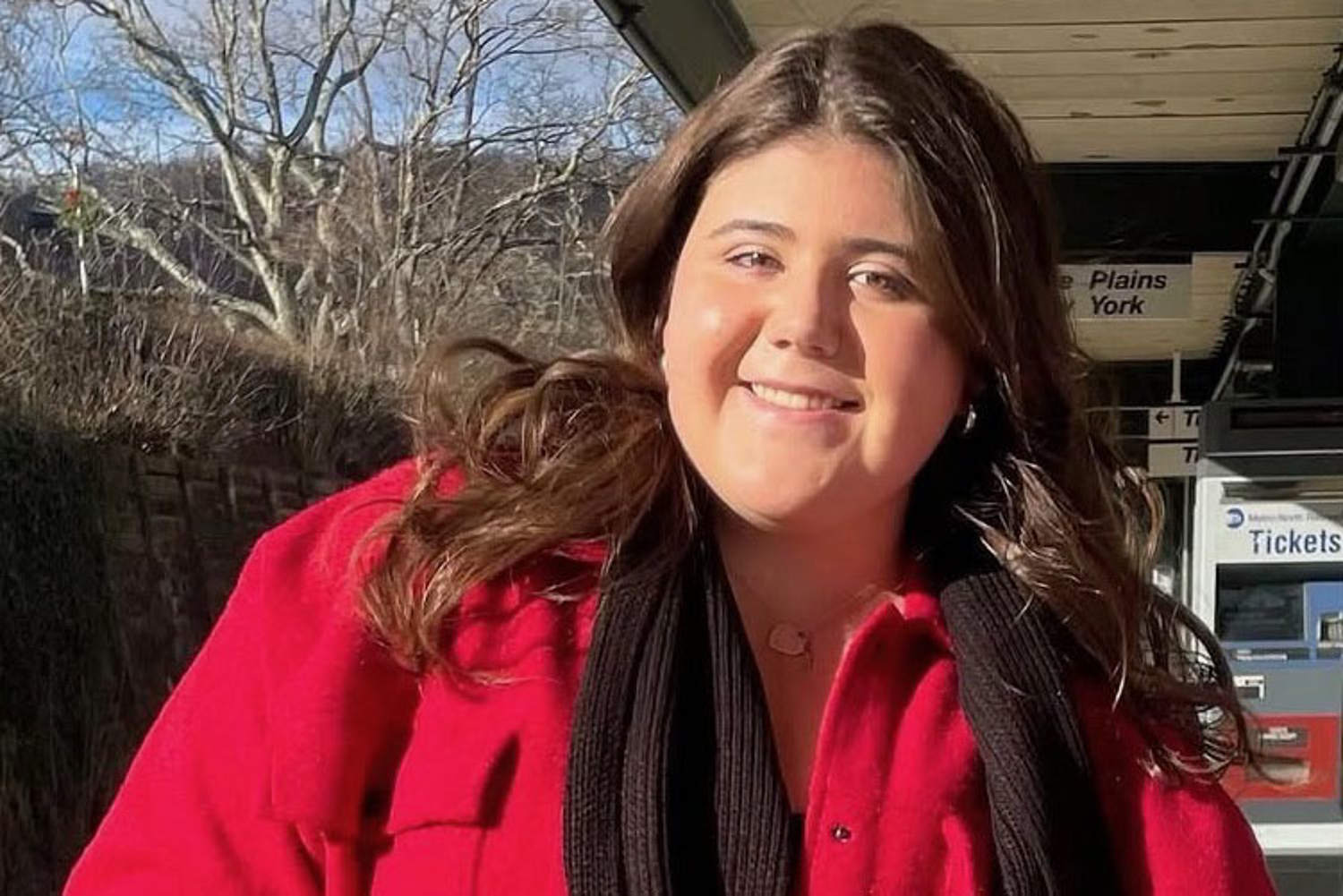
The fluorescent lights of a university library have a specific, humming silence. It is the sound of ambition, of late-night caffeine, and of the quiet rustle of turning pages. For a student at Loyola, that silence is a sanctuary. It represents the bridge between a childhood of dreams and a professional life of purpose. But when a chair remains empty—not just for a night, but forever—that silence becomes a deafening roar.
The death of a student isn't just a headline. It is a fracture in a family’s timeline. It is a dorm room that stays locked because no one knows who should pack the boxes. Yet, within hours of such a tragedy, the human being at the center of the story often vanishes. They are replaced by a political symbol. The grief of a mother is traded for the talking points of a press secretary. The complexities of a life cut short are flattened into a weapon used to bludgeon an opponent across a debate stage. Discover more on a connected issue: this related article.
This is the current state of the American conversation on immigration. It is a battle fought over the bodies of the fallen, where the "invisible stakes" aren't actually invisible—they are just being ignored in favor of the loudest voice in the room.
The Human Cost of a Stalled System
Imagine a young woman walking across campus. Let’s call her Elena. She is real in every sense that matters, representing the thousands of students who navigate these halls. She worries about her GPA. She wonders if she should text her crush back. She is the protagonist of her own unfolding epic. When that story is cut short by violence, the instinct is to demand an immediate "Why?" Additional journalism by USA Today delves into similar perspectives on the subject.
The answer, however, is rarely as simple as a single policy or a single person.
When politicians descend on a tragedy like the one at Loyola, they arrive with pre-packaged solutions. One side points to a map and demands more steel and concrete. They argue that the failure is one of physical boundaries. The other side points to a processing center and demands more judges and social workers. They argue the failure is one of administrative capacity.
Neither side is entirely wrong. But both are often incomplete.
The reality of immigration policy is a tangled web of outdated laws and overwhelmed resources. Since the mid-1990s, the legal framework governing how people enter and remain in the United States has remained largely frozen, even as the global landscape has shifted. We are trying to manage a 21st-century humanitarian and economic migration pattern with a 20th-century toolkit.
Consider the backlog. There are millions of cases pending in immigration courts. A single judge might have a "docket" of thousands of individuals. When a system is that strained, things break. People slip through the cracks. Sometimes, those people are looking for a better life and become vital parts of our economy. Other times, the people who slip through are those who should have been flagged, detained, or removed.
When a tragedy occurs involving someone who entered the country outside the legal parameters, the "system failure" isn't a metaphor. It is a literal breakdown of oversight. But fixing that breakdown requires more than a soundbite. It requires a grueling, unglamorous overhaul of how we track, process, and integrate human beings.
The Noise and the Signal
The rhetoric following the Loyola incident followed a predictable, exhausting script. Within twenty-four hours, the tragic loss of life was subsumed by "border security" versus "sanctuary city" debates.
The term "sanctuary city" has become a linguistic Rorschach test. To some, it signifies a compassionate refusal to tear families apart for minor infractions. To others, it represents a defiant lawlessness that invites danger. In the middle of this semantic war is the actual policy: a patchwork of local ordinances that dictate how much local police should cooperate with federal immigration authorities.
But here is the truth that gets lost in the shouting: Neither a wall nor a sanctuary city status is a magic wand.
If you build a wall without fixing the visa system, people will find a way under, over, or through it because the economic "pull" of the American labor market is stronger than any physical barrier. If you declare a sanctuary city without providing the infrastructure to support and monitor those who arrive, you create a vacuum where both the migrants and the existing residents are left vulnerable.
The noise outside the window—the protestors, the cable news anchors, the campaigning senators—often drowns out the signal. The signal is the data.
Statistically, foreign-born individuals in the United States are incarcerated at lower rates than native-born citizens. This is a fact backed by decades of sociological research and Department of Justice data. However, that statistic provides cold comfort to a family whose child was killed by someone who shouldn't have been in the country. To them, the "rate" is 100%. Their world has ended.
The challenge of leadership is to hold both of these truths at once. We must acknowledge that the vast majority of people crossing borders are seeking the same safety we enjoy, while simultaneously recognizing that a government's primary duty is the protection of its own people. When those two duties clash, the resulting spark can set an entire nation on fire.
The Invisible Stakes
Why is this so hard to solve? Why does a student’s death trigger a "battle" instead of a "meeting"?
The answer lies in the invisible stakes of identity. For many Americans, immigration isn't about labor statistics or border crossings. It’s about the feeling of "home." It’s about the fear that the culture they know is changing too fast, or the fear that the country they love is becoming a place of exclusion and cruelty.
When we talk about immigration, we are really talking about who we are.
If we see ourselves as a "Nation of Immigrants," then every restriction feels like a betrayal of our founding myth. If we see ourselves as a "Nation of Laws," then every bypass of the system feels like a personal insult to our citizenship.
The tragedy at Loyola happened at the intersection of these two identities.
The student was a person of the world, likely studying to contribute to a global society. The person accused in the case represents the failure of the "Laws" side of the equation. Because we cannot agree on which identity is more important, we do nothing. We let the laws remain broken. We let the borders remain porous and the courts remain clogged.
We wait for the next tragedy to give us an excuse to start the same argument again.
Beyond the Script
The cycle of grief and grievance is a closed loop. It provides a sense of moral clarity for those who already have their minds made up. If you believe the border is a "war zone," the Loyola tragedy confirms your worldview. If you believe the system is "racist," the subsequent political backlash confirms yours.
But what if we looked at the empty chair in the library and asked a different set of questions?
What if the focus wasn't on the next election cycle, but on the next decade? A functional immigration system would look like this: a streamlined process for those who contribute to our economy, a rigorous and well-funded screening process to identify risks, and a clear, enforceable path for those already living in the shadows.
It sounds boring. It doesn't make for a good protest sign. It requires the kind of compromise that modern politics has categorized as "weakness."
But the cost of our current "strength" is too high. The cost is the loss of nuance. The cost is the weaponization of a young life.
We are currently living in a house with a broken front door and a leaking roof. Half the family wants to fix the door; the other half wants to patch the roof. Because they can’t agree on which to do first, they stand in the middle of the living room and scream at each other while the rain ruins the carpet and the wind blows through the house.
The students at Loyola will return to class. They will pass that empty chair. They will feel the weight of what happened. They deserve a world where their safety is not a partisan talking point. They deserve a system that functions with the same precision and dedication they apply to their studies.
The noise outside the window will eventually fade. The cameras will move to the next city, the next tragedy, the next battle. But the silence in the library will remain. It is a silence that demands more than anger. It demands a solution that recognizes the humanity of both the victim and the world they lived in.
Politics is the art of the possible, but right now, it feels like the art of the impossible. We are trapped in a narrative of "us versus them" while the "us" is shrinking and the "them" is anyone we disagree with.
Somewhere, a father is looking at a photograph of his daughter. He doesn't care about the Senate's debate on funding levels. He doesn't care about the legal definition of a sanctuary city. He cares that his daughter went to school and never came home.
If we can’t start the conversation there—with the weight of that photograph—then we aren't really talking at all. We’re just waiting for our turn to shout.
The books on that empty desk are still there, held open by a bookmark, waiting for a reader who will never return to finish the chapter.