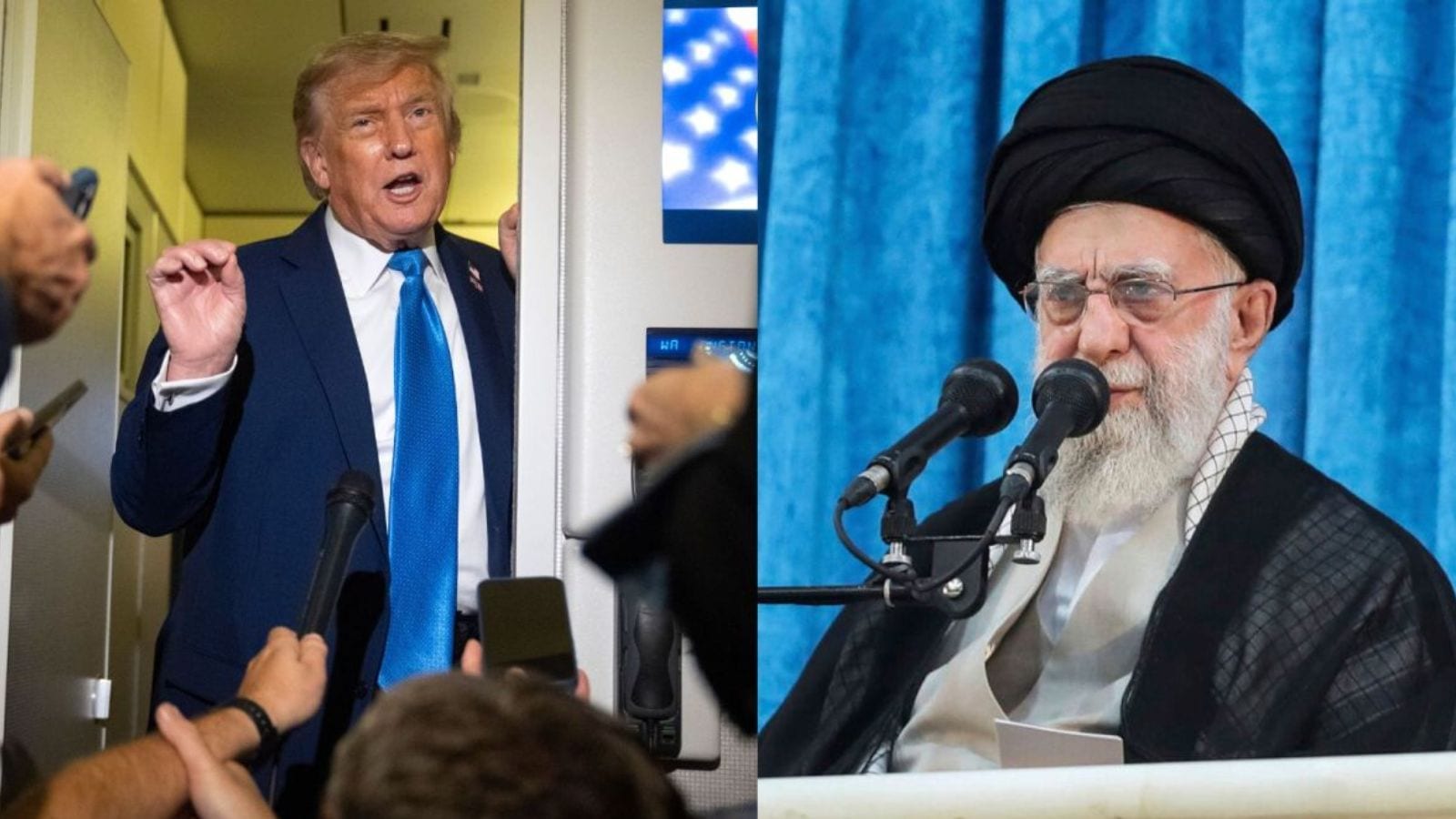
The smoke rising over North Tehran this morning signals the end of a forty-year cold war and the start of a chaotic, unpredictable hot one. By Saturday night, the geopolitical board was incinerated. President Donald Trump’s announcement that joint U.S.-Israeli strikes successfully targeted and killed Supreme Leader Ayatollah Ali Khamenei has fundamentally rewritten the rules of Middle Eastern engagement. For weeks, the world was led to believe that a "token enrichment" deal was the path forward, a diplomatic escape hatch designed to let both Washington and Tehran save face. It was a mirage. While diplomats in Geneva were arguing over centrifuge counts and 1.5% enrichment caps, the Pentagon and the IDF were finalizing a decapitation strike aimed at the very heart of the Islamic Republic’s power structure.
This was never about a deal. It was about an ending.
The concept of a "token" nuclear arrangement—where Iran would be allowed a symbolic level of enrichment in exchange for dismantling its major facilities at Fordow and Natanz—served as the perfect smoke screen. It kept the Iranian negotiating team at the table, convinced that Trump’s transactional nature would eventually lead to a "Grand Bargain" involving oil concessions and mineral rights. Iranian Foreign Minister Abbas Araghchi was still speaking of “good progress” just forty-eight hours before the first missiles hit their marks. The administration exploited the regime’s desperation for sanctions relief to fix them in place, ensuring the leadership remained centralized and accessible for a high-intensity strike.
The Intelligence Trap
The surgical nature of the operation, dubbed "Operation Epic Fury" by some and "Midnight Hammer" in its earlier 2025 iterations, suggests a deep-level intelligence penetration that the Iranian security apparatus failed to detect. Reports indicate that the U.S. and Israel tracked a gathering of top-tier clerics and IRGC commanders, including the Supreme Leader, his son Mojtaba, and as many as forty other high-ranking officials. The decision to strike during this window of opportunity suggests that Washington had moved past the goal of containment.
The strategy hinges on a high-stakes gamble: that the Islamic Revolutionary Guard Corps (IRGC) is a structure built on a cult of personality that cannot survive the loss of its central figure. Without Khamenei to bridge the gap between the mullahs and the military, the White House expects the system to fracture. This isn't just a military action; it is an invitation for a coup or a popular uprising.
The Token Deal That Failed to Launch
To understand why diplomacy was discarded, one must look at the "token enrichment" proposal that was allegedly on the table. The terms demanded by the Trump administration were, in reality, a demand for unconditional surrender. Washington required:
- The total dismantling of Fordow, Natanz, and Esfahan.
- The physical transfer of all enriched uranium stocks to the United States.
- A permanent end to all sunset clauses.
- The inclusion of ballistic missile curbs and the cessation of support for the "Axis of Resistance."
Iran’s counter-offer—reducing enrichment to 1.5% and allowing oversight by a regional consortium—was fundamentally incompatible with the "Maximum Pressure 2.0" philosophy. For Secretary of State Marco Rubio and Vice President JD Vance, any Iranian enrichment was viewed as a latent breakout capacity. The administration’s public flirtation with a "token" deal was less a policy shift and more a tactical delay, allowing for the massive buildup of carrier strike groups and warplanes that now dominate the Persian Gulf.
The Economic Shockwave
The fallout is not confined to the wreckage of the Supreme Leader’s compound. Within hours of the strike, Brent crude surged 12%, with markets bracing for a potential closure of the Strait of Hormuz. The IRGC has already signaled its intent to turn the Gulf into a graveyard for tankers, a move that could send oil prices into the triple digits. This is the "tax" of regime change. While Trump has gambled that a quick collapse of the Iranian state will keep economic pain brief, a protracted "war of attrition," as threatened by groups like Kataib Hezbollah, would hit the American consumer directly at the gas pump just months before the midterm elections.
The domestic response has been a predictable split between hawks celebrating the "liberation" of the Iranian people and critics warning of an unauthorized act of war. Unlike the 2025 strikes that focused purely on nuclear infrastructure, this operation explicitly seeks the total dismantling of the Iranian government. There is no plan for what follows a vacuum in Tehran, a lack of foresight that has historically plagued American interventions in the region.
The Ghost of the Proxy War
The death of Khamenei does not automatically mean the death of his proxies. From the Houthi-controlled ports in Yemen to the militia strongholds in Iraq and Lebanon, the "Axis of Resistance" now finds itself leaderless but heavily armed. The risk of decentralized, retaliatory terror attacks against U.S. interests globally is at its highest point in decades. Iran’s President, Masoud Pezeshkian, has already called the killing a "declaration of war against Muslims," a narrative designed to mobilize the Shia world for a long-term insurgency.
The U.S. military is currently conducting "heavy and pinpoint" bombing across the country to prevent the IRGC from regrouping or launching a coordinated counter-strike. However, the true test will be on the streets of Tehran. Trump has called on Iranian civilians to "take back your country," betting that the internet blackouts and the blood spilled during the January protests have created a population ready to snap the remaining bonds of clerical rule. If they don't, the U.S. may find itself owning a broken, radioactive nation with no clear exit strategy.
Would you like me to analyze the specific IRGC units most likely to lead a counter-insurgency in the wake of the leadership vacuum?