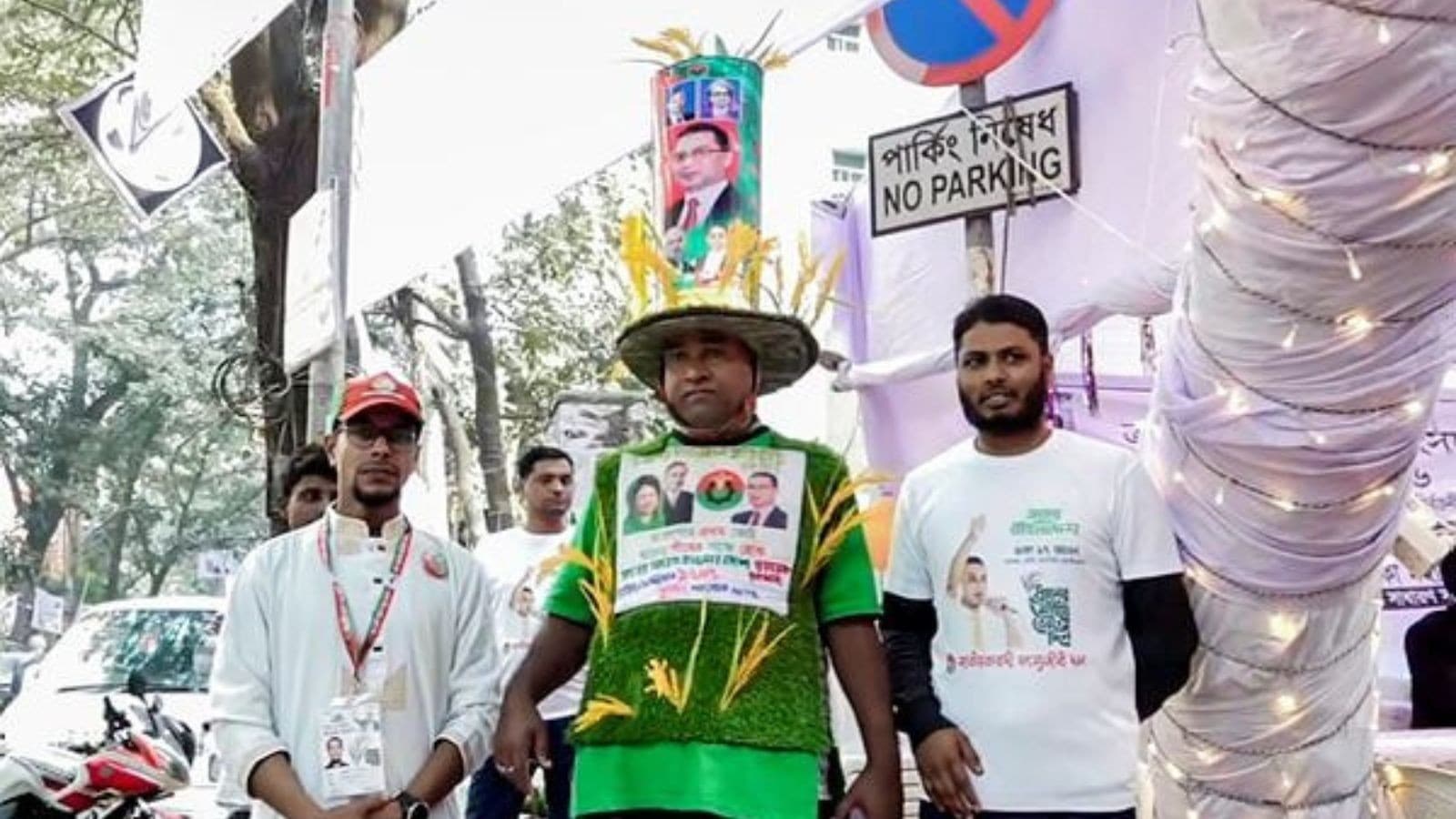
The dust has finally settled over the streets of Dhaka. After years of tectonic shifts and the high-voltage electricity of a "Gen-Z" uprising, the 13th Jatiya Sangsad is no longer a theoretical battleground. It is a reality. The Bangladesh Nationalist Party (BNP) has emerged with a commanding two-thirds majority, and for the 297 men and women who recently placed their hands on sacred texts to take their oaths, the world changed in a heartbeat.
Entering the parliament building—a masterpiece of monolithic concrete and light—is more than a career milestone. It is an entry into a parallel economy. While the average citizen navigates the bruising reality of inflation and the daily grind, a newly minted Member of Parliament (MP) steps into a life defined by a unique set of "facilitations." These are not merely line items in a government gazette. They are the invisible gears that keep the machinery of leadership turning, though to the person on the street, they often look like a different world entirely.
Consider the journey of a hypothetical newly elected lawmaker, let’s call him Arif. A few weeks ago, Arif was a local organizer, dodging the chaos of a transition government. Today, his signature carries the weight of the law. But the transition isn’t just psychological. It is physical.
The first thing Arif notices is the car. In Bangladesh, a high-end SUV is a symbol of ultimate triumph, largely because the taxes on imported luxury vehicles can soar between 300% and 500%. For a private citizen, a Land Cruiser is a dream deferred by a massive tax bill. For Arif, it is a "duty-free" reality. Under the Members of Parliament Order of 1973, he is entitled to import one luxury vehicle—a jeep, a car, or a microbus—without paying a single paisa in customs duty or VAT.
This single perk is worth millions of Taka. It is the most visible marker of the "MP class." However, in a move that has sent ripples through the tea stalls and talk shows of the capital, the BNP leadership recently made a startling decree. In a bid to reclaim "political morality," the party's high command announced that their MPs would decline these duty-free vehicles and government-allotted land plots. It is a gamble on public trust, a deliberate attempt to break the cycle of "vindictive tactics" and entitlement that defined previous eras.
But even without the luxury SUV, the financial architecture supporting a lawmaker remains robust.
Arif’s monthly bank statement now looks very different. His basic salary is set at Tk 55,000. On its own, that is a modest sum for a person tasked with shaping a nation’s destiny. But the "perks" are cumulative. There is a constituency allowance of Tk 12,500 to keep his local office running. There is a "sumptuary" allowance—a polite term for entertainment expenses—of Tk 5,000.
Then there is the transport allowance. Even if Arif chooses not to import a duty-free beast, the state provides Tk 70,000 every month to cover fuel, maintenance, and the salary of a driver. Add in Tk 15,000 for office expenses, Tk 1,500 for laundry, and a miscellaneous fund of Tk 6,000. By the time the math is done, the monthly take-home is closer to Tk 1,72,800.
To a family in rural Bogra or a student in Chittagong, this is a staggering amount. To the MP, it is the cost of being "available." In the political culture of Bangladesh, a lawmaker is often treated as a one-person social safety net. When a constituent’s daughter gets married, they go to the MP. When a school needs a new roof, they go to the MP. To facilitate this, each lawmaker is granted an optional "discretionary grant" of up to Tk 5 lakh per year. It is a small chest of gold to be distributed at their whim, a tool of both genuine charity and calculated patronage.
The logistics of movement are equally frictionless. When Arif travels for official business, the state doesn't just buy him a ticket; it buys him the best version of that journey. He is entitled to 1.5 times the highest class fare for planes, trains, or steamers. If he chooses the road, a per-kilometer allowance kicks in. If he stays home, his phone bills are covered up to Tk 7,800.
And then there is the ultimate safety net: the health of the family. MPs and their immediate households receive medical care at government facilities that most citizens wait in line for hours to access. There is also a monthly medical allowance of Tk 700—a symbolic gesture, perhaps, but one that ensures the gears of health never grind to a halt for the elite.
Yet, there is a tension beneath the surface of these benefits. The 2026 election wasn't just about who sits in the chairs; it was a referendum on how those chairs are used. The rise of a "Gen-Z" consciousness has put a spotlight on the gap between the rulers and the ruled. The decision by many BNP members to forgo the most ostentatious perks—the cars and the land—suggests a fear of being seen as "the same as before."
Trust is a fragile currency. In a country where the median age is roughly 26, the new electorate has little patience for the "imperial" style of governance. They remember the 2024 uprising. They remember the cost of silence. For the 13th Parliament, the challenge isn't just to pass laws, but to prove that the Tk 1,72,800 they receive every month is an investment in the people, not a fee for their own comfort.
As the lights dim in the Sangsad Bhaban tonight, the new lawmakers head home—some to rented apartments, some to party-provided housing, all carrying the weight of a nation’s expectations. The "perks" are there, documented in the law, but the real benefit of the office remains the one thing that can't be bought or imported duty-free: the chance to actually fix the system before the next storm arrives.
Would you like me to look into the specific constitutional reforms the BNP has proposed in their new "July Charter" mandate?