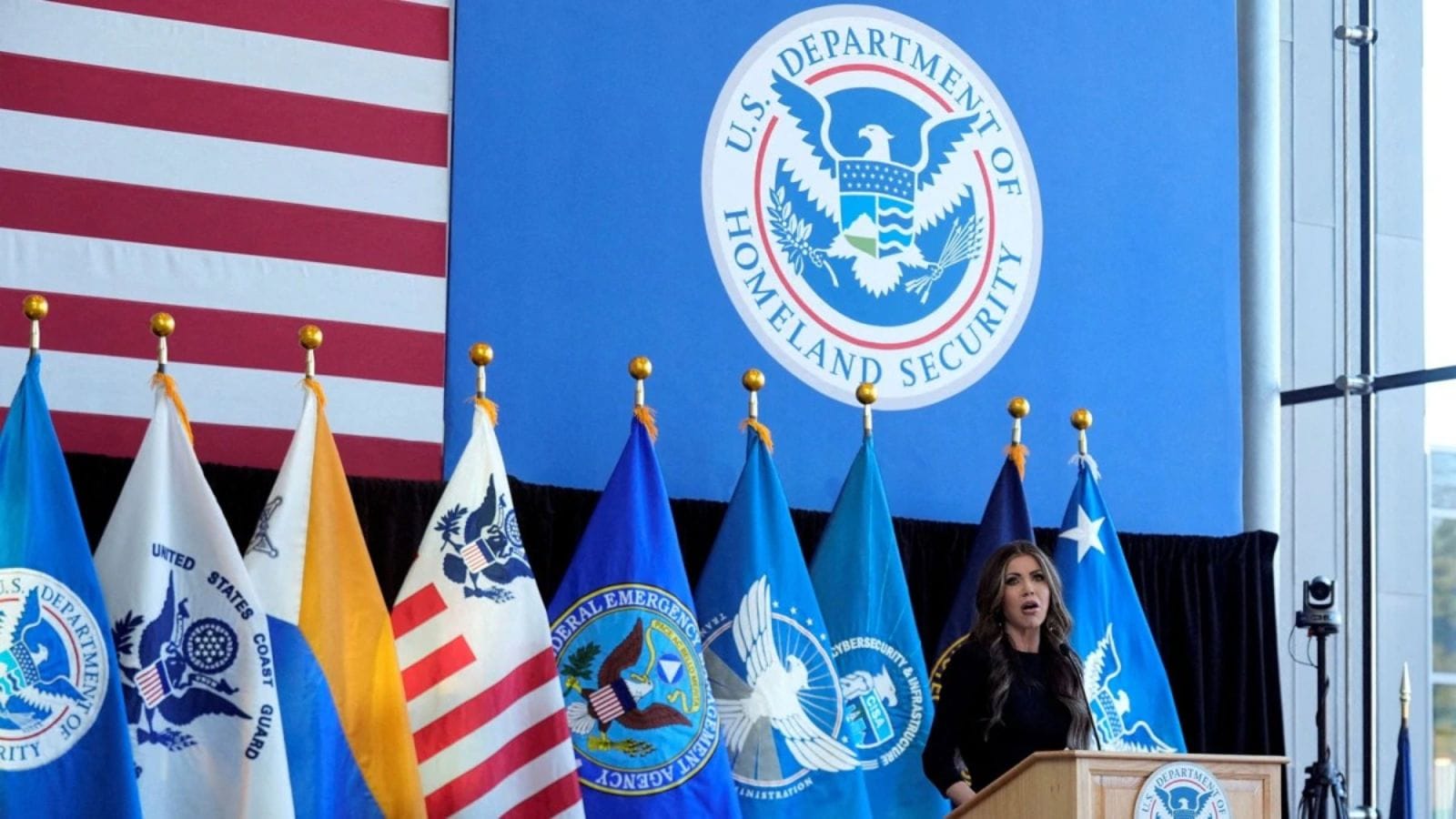
The media loves a good apocalypse. Every time a budget impasse hits Capitol Hill, the sirens start wailing about the "total collapse" of national security. They paint a picture of empty border towers, unmonitored airport terminals, and a nation left entirely defenseless.
It is a lie.
If you are waiting for the US Department of Homeland Security (DHS) to actually "shut down," you’ll be waiting forever. The term itself is a linguistic trick designed to incite panic and political leverage. In reality, DHS is the most "essential" department in the federal government, which means even when the money stops flowing, the machine keeps grinding.
We need to stop asking "what services will be affected" and start asking why we pretend a shutdown is even happening.
The Myth of the Unprotected Border
The standard narrative suggests that a DHS shutdown leaves the border wide open. This is demonstrably false. Under the Antideficiency Act, "essential" personnel—those responsible for the safety of human life or the protection of property—must stay on the job.
During a "shutdown," roughly 90% of DHS employees are classified as essential.
Customs and Border Protection (CBP) officers don’t just walk away from the ports of entry. Border Patrol agents don’t park their trucks and go home to watch Netflix. They work. The only difference is they aren't getting a paycheck on Friday. They get back pay later.
I have spent years navigating the intersection of federal policy and private sector logistics. I have seen how these agencies operate during "funding gaps." The intensity doesn't drop; the frustration just rises. The border is not "unprotected"; it is merely staffed by people who are rightfully annoyed at Congress.
TSA Lines and the Theater of Inconvenience
The most visible "victim" of a shutdown is the Transportation Security Administration (TSA). The news cycle will inevitably feature shots of long lines at O'Hare or Hartsfield-Jackson, blaming the shutdown for the delay.
This is a tactical choice, not a structural necessity.
TSA officers are essential. They are required to show up. However, when the paychecks stop, "blue flu" sets in. Sick calls spike. This isn't a failure of the department's capacity; it is a labor protest. The slowdowns you experience are a result of human friction, not a lack of federal authority.
The dirty secret? Even during a full funding cycle, the TSA’s failure rate in detecting prohibited items has historically been abysmal. A 2015 internal investigation showed a 95% failure rate. If you are worried that a shutdown makes flying "less safe," you are operating under the delusion that the system was foolproof to begin with. The shutdown doesn't break the security; it just strips away the aesthetic of efficiency.
The Real Victims are the Tech Contractors
While the media focuses on the guy in the TSA uniform, the real damage happens in the sterile offices of Northern Virginia.
DHS relies heavily on private-sector contractors for cybersecurity, data analytics, and infrastructure maintenance. When the government shuts down, "non-essential" contracts are often paused. This is where the actual risk lies.
If a third-party vendor is responsible for patching vulnerabilities in a DHS network and their contract isn't funded for the month, that work stops. We aren't losing boots on the ground; we are losing the digital shield. The "lazy consensus" ignores the fact that modern security is a software game, not just a physical one.
The Evolved Definition of Essential
The DHS was born out of the chaos of 9/11, a reactionary beast designed to consolidate power. Because its mandate is so broad—ranging from the Coast Guard to FEMA to the Secret Service—almost everything it does can be squeezed into the "essential" category.
- US Secret Service: Do you think the President’s detail stays home? No.
- Coast Guard: Do search and rescue missions stop? No.
- FEMA: Does disaster relief vanish? No, because the Disaster Relief Fund is often multi-year or supplemental.
The shutdown is a budgetary accounting trick. It is a change in the timing of payments, not a cessation of activity. The "affected services" are almost exclusively administrative: training programs, hiring cycles, and the processing of civil immigration applications (USCIS).
Wait, let's talk about USCIS.
The Fee-Funded Exception
Most people assume the entire immigration system freezes. Wrong.
US Citizenship and Immigration Services (USCIS) is largely fee-funded. They don't rely on the annual congressional circus for the bulk of their budget. If you are applying for a green card or naturalization, the person processing your paperwork is likely still getting paid because you paid them, not the taxpayer.
The "shutdown" narrative fails to account for the fragmented way the US government actually breathes. We treat the DHS like a monolithic block of ice that melts when the sun goes down. In reality, it’s a collection of loosely connected engines, many of which have their own fuel tanks.
Stop Asking the Wrong Questions
People always ask: "Is it safe to travel during a shutdown?"
The answer is: Yes, as safe as it ever is.
The real question you should be asking is: "If 90% of the department keeps working without a budget, why do we have the budget theater at all?"
The shutdown reveals the staggering inertia of the federal government. It shows that the bureaucracy is so entrenched that it can literally run on its own momentum for weeks without a single dime of authorized new spending.
If you want to see the "affected services," don't look at the border. Look at the small businesses that depend on E-Verify, which usually goes offline during a shutdown. Look at the local police departments waiting for federal grants that are now stuck in a digital queue. These are the micro-fractures. The macro-structure—the "Homeland"—remains exactly as it was.
The High Cost of Back Pay
Here is the financial reality that no one wants to admit: Shutdowns cost more than staying open.
Every time this happens, Congress eventually passes a bill to give federal employees back pay for the time they were furloughed or worked without pay. We are essentially paying people for the chaos we caused them. We pay for the administrative overhead of stopping and starting contracts. We pay for the lost productivity of a workforce that spent two weeks wondering how to pay their mortgage instead of focusing on their mission.
The shutdown isn't a "saving." It’s an expensive, high-stakes tantrum.
The Strategy for the Cynical
If you are a business owner or a traveler, ignore the headlines.
- Logistics: Expect delays at ports of entry not because of lack of staff, but because of lowered morale and increased scrutiny from frustrated agents.
- Compliance: If you rely on DHS portals (like E-Verify), have a manual backup plan ready.
- Perspective: Realize that "national security" is the ultimate trump card. No politician, no matter how partisan, is going to let a shutdown actually result in a catastrophic failure. The liability is too high.
The DHS shutdown is a performance. The "affected services" are the scenery, not the foundation. The lights stay on, the cameras keep rolling, and the guards stay at the gate. The only thing that truly stops is the common sense of the American taxpayer.
Prepare for the inconvenience, but stop fearing the collapse. The machine is designed to be unstoppable, even when it’s broke.
Go to the airport. Cross the border. File your paperwork. The "shutdown" is a ghost story told by people who want your vote or your clicks.
Don't give them either.


