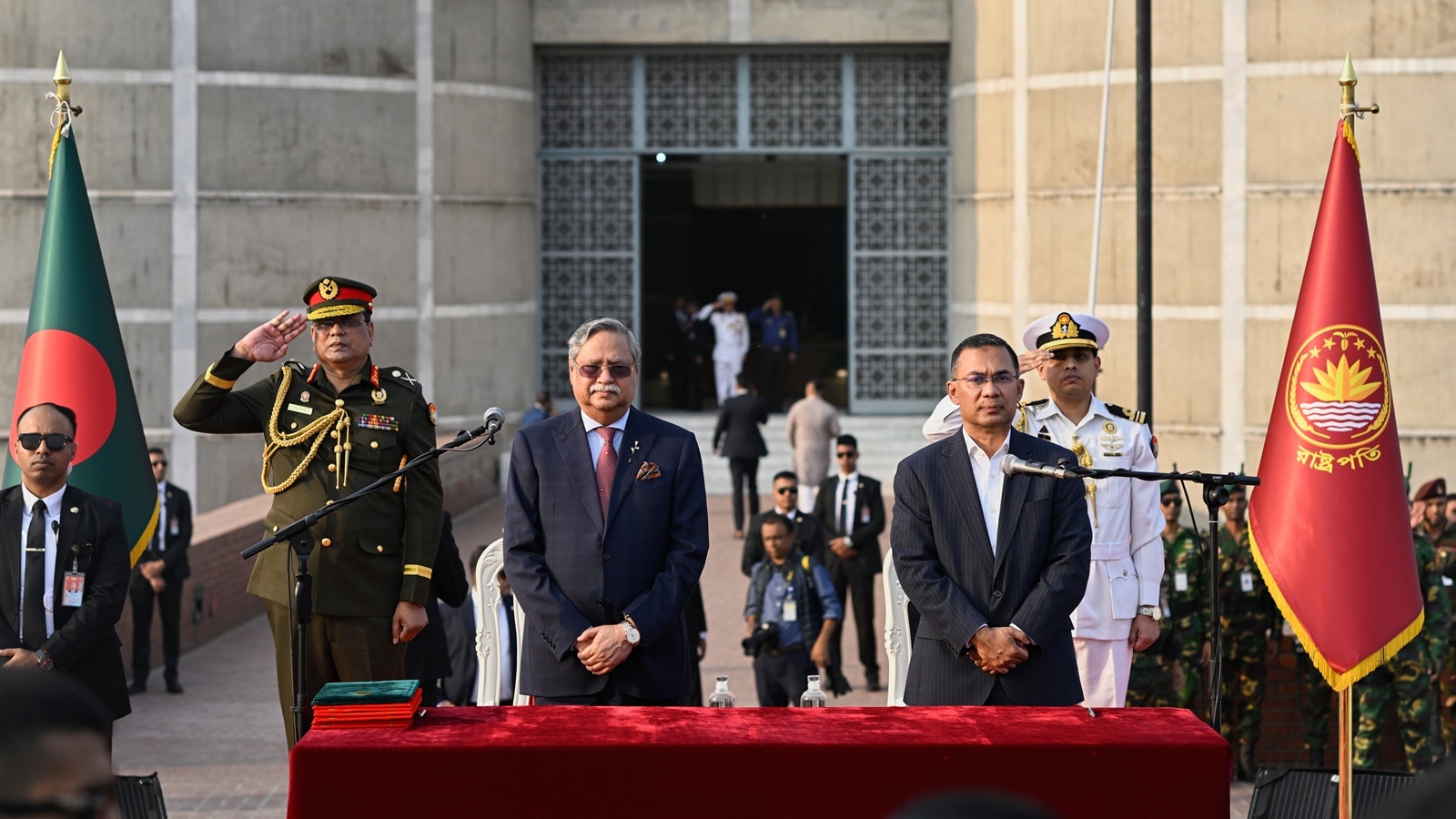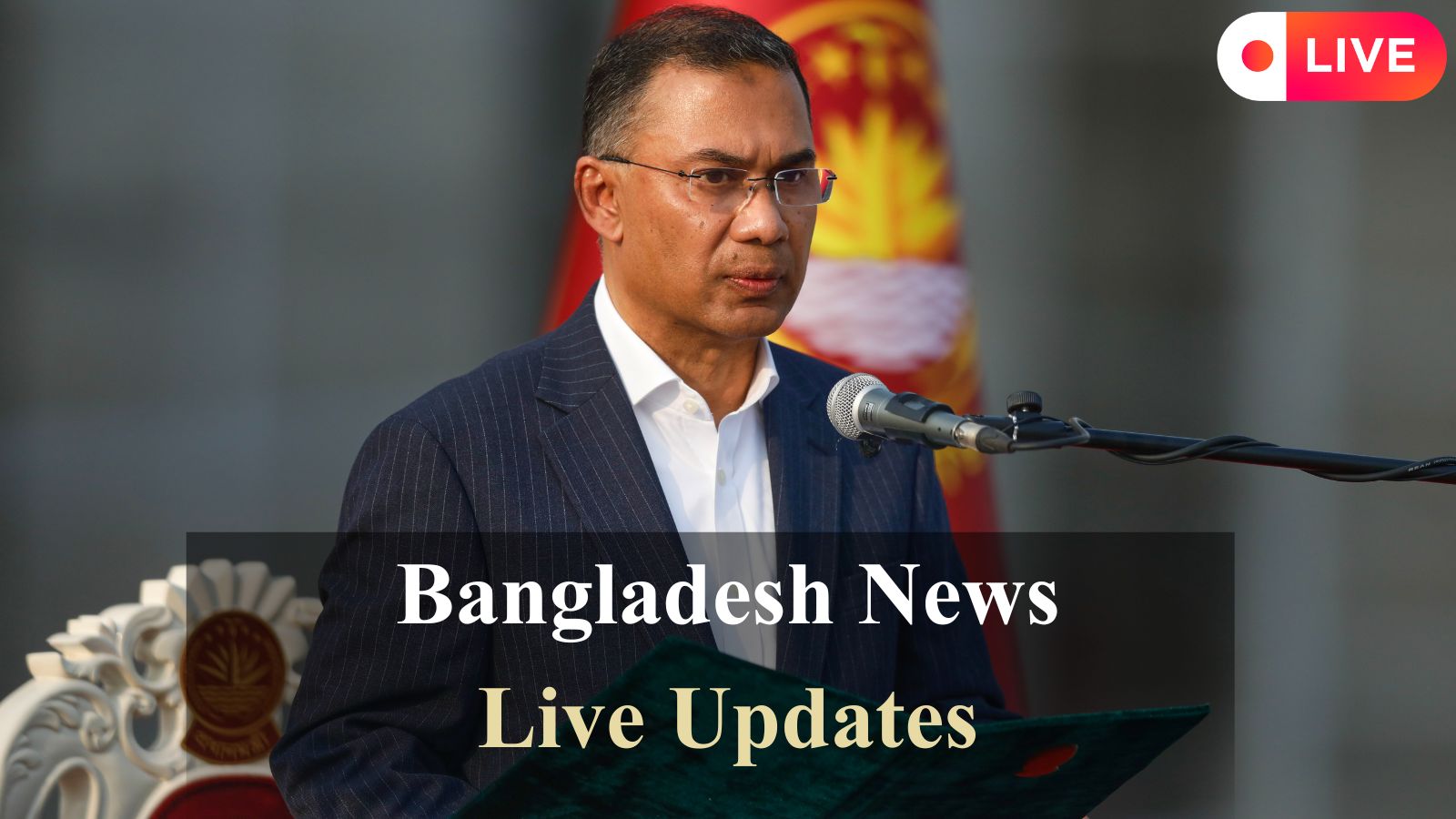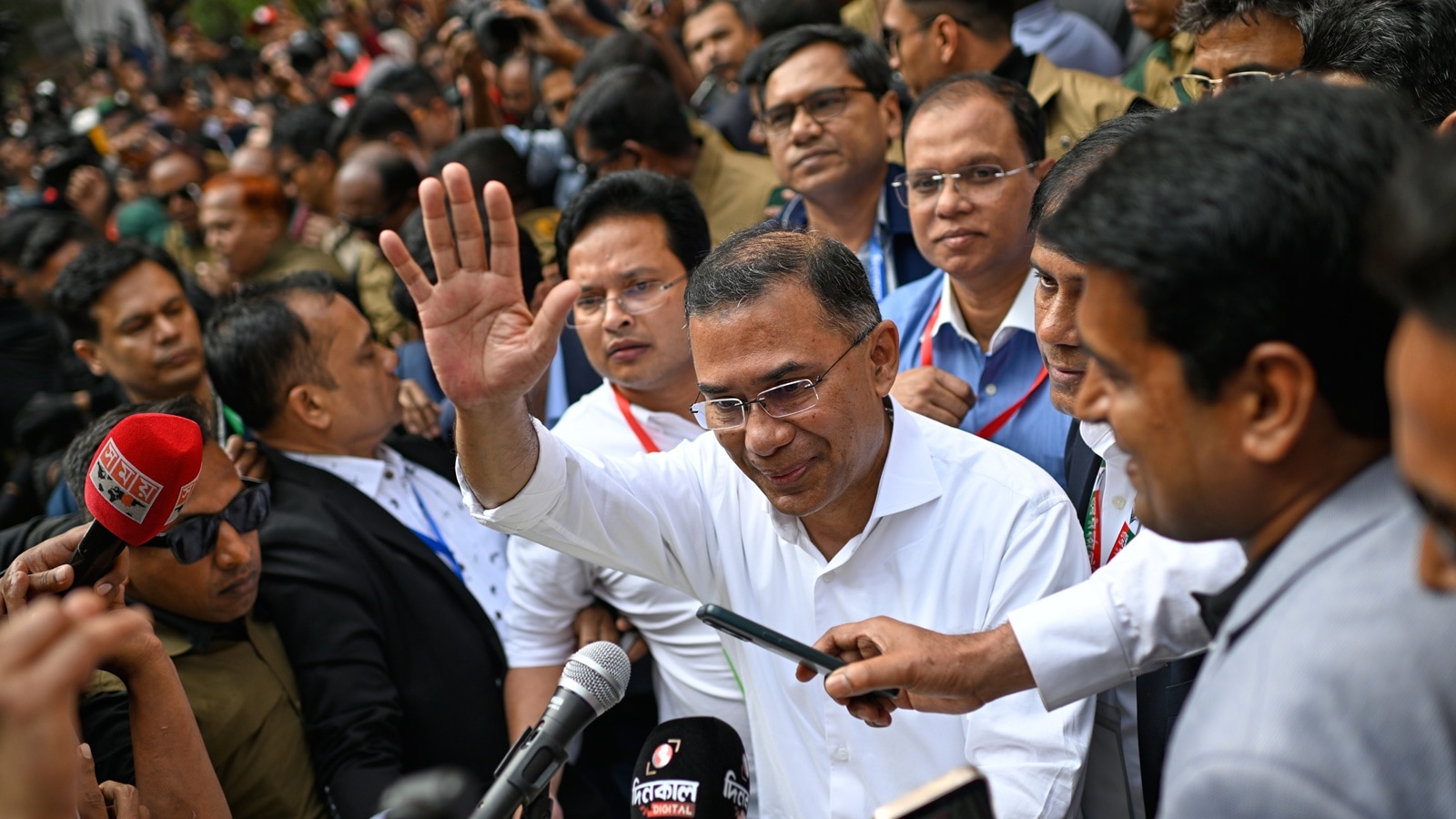
Tarique Rahman has officially taken the oath as the Prime Minister of Bangladesh, ending two decades of political exile and marking the formal return of the Bangladesh Nationalist Party (BNP) to the seat of government. The ceremony, held at Bangabhaban amid heavy security and a jubilant base of supporters, signals more than just a change in leadership. It represents a total structural reset for a nation that has spent years locked in a cycle of protest, crackdown, and economic volatility. Alongside Rahman, a sprawling cabinet of dozens of ministers took their oaths, tasked with the immediate and daunting goal of stabilizing a country that has forgotten what a peaceful transition of power feels like.
This is not a standard political handoff. Rahman’s ascent is the culmination of years of grassroots pressure and international diplomatic maneuvering that finally broke the deadlock of the previous administration. For the BNP, the twenty-year hiatus was an era of survival, defined by legal battles and the physical absence of their primary leader. Now, the party faces the reality of governing a population that is exhausted by inflation and eager for the democratic reforms promised during the long years of opposition.
The Long Road from London to Dhaka
Rahman’s return to the center of Bangladeshi politics was never guaranteed. Living in London for over a decade, he managed party affairs through a digital bridge, a feat of organizational endurance that kept the BNP from fracturing under pressure. His critics often pointed to his absence as a sign of detachment, but his supporters saw him as a leader in waiting, protected from the immediate reach of domestic political purges.
The logistics of his return and the subsequent victory involved a complex alignment of internal dissatisfaction and a desperate need for economic recalibration. The previous government’s grip on power began to slip when the cost of living outpaced the official narrative of growth. When the price of basic commodities like rice and oil spiked, the political theoreticals of "stability versus democracy" stopped mattering to the average voter. They wanted a change, and Rahman was the only figure with the name recognition and organizational backing to provide a viable alternative.
A Cabinet Built for Crisis Management
The dozens of cabinet members who took the oath alongside Rahman reflect a strategy of broad-tent politics. This isn’t a lean, specialized team. It is a massive assembly designed to reward loyalty and ensure that every faction within the BNP feels represented. This scale is a double-edged sword. While it prevents immediate internal mutiny, it risks bureaucratic gridlock at a time when the country needs swift, decisive action.
Several key portfolios have been handed to veterans who served in the BNP’s previous tenure, suggesting a desire for institutional memory. However, there are also new faces—younger activists who rose through the ranks during the protest movements of the last five years. Balancing the expectations of these two groups will be Rahman’s first major internal test. The veterans want a return to the status quo of 2004, while the youth wing is demanding a more modern, transparent approach to governance that accounts for the digital era’s demands for accountability.
Dismantling the Shadow State
Rahman inherits a state apparatus that has been deeply politicized for twenty years. In Bangladesh, the civil service, the police, and the judiciary often mirror the preferences of the ruling party. One of the most significant challenges for the new Prime Minister will be how he handles the existing bureaucracy. If he purges it too quickly, he risks a total collapse of public services. If he leaves it intact, he risks being sabotaged from within.
The "how" of this transition is already becoming clear. Reports from the capital suggest a phased approach to administrative reform. Instead of mass firings, the new administration is shifting key personnel to less influential roles while promoting those perceived as neutral or suppressed under the previous regime. This is a delicate surgical operation. One wrong move could trigger a strike within the civil service, paralyzing the very government Rahman just fought to lead.
The Economic Minefield
The headlines focus on the swearing-in, but the real story is the state of the treasury. Bangladesh’s foreign exchange reserves have been under immense pressure, and the garment industry—the backbone of the export economy—is facing stiff competition from regional neighbors. Rahman has promised a "New Deal" for Bangladeshi workers, but he is constrained by the need to maintain favor with the International Monetary Fund (IMF) and other global lenders.
Foreign investors are currently in a "wait and see" mode. They are looking for signals that the new government can maintain order without resorting to the same heavy-handed tactics that eventually led to the downfall of the previous administration. Rahman’s cabinet includes several figures with deep ties to the business community, a move intended to signal that the BNP is "open for business." Whether that translates to actual capital inflow depends on how the government handles the upcoming labor negotiations in the industrial zones.
The Weight of the Past
History looms large over this new government. The last time the BNP was in power, the political environment was characterized by intense polarization. Rahman himself carries the baggage of previous allegations, many of which he has dismissed as politically motivated fabrications. To succeed, he must demonstrate that he is a different leader than he was two decades ago.
The international community, particularly regional powers like India and global players like the United States, will be watching closely. Bangladesh is a strategic linchpin in the Bay of Bengal. Any shift in its foreign policy toward or away from major regional blocs will have ripple effects far beyond Dhaka. Rahman’s initial speeches have focused on "friendship to all," a standard diplomatic trope, but the actual appointments in the Ministry of Foreign Affairs will reveal the true direction of his geopolitical strategy.
Restoring the Electoral Trust
The most immediate demand from the public is a guarantee that the next election will not be a repeat of the contested cycles of the past. Rahman’s legitimacy rests on the promise of a restored democracy. This means the new government must quickly move to empower the Election Commission and ensure that the various wings of the state remain neutral.
This is difficult to achieve when the party has been out of power for so long. There is a natural urge among the rank and file to "claim their turn" after years of being on the sidelines. Rahman must restrain his own party members from engaging in the same exclusionary practices they once protested. If the BNP becomes a mirror image of what it replaced, the jubilant crowds at the swearing-in will quickly turn into the architects of the next protest movement.
Infrastructure and the Urban Divide
While the political theater unfolds in Dhaka, the rural-urban divide remains a critical fracture point. The previous government invested heavily in "mega-projects"—massive bridges and transit lines that served as symbols of progress but often came with allegations of inflated costs. Rahman must now decide whether to continue these projects or pivot the budget toward social safety nets and agricultural subsidies.
His cabinet’s response to the current energy crisis will be the ultimate litmus test. Load-shedding and power outages have crippled small businesses in the interior of the country. If the new administration cannot keep the lights on and the factories running, the political honeymoon will be exceptionally short. People do not eat "democracy"; they eat rice, and they need electricity to cook it.
Institutional Autonomy
For Bangladesh to move forward, the independence of the judiciary must be more than a campaign slogan. The legal system has been used as a weapon for decades. If Rahman uses his new power to simply reverse every legal decision made against his party while launching new cases against his opponents, the cycle of vengeance will continue.
True leadership in this context requires a degree of restraint that is rare in the region’s politics. It requires allowing the courts to function without executive interference, even when the outcomes are unfavorable to the party in power. This is the only way to build a state that survives beyond the term of a single leader.
The Security Apparatus Challenge
The relationship between the Prime Minister and the security forces is perhaps the most sensitive aspect of the new government. The military has historically played a "guardian" role in Bangladeshi politics, stepping in during times of extreme instability. Rahman’s ability to maintain a professional, distanced relationship with the top brass will determine the longevity of his administration.
The police force, in particular, requires a total cultural overhaul. Having been used as the front line of political enforcement for twenty years, the average citizen views a uniform with suspicion rather than security. Rebuilding that trust is a task that will take years, not months, and it starts with the cabinet-level appointments made this week.
A Nation in Transition
The swearing-in ceremony at Bangabhaban was a spectacle of order, but it took place against a backdrop of immense national anxiety. The BNP’s return to power is a chance for a hard reset, but it is also a moment of extreme vulnerability. The country is watching to see if Tarique Rahman can transition from a symbol of resistance to a functional head of state.
He has the mandate, he has the cabinet, and he has the eyes of the world upon him. The coming weeks will see a flurry of executive orders aimed at dismantling the old guard's policies, but the real measure of this government will be found in the stability of the Taka and the price of goods in the local bazaar. Power is easily taken in a moment of crisis, but it is only kept through the steady, often boring work of effective governance. Rahman’s 20-year hiatus is over; the clock on his performance starts now.
Hold the new administration accountable for the specific reform timelines they promised during the transition.