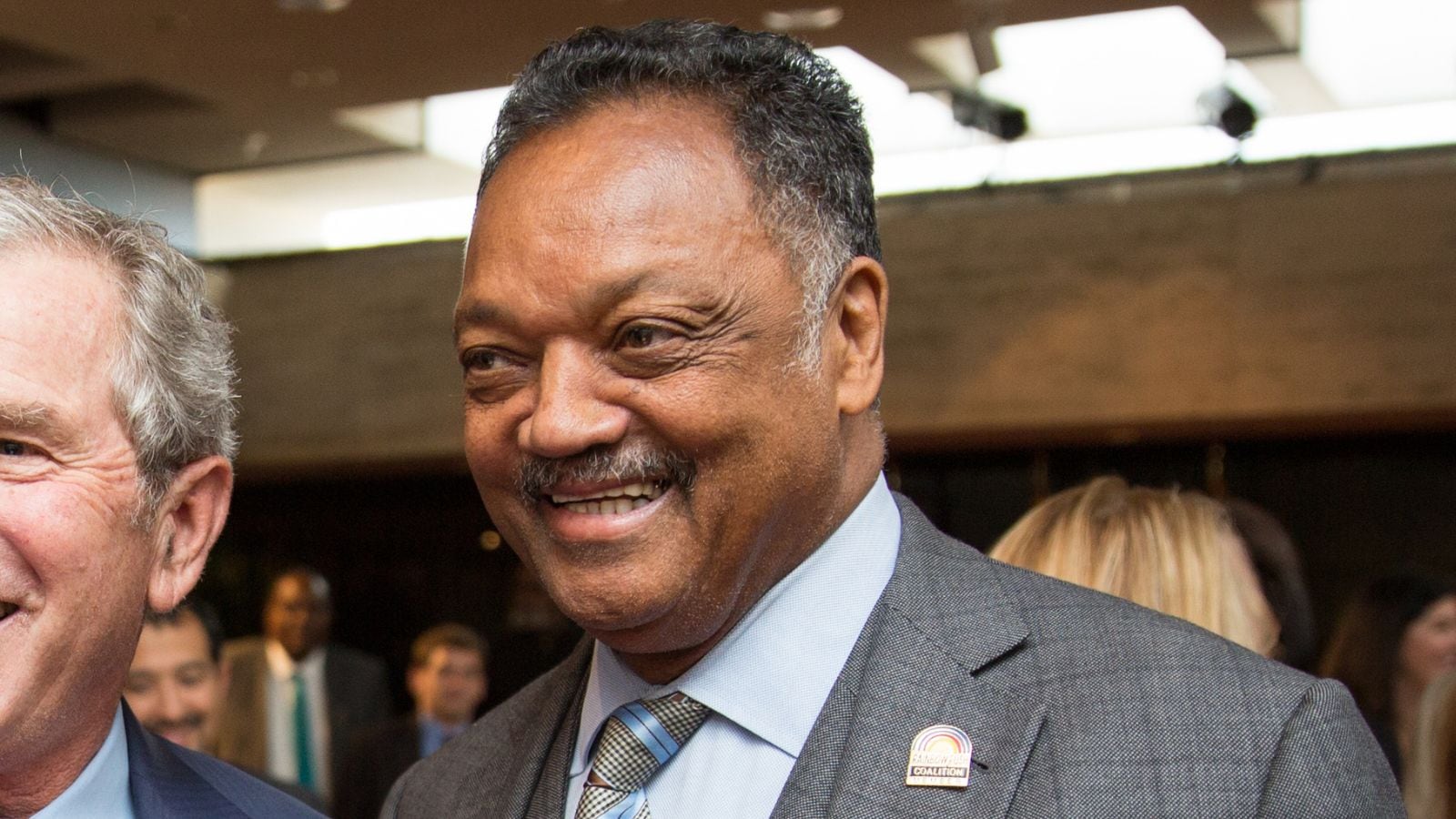
The passing of Reverend Jesse Jackson at age 84 marks the end of an era that many younger voters don't fully grasp. When his family confirmed his death, the headlines immediately defaulted to "civil rights leader" and "presidential hopeful." Those labels are accurate, but they’re also incredibly thin. They don't capture how Jackson actually rewired the mechanics of the Democratic Party or how he forced corporate America to look at the Black middle class. He wasn't just a man who gave speeches; he was the man who built the bridge between the street protests of the 1960s and the Black presidency of the 2000s.
If you think the diverse coalitions we see in politics today just happened naturally, you're wrong. Jackson’s "Rainbow Coalition" was the prototype. He spent decades arguing that if you bring together the "dispossessed"—the poor, the marginalized, and the working class across racial lines—you don't just win arguments; you win elections. For a closer look into similar topics, we suggest: this related article.
The Protégé Who Outlasted the Giants
Jesse Jackson didn't emerge from a vacuum. He was a lieutenant to Dr. Martin Luther King Jr., and he was standing on the balcony of the Lorraine Motel in Memphis when King was assassinated in 1968. That moment changed him, but it also fueled a specific kind of ambition that some of his peers found abrasive. He didn't want to just be a preacher. He wanted power.
In the 1970s, he founded Operation PUSH (People United to Save Humanity) in Chicago. This wasn't just about marching. It was about economics. Jackson understood that if you want a seat at the table, you have to hit the bottom line. He pioneered the use of "covenants"—agreements with massive corporations like Coca-Cola and Burger King to hire more Black workers and use Black-owned suppliers. He was doing ESG (Environmental, Social, and Governance) work before the term even existed. To get more context on this topic, comprehensive coverage can also be found on BBC News.
He saw the world through the lens of leverage. He knew that the Black community had collective buying power and that withholding it was a faster route to change than waiting for a slow-moving Congress to pass a bill. It was direct, it was effective, and it made a lot of people in high-rise boardrooms very nervous.
Why the 1984 and 1988 Campaigns Changed Everything
Most history books treat Jackson’s runs for the presidency as noble but failed efforts. That’s a massive misreading of political history. Before 1984, the idea of a Black man winning a major party primary was treated like science fiction. Jackson didn't just run; he dominated the conversation.
In 1984, he won over 3 million votes. In 1988, he doubled that, winning nearly 7 million votes and several states, including Michigan. He proved that a progressive, populist message could resonate with white rural farmers and urban Black voters at the same time. He talked about "common ground." He talked about the "patchwork quilt" of America.
His success forced the Democratic Party to change its rules. He fought against "superdelegates" and winner-take-all systems that he felt suppressed the will of the people. Without the groundwork Jackson laid in the 80s, there is no path for Barack Obama in 2008. Jackson did the hard, unglamorous work of registering millions of new voters who had been ignored by the establishment for generations. He made the electorate look like the actual country.
The Hostage Negotiator and Global Diplomat
Jackson also had a knack for showing up where the State Department wouldn't. He had this "cowboy diplomacy" style that drove official Washington crazy, but it worked.
- 1983: He traveled to Syria and secured the release of Navy pilot Robert Goodman.
- 1984: He went to Cuba and convinced Fidel Castro to release 48 prisoners.
- 1990: He met with Saddam Hussein and brought home dozens of foreigners being held as "human shields."
He wasn't an elected official. He didn't have a formal mandate. He just had the audacity to fly into a conflict zone and start talking. He understood that his moral authority as a civil rights leader gave him a different kind of currency on the world stage. It was risky, and it was often criticized as grandstanding, but the families of those prisoners didn't care about the optics. They just wanted their loved ones home.
Dealing With the Controversies
You can't talk about Jesse Jackson without talking about the friction. He was a polarizing figure. His "Hymietown" remark in 1984 was a disaster that damaged his relationship with the Jewish community for years. He apologized, but the scar remained. There were also the internal rifts within the civil rights movement, where some felt he moved too fast or took too much credit.
Later in life, his personal life became tabloid fodder when it was revealed he had fathered a child out of wedlock. For a man of the cloth, it was a heavy blow to his reputation. But Jackson didn't disappear. He kept showing up. He kept marching. He was at the front lines in Ferguson, and he was there for the Voting Rights Act fights of the 2010s. He was a flawed messenger, but the message itself stayed remarkably consistent.
The Long Shadow of the Rainbow Coalition
What happens now? Jackson’s death leaves a vacuum in the "old guard" of the movement. We’re losing the last direct links to the 1960s. But his strategy—the idea of the multiracial, working-class coalition—is now the standard playbook for the modern left.
When you look at the organizing efforts in Georgia or the rise of progressive voices in Congress, you’re looking at the ghost of the 1988 Jackson campaign. He taught a generation how to organize outside of the traditional power structures. He taught them that "Your Vote is Decisive," a slogan he hammered into the ground until it became a reality.
He leaves behind a complicated, massive, and undeniable legacy. He shifted the center of gravity in American life. He made it impossible to ignore the "locked out" and the "left behind."
If you want to honor the work he started, don't just post a quote on social media. Check your voter registration status. Support a local Black-owned business. Read up on the history of the Rainbow Coalition and see how those same tactics apply to the struggles we're facing today. The man is gone, but the blueprint he left behind is still the most effective tool we have for changing the system.