The failure to capitalize on Côte d’Ivoire’s archaeological and historical inventory is not a matter of cultural indifference, but a failure of capital allocation and infrastructure integration. When practitioners describe current methods as belonging to the "last century," they are identifying a systemic decoupling of heritage management from modern economic value chains. The current state of Ivorian heritage is defined by three primary friction points: the absence of a digital inventory as a foundational asset class, the lack of private-sector integration in site preservation, and a regulatory framework that treats archaeology as a cost center rather than a catalyst for the tertiary sector.
The Infrastructure Deficit and the Cost of Manual Curation
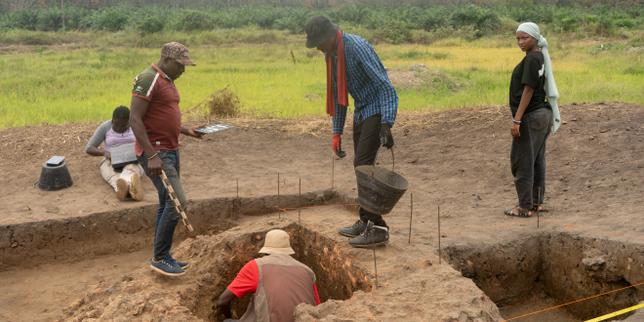
The primary bottleneck in Ivorian archaeology is the reliance on analog data recovery. In a global context where LiDAR (Light Detection and Ranging) and photogrammetry have standardized the rapid mapping of tropical landscapes, the persistent use of manual excavation and paper-based cataloging creates an exponential lag in site protection.
The economic cost of this lag is twofold:
- Site Attrition: Without high-resolution digital mapping, sites are lost to urban expansion and agricultural encroachment before they are even recorded. This represents a permanent loss of "historical capital" that cannot be recovered.
- Research Inefficiency: The time-to-output for an analog excavation is significantly higher than for a tech-integrated dig. This delays the publication of findings, which in turn prevents the site from entering the global scientific and tourism consciousness.
The inability to move beyond "last century" techniques is fundamentally a result of a broken funding loop. Without a digital proof-of-concept for the value of these sites, the state remains hesitant to invest in the very technology required to prove that value.
The Economic Misalignment of Heritage Management
Ivorian heritage assets currently exist in a vacuum, separated from the broader tourism and educational ecosystems. For a site to transition from a "patch of dirt" to a viable economic asset, it must satisfy a specific utility function: $U = V + A - C$.
In this equation, $V$ represents the intrinsic historical value, $A$ represents accessibility (infrastructure, interpretation, and safety), and $C$ represents the maintenance cost. In the Ivorian context, $V$ is exceptionally high due to the density of pre-colonial and colonial history, but $A$ is frequently near zero. When $C$ exceeds the sum of $V$ and $A$, the state perceives the site as a liability.
The second limitation is the centralization of heritage authority. When the state is the sole custodian and the sole financier, the pace of development is limited by the national budget's volatility. The current model ignores the potential for Public-Private Partnerships (PPPs). In successful heritage economies, private developers are incentivized to integrate archaeological sites into their projects—not as hurdles to be cleared, but as "anchor assets" that increase property value and attract high-spend cultural tourists.
The Preventive Archaeology Bottleneck
One of the most significant missed opportunities in the Ivorian economy is the absence of a robust preventive archaeology mandate for major infrastructure projects. As the country undergoes rapid development in transport and energy, construction frequently intersects with undocumented historical sites.
A functional system requires a "polluter pays" principle applied to heritage:
- Mandatory Assessments: Developers must fund preliminary archaeological surveys.
- Time-Bound Mitigation: Clear windows for excavation to ensure heritage protection does not stall economic growth.
- Data Integration: Findings from these surveys must feed back into a centralized, open-access national database.
Without this framework, archaeology remains a reactive, emergency-based activity. This creates a friction-heavy environment where developers view archaeologists as "project killers" and archaeologists view development as a destructive force. This antagonism is a direct byproduct of a lack of clear regulatory sequencing.
The Human Capital Flight and Technical Erosion
The "last century" label also applies to the professional trajectory of Ivorian researchers. There is a visible gap between academic training and operational reality. While the universities produce historians and archaeologists, the lack of laboratory infrastructure and specialized equipment (such as carbon-dating facilities or conservation labs) means that primary analysis is often outsourced to foreign institutions.
This creates a cycle of intellectual dependency. When the core analytical work happens outside the country:
- Local expertise in specialized sub-fields (bioarchaeology, ceramic petrography) fails to develop.
- The high-value segments of the research economy—grant management, lab fees, and publishing—accrue to external entities.
- The "prestige" associated with major discoveries is often attributed to the foreign partner rather than the local institution.
To break this cycle, the focus must shift from "digging" to "processing." Building a domestic capacity for scientific analysis is a prerequisite for moving heritage management into the 21st century.
Strategic Reconfiguration of the Heritage Sector
To transform the Ivorian heritage sector from an under-exploited resource into a strategic asset, the following operational shifts are required:
- Digitization of the National Registry: Transition from paper records to a Geographic Information System (GIS) database. This allows for predictive modeling, where authorities can anticipate site locations based on environmental data, significantly reducing the cost of discovery.
- Implementation of Heritage Taxes: A small percentage of tourism revenue or developer fees should be ring-fenced specifically for the "Archaeological Innovation Fund." This ensures a consistent revenue stream independent of the general state budget.
- The "Site-as-a-Service" Model: Pilot a program where specific, high-potential sites are managed by professional heritage firms under long-term leases. These firms would be responsible for excavation, site protection, and tourism development in exchange for a share of the revenue.
- Regional Hub Strategy: Instead of attempting to preserve every small site simultaneously, the state should focus resources on three "Heritage Hubs" (e.g., Grand-Bassam, the northern mosque circuit, and the western stone circles). Concentrating investment in accessibility and marketing within these hubs creates a proof-of-concept for the broader national strategy.
The undervaluation of Ivorian heritage is a solvable technical problem. By shifting the perspective from "archaeology as history" to "archaeology as high-yield infrastructure," Côte d’Ivoire can secure its past while funding its future. The immediate priority must be the legislative formalization of preventive archaeology, forcing the integration of historical preservation into the national development roadmap. This creates a self-funding mechanism that removes the burden from the taxpayer and places it on the economic activities that benefit from the land's development.