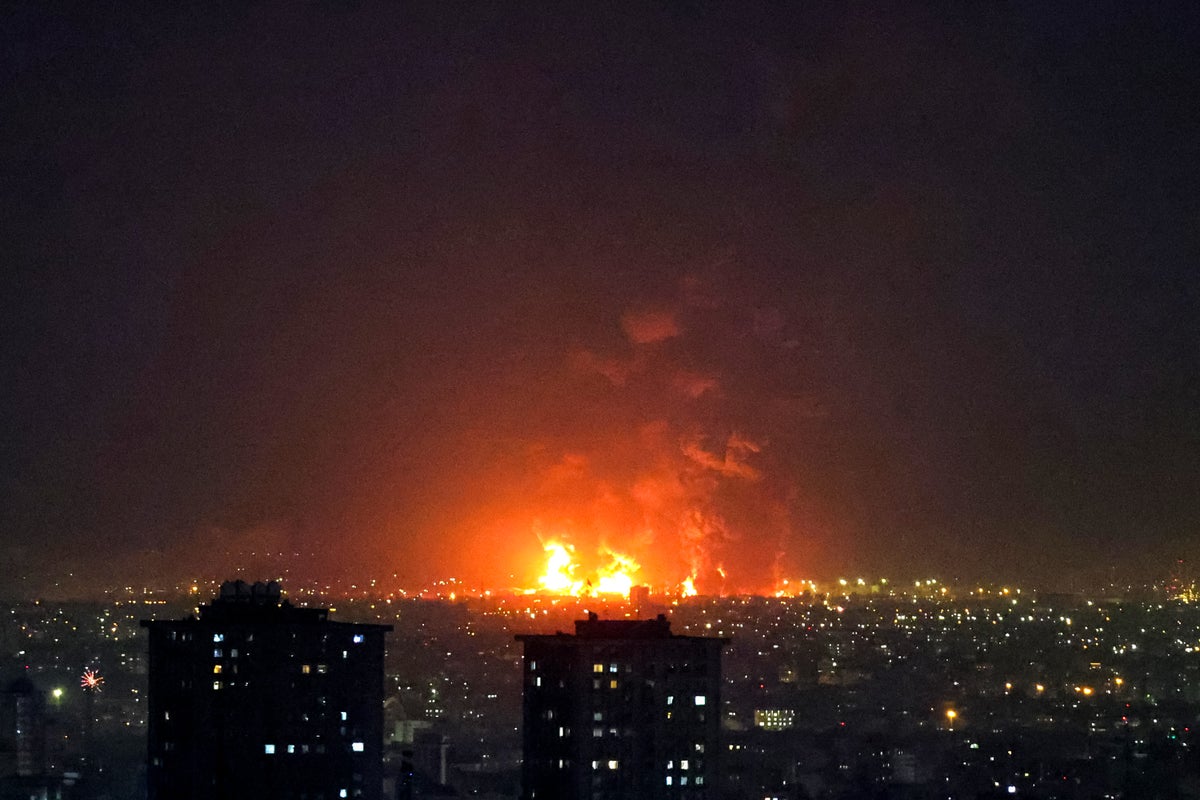
The headlines are always the same. "Success." "Intercepted." "Threat Neutralized." The UAE Ministry of Defence announces a successful shield against incoming drones and missiles, and the world breathes a collective sigh of relief. This reaction is fundamentally wrong. It's a symptom of a strategic blindness that prioritizes tactical optics over long-term security. If you are celebrating a $2 million interceptor hitting a $20,000 drone, you aren't winning. You are being bled dry in a war of economic attrition that you’ve already lost.
The "lazy consensus" among defense analysts is that high interception rates equate to safety. They don't. They equate to a temporary stay of execution. When we see high-definition footage of an Iron Dome or a Terminal High Altitude Area Defense (THAAD) battery lighting up the night sky, we are seeing the most expensive fireworks display in human history. We are seeing a system that is fundamentally reactive, mathematically unsustainable, and strategically passive. For another view, see: this related article.
The Mathematical Trap of Modern Air Defense
Let’s look at the cold, hard physics of the situation. Modern aerial warfare is no longer about the "Ace" in the cockpit. It is a game of mass and velocity. In any engagement involving ballistic missiles or autonomous loitering munitions, the advantage lies entirely with the attacker.
The cost-exchange ratio is the only metric that matters, yet it is the one most ignored by the press. Consider the math. A high-end interceptor, like those used in the Patriot or THAAD systems, can cost anywhere from $2 million to $5 million per shot. Often, doctrine dictates firing two interceptors at a single target to ensure a kill. That is $10 million to stop a single threat. Further coverage regarding this has been shared by Al Jazeera.
Now, look at the "incoming." A Shahed-class drone or a simplified cruise missile can be manufactured for the price of a mid-sized sedan—roughly $20,000 to $50,000.
$$Cost Ratio = \frac{Cost_{Interceptor}}{Cost_{Threat}}$$
In this scenario, the defender is spending 200 times more than the attacker. This isn't defense; it's a wealth transfer. If an adversary launches 100 cheap drones, they have spent $2 million. To stop them, the defender spends $200 million. You don't need to be a grand strategist to see who wins that marathon. The UAE and its neighbors are currently trapped in a cycle where the more "successful" they are at defending their skies, the faster they deplete their national treasuries and missile stockpiles.
The Myth of the "Surgical" Intercept
We’ve been sold a narrative of "clean" warfare. The Ministry of Defence releases statements saying debris fell in "unpopulated areas." This is luck, not design. When an interceptor hits a ballistic missile, you aren't "destroying" the threat. You are simply changing its state from a single guided projectile into a cloud of unguided, kinetic, and potentially toxic shrapnel.
If the incoming missile was carrying a chemical or biological payload—or even just high explosives—an intercept over a city doesn't solve the problem; it just distributes it. Kinetic energy doesn't vanish. If a missile is traveling at Mach 5 ($1,700$ meters per second) and it gets hit, that mass still has to go somewhere. The "interception" is often just a high-altitude redistribution of a disaster.
Why "Proactive Defense" Is a Polite Term for Failure
The industry likes to talk about "integrated air and missile defense" (IAMD). It sounds sophisticated. It sounds like a "holistic" (to use a word I hate) shield. In reality, it’s a confession that you have lost control of your borders.
I have watched regional powers pour billions into localized defense systems while ignoring the source of the launch. True defense is not a shield; it is a hammer. If you are waiting for the missile to appear on your radar, you have already failed at the three primary levels of security:
- Deterrence: The enemy didn't fear the consequences of launching.
- Intelligence: You didn't know the launch was imminent.
- Preemption: You didn't stop the launcher before it fired.
Relying on air defense is like a boxer who only trains to take punches to the face. Eventually, the jaw breaks. The current obsession with "interception rates" is a distraction from the fact that the UAE and its allies are allowing their adversaries to dictate the time, place, and cost of every engagement.
The Silicon Fallacy
The technology industry has convinced the defense sector that software will save us. They promise "AI-driven" targeting and "autonomous" counter-drone swarms. But software cannot override the laws of thermodynamics or the reality of supply chains.
You can have the smartest interceptor in the world, but it still requires rare earth minerals, complex rocket motors, and years of specialized manufacturing. A drone requires a lawnmower engine and a GPS chip. We are trying to fight a swarm of locusts with individual, handcrafted silver bullets. It is a category error.
Stop Asking "Did We Stop It?"
People always ask, "How many were shot down?" That is the wrong question. It’s a binary trap designed to make the public feel safe.
The questions you should be asking are:
- What was the "Shot Depth"? (How many interceptors are left in the magazine after this "success"?)
- What was the "Economic Delta"? (How much more did we spend to stop this than they spent to send it?)
- Where is the Launcher? (If the launcher is still intact, the interception was a delay, not a victory.)
In the 1991 Gulf War, the world was mesmerized by the Patriot missile. Decades later, declassified reports showed the actual success rate against Scuds was significantly lower than initially claimed. We are seeing the same theater today. We celebrate the flash in the sky because we don't want to acknowledge the grim reality: our expensive shields are being rendered obsolete by cheap, mass-produced chaos.
The Strategy of the Absurd
Imagine a scenario where a billionaire and a teenager are in a fight. The teenager throws $5 rocks at the billionaire’s house. The billionaire uses a $5,000 laser to vaporize each rock in the air. The billionaire’s friends cheer and tell him how "safe" he is. Meanwhile, the billionaire is running out of money, and the teenager has a mountain of rocks.
That is the current state of Middle Eastern air defense.
We need to stop fetishizing the interceptor. We need to stop pretending that a 100% kill rate is a "win." Until the cost of launching a missile is higher than the cost of stopping it, the "defense" is just a slow-motion surrender.
Burn the press releases. Ignore the "success" stats. Look at the balance sheet. If the enemy can afford to lose 90% of their drones and still bankrupt you, they aren't the ones who are failing.
Go find the launchers. Everything else is just expensive theater.