The media is obsessed with the "Next Phase." Headlines scream about tactical escalations in Lebanon and surgical strikes on Iranian oil infrastructure as if we’re watching a high-stakes chess match. They aren't. They’re watching a 1980s rerun with a bigger budget and worse actors.
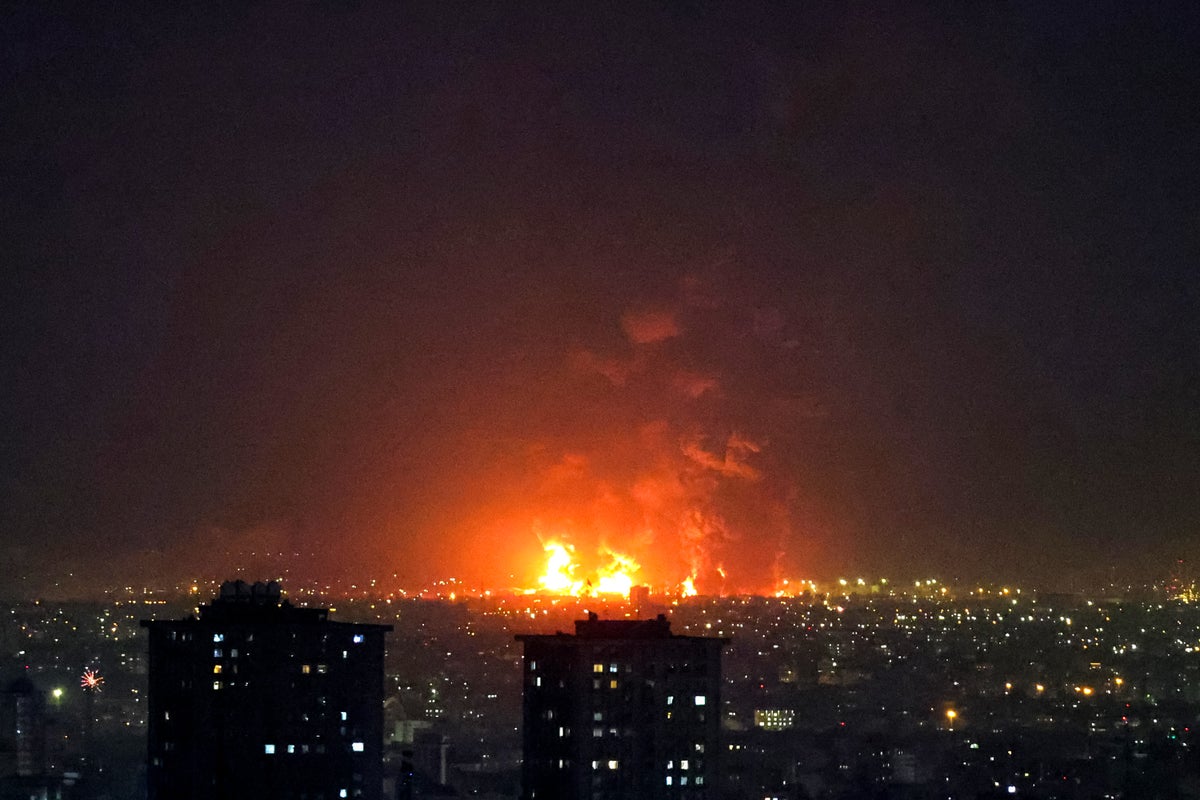
The consensus suggests that targeting Tehran’s oil depots is the "ultimate leverage" to cripple the regime. This is a fundamental misunderstanding of how modern energy markets and sanctioned economies actually function. If you think hitting a few refineries in Abadan or Kharg Island is going to bring the global economy to its knees or force a regime change, you haven't been paying attention to the last three decades of failed "maximum pressure" campaigns.
The Crude Illusion of Leverage
Most analysts treat oil as a singular, fragile pillar of the Iranian state. They argue that because oil exports fund the Revolutionary Guard, removing the oil removes the threat. This is a linear solution to a non-linear problem.
Iran has spent forty years building a "resistance economy." They are the world masters of shadow fleets, ship-to-ship transfers in the dark of night, and back-channel bartering. When you target physical infrastructure, you aren't "cutting off" the money; you are simply increasing the risk premium, which—ironically—often drives up the price of the remaining barrels they manage to sneak out.
Furthermore, the "knockout blow" theory ignores the geopolitical reality of the "Teal" market—the intersection of sanctioned Chinese demand and Iranian supply. China isn't going to stop buying just because a depot is smoldering; they will simply demand a steeper discount, and Iran will pay it to keep the lights on.
Lebanon and the Fallacy of "Buffer Zones"
In Lebanon, the narrative is equally stale. The "renewed assault" is framed as a mission to create a permanent buffer zone to protect northern residents. I’ve watched military planners chase this ghost for twenty years. A physical buffer zone in the age of precision-guided munitions and long-range drones is a nineteenth-century solution to a twenty-first-century nightmare.
A "buffer" suggests that if you push the enemy back twenty kilometers, you are safe. That logic died when rocket ranges exceeded 100 kilometers. You aren't buying safety; you are buying a more expensive, more volatile front line that requires constant, resource-draining occupation.
- The Asymmetry Gap: You spend $2 million on an interceptor to stop a $20,000 drone. The math doesn't work.
- The Vacuum Effect: When you degrade a centralized command structure in a decentralized militia, you don't get peace. You get ten smaller, more radicalized cells that don't answer to anyone.
- The Urban Trap: Entering southern Lebanon isn't a "strike." It’s a commitment to a grinding, multi-year counter-insurgency that history proves is unwinnable by conventional means.
The Reality of the Strait of Hormuz
People ask: "Will Iran close the Strait of Hormuz?"
The answer is a brutal "No," but not for the reasons you think. They won't close it because they need it to breathe. However, the threat of closing it is worth more than the act itself. By targeting oil depots, the West and its allies are actually calling a bluff that Iran doesn't want to show.
If the depots go up in flames, the "escalation ladder" disappears. You’ve jumped to the top rung. Once the oil is gone, Iran has nothing left to lose. A cornered regime with a massive ballistic missile stockpile and no remaining economic skin in the game is far more dangerous than a sanctioned one trying to protect its last few billion dollars in revenue.
The Tech Debt of Modern Warfare
We are witnessing the "Sunk Cost Fallacy" on a national scale. Military-industrial complexes are optimized for big, expensive, kinetic solutions.
- Kinetic solutions: Bombs, tanks, boots on the ground.
- Non-kinetic realities: Cyber-warfare, economic subversion, psychological operations.
The current strategy is heavily weighted toward the kinetic because it looks good on a map. It feels like "doing something." But the true battlefield is the global supply chain and the digital infrastructure of the Persian Gulf. A single well-placed cyber-attack on the SWIFT system or a regional desalination plant does more damage than a thousand sorties over the Beqaa Valley. Yet, the headlines remain obsessed with the "assault" and the "depots."
Why the Market Doesn't Care (Yet)
You'll notice that every time a headline hits about a "new phase" of the war, oil prices spike for forty-eight hours and then retreat. Why? Because the "smart money" knows that the global oil market is currently oversupplied.
The US is producing more oil than at any point in history. Guyana is coming online. Brazil is pumping. The "fear premium" is being dampened by the sheer volume of non-OPEC supply. If you want to actually hurt Tehran, you don't bomb their depots. You flood the market with cheap, Western-produced energy until the price per barrel drops below their break-even point.
Economic Warfare 101: It is cheaper to drill a hole in Texas than it is to drop a laser-guided bomb on a tank in the Levant.
The Wrong Questions
Stop asking: "When will the war end?"
Start asking: "Who profits from the state of permanent friction?"
The current conflict isn't a bug; for many regional players, it's a feature. It justifies massive defense spending, keeps domestic populations distracted, and ensures that energy prices remain volatile enough for traders to skim off the top.
If you're waiting for a "victory" in the traditional sense—a treaty signed on a deck or a clear border established—you are waiting for a ghost. The "Next Phase" is just a rebranding of the "Previous Phase," designed to keep the machinery of conflict well-greased and the public looking at the wrong side of the ledger.
The real threat isn't a fire at a depot. It's the total collapse of the diplomatic middle ground, leaving only two options: total submission or total destruction. Neither leads to a stable market. Neither leads to a safer world.
Stop looking at the maps. Look at the balance sheets. The war isn't being won in the air; it's being lost in the ledger.
Go back to the basics: If your strategy relies on your enemy caring about their own infrastructure more than their ideological survival, you've already lost the war. You’re playing checkers against a guy who’s willing to burn the board just to watch you choke on the smoke.