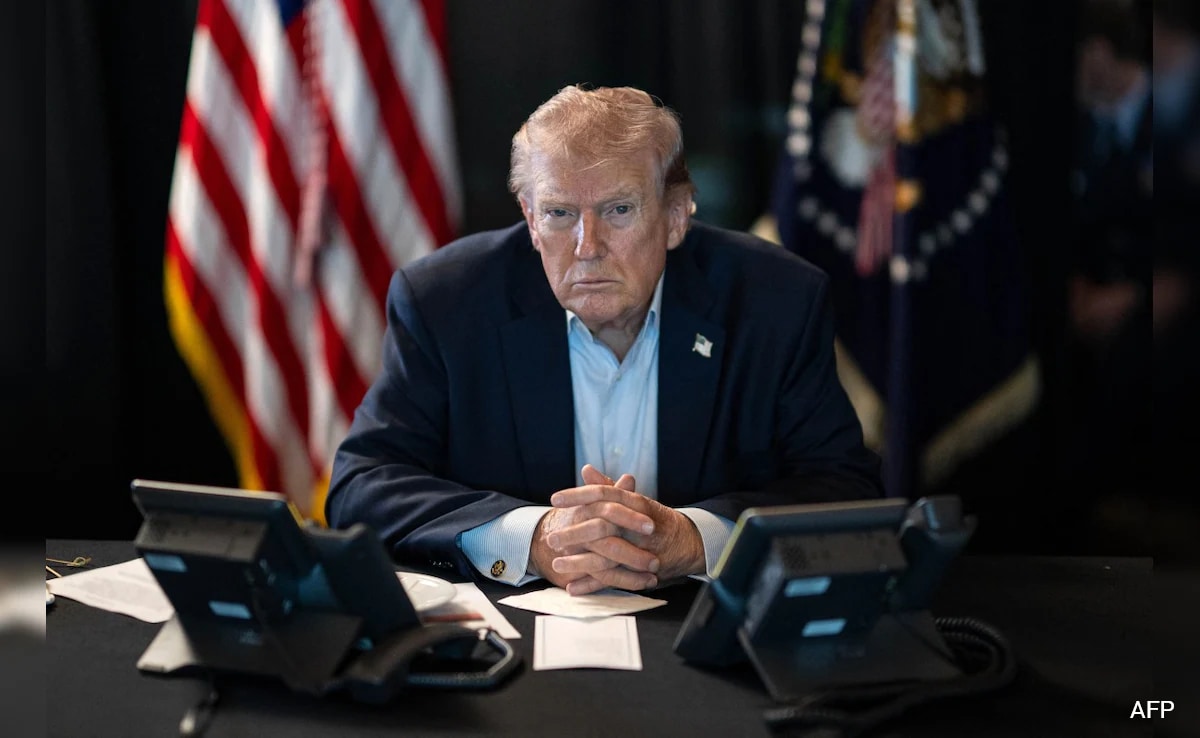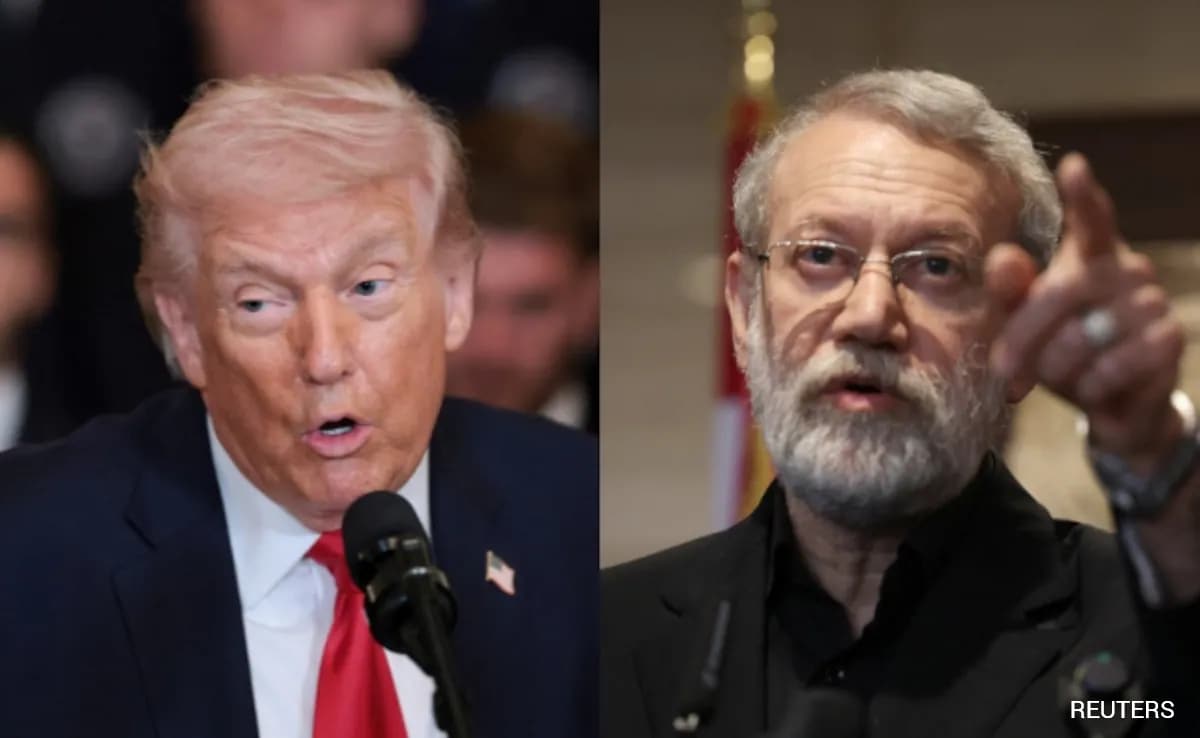
Ali Akbar Velayati sits in a room that smells of old paper and history. As a top advisor to Iran’s Supreme Leader, his words are not merely suggestions; they are the verbal architecture of a state’s intent. When he spoke recently, the air in the diplomatic corridors of Tehran and Washington didn’t just chill—it solidified. He wasn't talking about trade or enrichment levels. He was talking about a debt. Specifically, a debt he believes is owed for the death of Qasem Soleimani, the general who was once the shadow commander of Iran’s regional ambitions.
The message was blunt. Iran will not leave Donald Trump alone.
To understand why this matters, you have to look past the cable news chyrons and into the way power is perceived in the East versus the West. In Washington, policy is often a matter of four-year cycles, election maps, and quarterly reports. In Tehran, time is a river that moves much more slowly. Grudges are not baggage; they are assets. They are preserved.
The Shadow of the Reaper
Imagine a high-stakes chess match where one player believes the game ended years ago, while the other is still staring at the board, waiting for a piece to move. This is the current state of the relationship between the former President and the Islamic Republic. The 2020 drone strike that killed Soleimani near the Baghdad airport wasn't just a military operation. It was a rupture in the unspoken rules of engagement.
For the Iranian establishment, this wasn't just "foreign policy." It was personal. Velayati’s recent warnings are a reminder that for certain factions within the Iranian government, the pursuit of "justice"—as they define it—is a lifelong commitment. They are playing a game of infinite duration.
Trump, for his part, has never been one to retreat from a rhetorical fight. His response was characteristically defiant, a blend of bravado and a reminder of the asymmetric power he still wields, even from a Florida golf course or a campaign trail. To the former President, the Soleimani strike was a necessary act of deterrence. He sees it as a "game-changer," though that's a term he would never use. To him, it was a "big, beautiful, and necessary" blow to an adversary.
But the reality of the situation is much more complex than a series of tweets or a formal press release.
A Duel of Different Realities
Consider what happens next: The world watches. The intelligence agencies of two different nations are locked in a silent dance. One is looking for an opening, the other for a threat.
The Iranian strategy has shifted. It is no longer just about the battlefield or the nuclear centrifuge. It’s about the digital and the personal. They are targeting the individual, not just the office. They are looking at the man behind the brand.
This is a new kind of warfare. It’s a war of attrition where the goal isn't just a military victory, but a psychological one. They want the target to look over his shoulder. They want the Secret Service to stay awake a little longer at night. They want the threat to be a constant, low-humming static in the background of a political campaign.
Wait, what does this mean for the average person? It means that the world is more interconnected and more dangerous than we often admit. A decision made in 2020 has a half-life that extends into 2026 and beyond. It’s a reminder that in the Middle East, the past is never dead. It’s not even past.
The Invisible Chessboard
There is a deep, uncomfortable truth at the heart of this confrontation. Both sides are trapped.
Iran is trapped by its own rhetoric. Having promised "severe revenge," the leadership in Tehran cannot simply walk away without looking weak to its own hardline supporters. They are a regime built on the idea of resistance. To stop pursuing the man who ordered the strike is to admit that the resistance has its limits.
Trump is trapped by his own legacy. Having taken the most aggressive stance against Iran of any modern American president, he cannot back down now. To do so would be to admit that his strategy of "maximum pressure" was not a complete success.
This isn't just a clash of policies. It's a clash of mythologies.
The story Iran tells itself is one of the underdog, the martyr, the long-suffering victim of imperialist aggression. The story Trump tells is one of the strongman, the deal-maker, the leader who finally did what no one else had the courage to do. These two stories cannot coexist in the same space.
The Tools of a Silent War
But how do you actually "not leave someone alone" when you are an ocean away?
The answer lies in the gray zones of modern conflict. It’s not about tanks or missiles anymore. It’s about the untraceable. It’s about cyberattacks that target infrastructure. It’s about the spread of disinformation that can destabilize an election or a public reputation. It’s about the potential for a lone actor, inspired by a state-sponsored narrative, to take a desperate action.
The Iranian government has spent years developing its "soft power" and its digital capabilities. They have learned that you don't need a massive navy to make an enemy sweat. You just need a few dedicated hackers and a long-term plan.
Velayati’s words were a signal to these digital warriors. They were a green light to continue the search for an opening. The goal is to make the cost of the Soleimani strike so high that no future leader would ever dream of doing the same thing again. They are trying to build a deterrent of their own, one based on the promise of eternal pursuit.
A History That Refuses to Fade
The relationship between the United States and Iran is a long, tangled story of missed opportunities and profound misunderstandings. It goes back to the 1953 coup, the 1979 revolution, and the 444 days of the hostage crisis. Each event is a layer of scar tissue over an old wound.
When Velayati speaks, he isn't just speaking for himself. He is speaking for a generation of Iranian leaders who have defined their lives in opposition to the West. For them, this isn't a political disagreement. It's a holy crusade. It’s a matter of honor.
In the West, we often struggle to understand the concept of "honor" in this context. To us, it sounds archaic, like something out of a medieval poem. But in the corridors of power in Tehran, it is the most valuable currency there is. Without it, the regime has no legitimacy.
So, when they say they won't leave Trump alone, they mean it. They will pursue him through the courts, through the digital world, and through the persistent threat of physical action. They will do it today, they will do it tomorrow, and they will do it a decade from now.
The Human Cost of High Policy
Think about the people who are caught in the middle. The diplomats who are trying to prevent a wider war. The intelligence officers who have to sift through thousands of threats to find the one that is real. The families of those who have already died in this decades-long shadow war.
For them, these aren't just headlines. They are the reality of a world that has forgotten how to talk to itself.
There is a profound sadness in the realization that the world's most powerful nations are still governed by the same ancient impulses of revenge and pride that have fueled conflicts since the dawn of time. Despite all our technology, all our progress, we are still just two men in a room, staring at each other with narrowed eyes, waiting for the other to blink.
The air in Tehran remains heavy with the weight of the past. In Mar-a-Lago, the sun continues to shine on a man who believes he has already won. But the ghost of the general still walks between them, a silent reminder that some debts are never truly paid.
The river of time continues to flow, and the memory of the Middle East is very, very long.
Would you like me to analyze the specific geopolitical implications of this ongoing feud for the next election cycle?