The world's most critical maritime choke point is a chaotic mess, and Washington's playbook to fix it is completely broken.
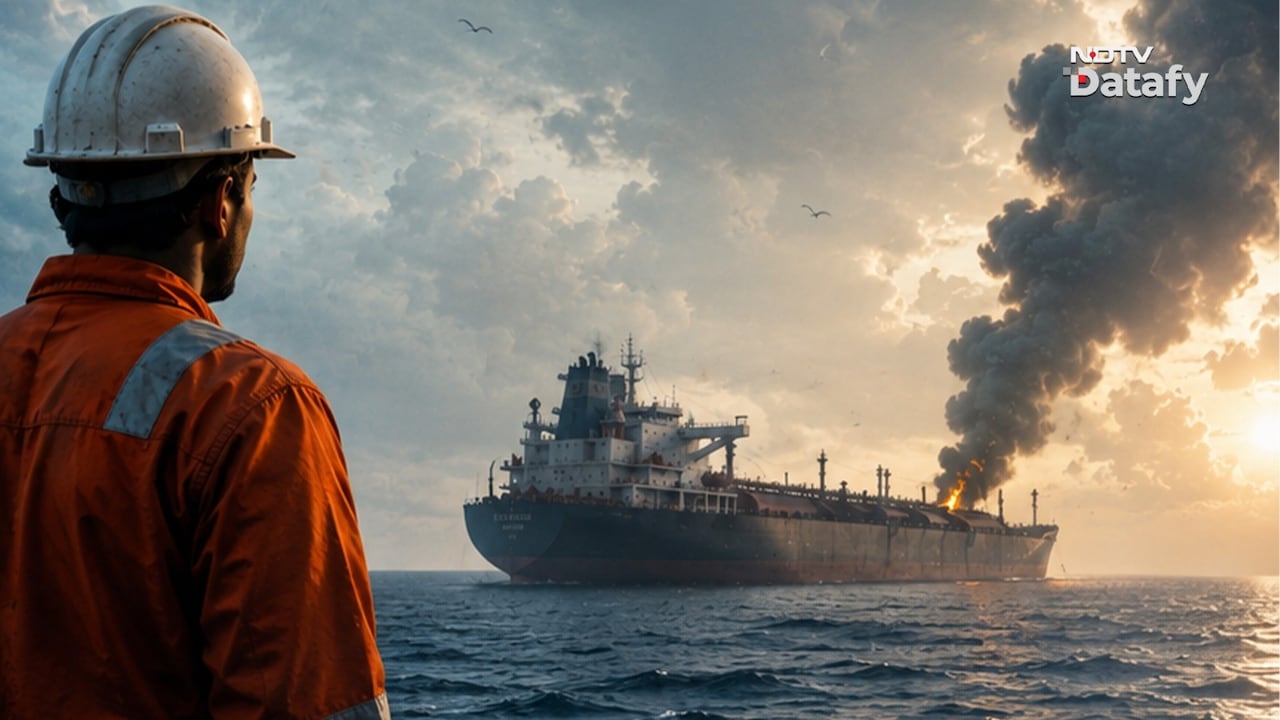
Every few months, the narrative repeats like clockwork. Iran’s Revolutionary Guard targets a commercial tanker. The Pentagon issues a sternly worded condemnation, dispatches a destroyer or a swarm of fighter jets to the Persian Gulf, and attempts to rally a coalition of the willing to patrol the waters. Then, silence. Until the next seizure. For an alternative perspective, read: this related article.
This cycle of knee-jerk deterrence is not working. The United States is no closer to securing the Strait of Hormuz today than it was a decade ago. In fact, the situation has grown more volatile, more complicated, and infinitely more dangerous.
The real problem is not a lack of American military hardware. It is a fundamental misunderstanding of the conflict. Washington is trying to solve a highly complex, asymmetric political puzzle with heavy-handed naval posturing. Similar insight on this trend has been provided by TIME.
The Asymmetric Math of a Twenty Mile Chokepoint
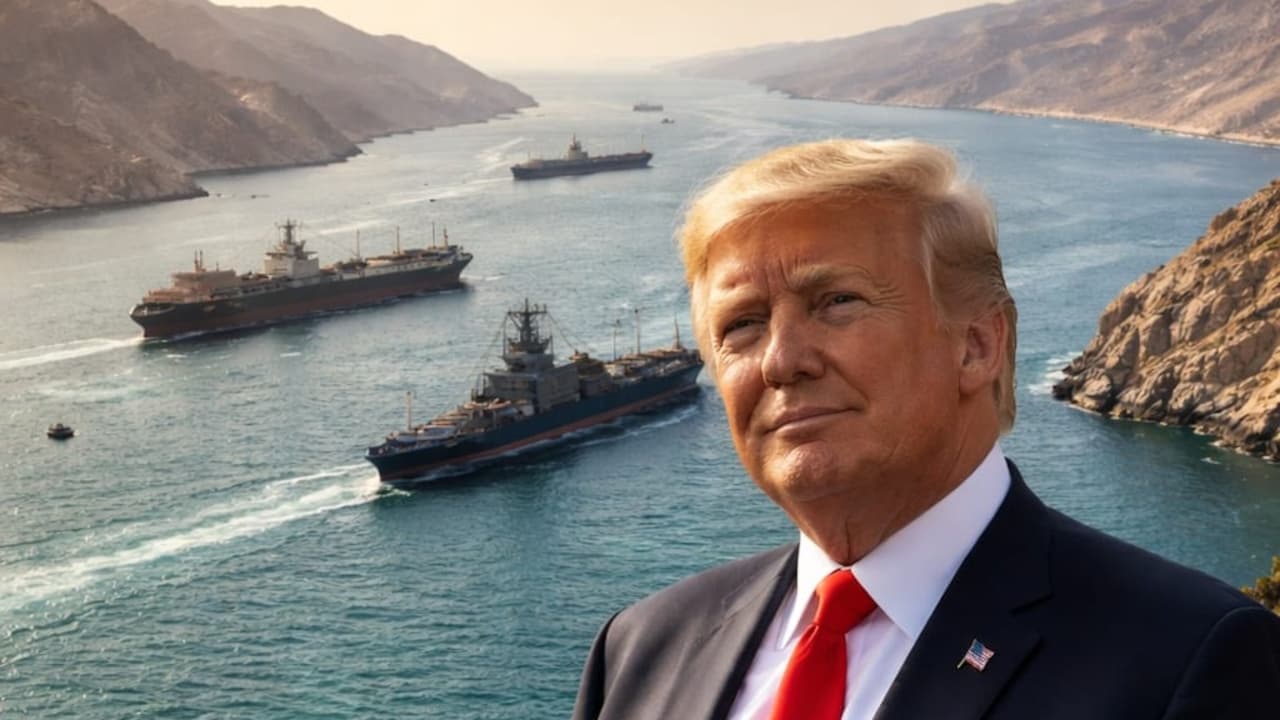
To understand why traditional military deterrence fails here, you have to look at the geography. The Strait of Hormuz is tiny. At its narrowest point, the shipping lanes are only two miles wide in either direction, separated by a two-mile buffer zone.
These lanes run directly through Omani and Iranian territorial waters.
[ Persian Gulf ]  -->  [ Strait of Hormuz (21 miles wide) ]  -->  [ Gulf of Oman ]
                             | (Shipping lanes run through
                             |  Iranian & Omani waters)
Through this tiny bottleneck flows roughly 20 to 21 million barrels of oil every single day. That is about a fifth of the world's petroleum consumption. It is the lifeblood of global industry, particularly for Asian markets like China, India, Japan, and South Korea.
The US Navy operates on the principle of open seas and freedom of navigation. But the Islamic Revolutionary Guard Corps Navy (IRGCN) does not play by those rules. They do not need a massive blue-water navy to project power. They have home-court advantage.
Iran's strategy relies on gray-zone tactics. They use fast-attack craft, low-cost loitering munitions, sea mines, and shore-based anti-ship missiles. They do not want a fleet-on-fleet battle with a US carrier strike group because they know they would lose. Instead, they rely on harassment.
They creep up on tankers, drop commandos from helicopters, and steer the vessels into Iranian waters under the guise of "environmental infractions" or maritime disputes.
How do you deter a helicopter raid that takes four minutes from takeoff to capture? You cannot keep a guided-missile destroyer parked next to every single commercial vessel. The math simply does not work.
The Deterrence Trap That Washington Built
For years, US policy has relied on the assumption that showing force forces Iran to back down. This is a massive miscalculation.
When the US sends more assets to the region, it often plays right into the hands of Iranian hardliners. It justifies their narrative of foreign encroachment. It gives them a high-profile target to shadow and harass, boosting their domestic propaganda.
The US military presence has become a permanent fixture that fails to actually deter. Consider the events of recent years. Despite the presence of the US Fifth Fleet, headquartered just across the water in Bahrain, Iran has repeatedly seized or harassed dozens of foreign-flagged tankers.
They grabbed the Advantage Sweet, a Chinese-managed tanker carrying Kuwaiti crude oil to Texas. They took the Niovi. They seized the St Nikolas.
Each time, the US Navy watched, tracked, and documented the events. Occasionally, they intervened to disrupt an ongoing attack, but they could not prevent the next one.
The hard truth is that the US has flashed its brake lights too many times. Washington does not want another shooting war in the Middle East. Iran knows this. Tehran understands that the US threshold for launching retaliatory strikes inside Iranian territory is incredibly high. Because of this, Iran operates with relative impunity, knowing that the cost of their provocations will likely be limited to economic sanctions they have already learned to bypass.
Allies Are Quieter Than Ever
Washington loves coalitions. Whenever tensions spike, the US tries to assemble an international maritime security alliance to share the burden.
It is a tough sell these days.
Most European and Asian allies are highly skeptical of joining US-led naval missions in the Gulf. They worry that getting too close to Washington's aggressive stance will turn their own merchant fleets into prime targets for Iranian retaliation.
Look at the International Maritime Security Construct (IMSC) or Operation Sentinel. While some key allies joined, many others participated only on paper or kept their distances.
Even regional heavyweights are changing their tunes. Saudi Arabia and the United Arab Emirates used to be the loudest voices calling for US military action against Iranian provocations. Not anymore.
Riyadh and Abu Dhabi have realized that when conflict erupts, their infrastructure gets hit first. The 2019 drone and missile attacks on Saudi Aramco's Abqaiq and Khurais facilities proved that US air defense systems are not a magic shield.
Since then, the Gulf states have shifted toward pragmatic diplomacy. The China-brokered detente between Saudi Arabia and Iran in 2023 reshaped regional politics. The UAE has actively worked to de-escalate tensions with Tehran to protect its status as a global business hub.
If the countries actually living on the shores of the Persian Gulf are choosing diplomacy and hedging over US military protection, Washington’s insistence on a purely military solution looks incredibly out of touch.
The Ghost Fleet and Sanctions Hypocrisy
There is a glaring contradiction in the way the West views the security of the Strait of Hormuz. We talk about the threat to global trade, but a massive chunk of the traffic flowing through the strait is part of the "dark fleet"—uninsured, shadow-market tankers carrying sanctioned oil from Russia, Venezuela, and Iran itself.
These ghost ships operate under flags of convenience, turn off their transponders, and falsify their locations to evade Western sanctions.
[ Sanctioned Oil Producer ]
         |
         v (Ghost Tanker / Dark Fleet)
[ Flags of Convenience & Falsified AIS Transponders ]
         |
         v (Passes through Strait of Hormuz)
[ Buyers willing to bypass Western Sanctions ]
When Iran seizes a vessel, it is often entangled in these shadow transactions. Sometimes it is a retributive action for the US seizing Iranian oil cargoes elsewhere in the world, such as the US confiscation of the Suez Rajan cargo.
This creates a chaotic legal and operational environment. The US Navy is put in the absurd position of patrolling waters to protect "international shipping," when many of those ships are actively undermining Western economic policy.
It is a circular game of retaliation. The US seizes an Iranian cargo to enforce sanctions; Iran retaliates by grabbing a commercial tanker in the Strait; the US sends more warships to protect the tankers. It is a self-inflicted cycle of escalation that keeps the region perpetually on the brink of conflict.
Realist Steps for Shipping and Energy Sectors
Since Washington is not going to solve this issue anytime soon, businesses and analysts must adapt to the permanent instability of the Strait of Hormuz. Relying on the hope of a peaceful resolution is a losing strategy.
If you are managing supply chains, trading energy, or operating vessels in the region, stop waiting for a US naval victory. Instead, execute these practical risk-mitigation steps.
Diversify Transit Routes Immediately
Do not rely solely on the Strait of Hormuz if you can avoid it. Saudi Arabia has the East-West Pipeline, which can transport crude from its eastern fields directly to the Red Sea port of Yanbu, bypassing the strait entirely. The UAE operates the Habshan–Fujairah pipeline, which carries oil directly to the Gulf of Oman. While these pipelines have capacity limits and their own geopolitical risks, utilizing them reduces your exposure to the Hormuz bottleneck.
Factor in the "Hormuz Premium" as a Permanent Cost
War risk insurance premiums for vessels transiting the Persian Gulf are no longer temporary spikes; they are a structural cost of doing business. Budget for these elevated insurance rates and potential cargo delays. If your business model cannot survive a sudden 400% spike in shipping insurance, you need to restructure your supply chain.
Track the Shadow Fleet and AIS Manipulation
If you are chartering vessels, perform deep due diligence on ownership structures. Avoid vessels that have a history of disabling their Automatic Identification System (AIS) transponders or operating under frequently changed flags of convenience. These ships are prime targets for seizure, and getting your cargo caught on one of them is a legal and operational nightmare.
Monitor Local Diplomacy, Not Pentagon Pressers
If you want to know if the Strait is about to boil over, ignore the rhetoric coming out of Washington. Watch the diplomatic channels between Muscat, Riyadh, and Tehran. Oman has historically been the primary mediator in the region. If Omani diplomats are suddenly flying between Tehran and Arab capitals, it is a sign that a backchannel deal is being worked out to de-escalate tensions. Conversely, if those local diplomatic lines go cold, that is your cue to prepare for operational disruptions.