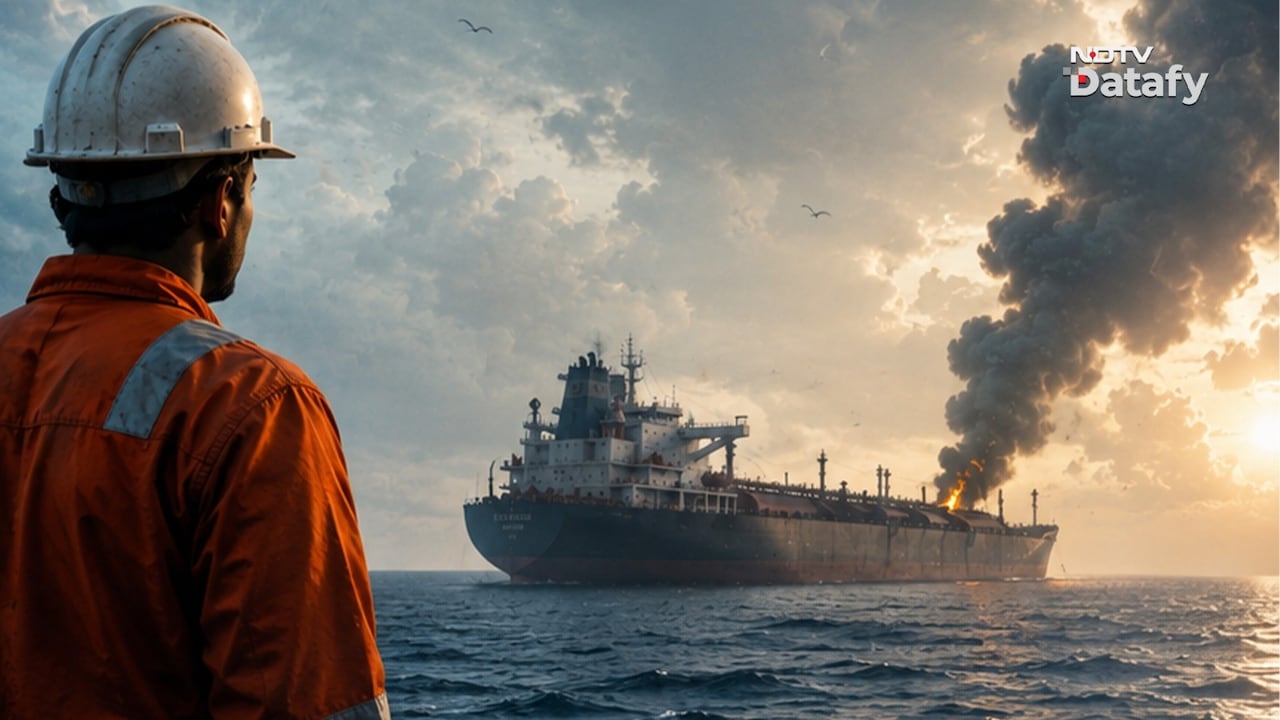
Global maritime trade is suffering a severe structural bottleneck, and its human toll is highly concentrated. Between March 1 and July 14, 2026, the escalation of the Strait of Hormuz crisis resulted in the deaths of 16 seafarers on commercial vessels. Of these casualties, seven were Indian nationals—accounting for nearly 44% of all merchant mariner fatalities in the waterway.
This high casualty rate among a single nationality is not a statistical anomaly. Instead, it is the direct consequence of two intersecting systems: the global labor supply chain for commercial shipping and the tactical realities of modern asymmetric naval warfare. When geopolitical friction points like the Strait of Hormuz ignite, the structural dependency of global shipping on South Asian labor transforms merchant crews into frontline casualties.
The Labor Supply Asymmetry in Global Shipping
To understand why Indian seafarers represent the majority of casualties, one must examine the labor economics of the global merchant fleet. The international shipping industry operates on a highly optimized, low-cost labor sourcing model.
According to data from the Baltic and International Maritime Council (BIMCO) and the International Chamber of Shipping (ICS), global merchant shipping relies heavily on a few key labor-exporting nations.
- The Crewing Triad: India, the Philippines, and China consistently supply the largest share of the world's seafarers. India alone provides over 10% of the global seafaring workforce, with a particularly high concentration of certified officers and skilled deck crew.
- Flag of Convenience (FOC) Decoupling: Most commercial vessels transiting the Persian Gulf fly Flags of Convenience (such as Panama, Liberia, or the Marshall Islands). This decouples the nationality of the ship's flag from the nationality of its crew.
- The Vulnerability Multiplier: When a vessel owned by a European entity, flagged in Liberia, and carrying cargo destined for East Asia enters a conflict zone, the crew on deck is disproportionately Indian or Filipino. If the vessel is targeted, the human cost is borne by nations entirely external to the primary geopolitical dispute.
This labor distribution creates a structural vulnerability. When regional tensions escalate—such as the recent naval standoff involving US-led forces and Iranian-backed operations in the Strait of Hormuz—the merchant sailors navigating these waters have no diplomatic or military shield matching their national origin.
The Tactical Mechanics of the Hormuz Bottleneck
The geography of the Strait of Hormuz creates a tactical bottleneck that exposes merchant crews to extreme risk. At its narrowest point, the shipping lanes in the strait are only two miles wide in each direction, separated by a two-mile buffer zone. This forces massive container ships and crude tankers into highly predictable transit paths.
[Persian Gulf] <---> [2-Mile Inbound Lane] [Buffer] [2-Mile Outbound Lane] <---> [Gulf of Oman]
During the recent escalation, the weapon systems deployed against commercial shipping have shifted the nature of maritime risk:
Precision vs. Collateral Damage
Modern anti-ship cruise missiles (ASCMs), one-way attack drones (loitering munitions), and fast-attack craft are designed to disable or seize vessels. However, these systems often strike superstructure elements—such as the bridge, accommodation blocks, or engine rooms—where crew members are concentrated during transit. The strike on the vessels MT Al Bahiyah and MT Mombasa illustrates this dynamic. The weapons did not sink the hulls but targeted the crew-dense operational quarters, resulting in immediate casualties.
Intelligence Failures and Proximate Targeting
Asymmetric actors operating in the strait frequently rely on outdated open-source intelligence, data roaming exploits, or ad-tech tracking to identify targets. When targeting algorithms or spotters misidentify a vessel's current ownership or destination, the strike is executed regardless. The crew on board has zero agency over the vessel's digital footprint but pays the price for the structural mismatch in targeting data.
The Diplomatic Friction: New Delhi’s Policy Dilemma
The high proportion of Indian casualties has forced a significant pivot in India's maritime diplomacy. Historically, New Delhi has maintained a delicate balancing act in the Middle East, preserving strong energy and security ties with Gulf Cooperation Council (GCC) states while maintaining a strategic partnership with Iran.
The death of Indian seafarers in the Strait of Hormuz has severely strained this equilibrium. The Indian Ministry of External Affairs took the highly formal step of summoning Iran’s deputy ambassador to lodge a strong protest.
This diplomatic friction highlights a deep operational limitation for India:
- Inability to Escort All Tonnage: While the Indian Navy operates escort missions under "Operation Sankalp" in the Gulf of Oman and the Persian Gulf, it cannot protect every vessel carrying Indian crew. Most of these sailors are employed on foreign-flagged ships that fall outside the Indian Navy's legal mandate for direct defense.
- The Repatriation Challenge: Compelling shipowners to reroute around the Cape of Good Hope is economically prohibitive for global trade, but keeping crews on active transits through Hormuz exposes them to unmanageable risk.
- The Threat to Remittance Flows: Seafaring is a major source of foreign exchange and highly paid employment for Indian maritime families. Prolonged conflict that deters Indian mariners from serving on high-risk routes threatens this critical economic pipeline.
Structural Reforms Required to Protect Maritime Labor
Relying on diplomatic protests after a strike occurs is an ineffective strategy for protecting maritime labor. To mitigate the disproportionate casualties suffered by Indian and other South Asian seafarers, global shipping federations and national governments must implement structural reforms in crew safety and risk allocation.
First, war risk transit pay must be accompanied by mandatory "right of refusal" clauses. Under current international maritime labor standards, seafarers have the right to refuse transit through designated high-risk areas without loss of employment. However, systemic pressure, fear of blacklisting by crewing agencies, and financial incentives often compromise this right. Maritime unions must establish anonymous, rapid-response arbitration mechanisms to allow seafarers to opt out of transiting the Strait of Hormuz during active blockades.
Second, the International Maritime Organization (IMO) must redefine shipowner liability for foreign-flagged crews. When a shipowner chooses to transit a high-risk zone to avoid the financial penalty of rerouting, the financial risk is transferred to insurers, while the physical risk is transferred entirely to the crew.
If shipowners were legally mandated to carry exponentially higher, non-waivable life insurance and disability payouts specifically tied to state-sponsored or asymmetric attacks, the economic cost of transit would align more closely with the actual physical risk. This would naturally incentivize cargo rerouting, reducing the density of vulnerable merchant mariners in contested waters.



