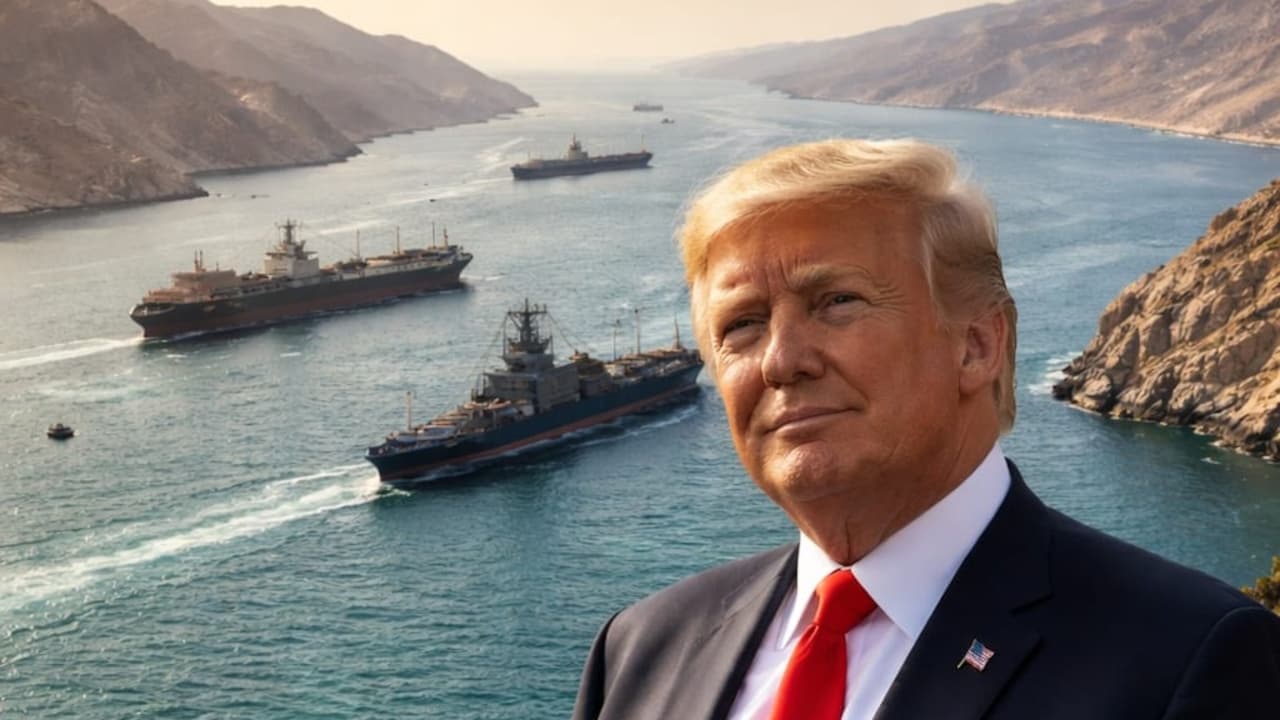
Donald Trump thought he had a billion-dollar idea. In typical fashion, he went on social media to declare that the United States was officially the "Guardian of the Hormuz Strait". But protection isn't free. Trump's proposal was bold: a 20% United States Reimbursement Fee slapped on all commercial cargo traversing the world's most critical energy chokepoint.
It took less than 24 hours for that plan to completely fall apart. Recently making waves in this space: Why the UKs Social Media Curfew Will Spark a Dark Web Boom for Teens.
By the next day, Trump walked back the entire concept, replacing the maritime tax with vague promises of "massive" trade and investment deals from Gulf allies. The rapid U-turn shows the immense pressure applied by Middle Eastern partners, the commercial shipping industry, and even Trump's own cabinet, who knew the proposal defied international law.
The Chaos Behind the 24-Hour U-Turn
The Strait of Hormuz is a narrow waterway between Oman and Iran. In normal times, about one-fifth of the world’s traded oil and natural gas flows through it. When hostilities flared and an interim ceasefire collapsed, maritime traffic slowed to a crawl. Additional insights regarding the matter are detailed by The New York Times.
Trump’s initial argument was simple: if the United States Navy is risking assets and personnel to secure the strait, the wealthy nations relying on it need to pay up.
"We guarded it for nothing, and now we're going to guard it," Trump said before the reversal. "We’re going to get paid for guarding it, a lot of money."
The reaction from Gulf leaders was immediate and fierce. Heads of state from Saudi Arabia, the United Arab Emirates, Kuwait, Qatar, and Bahrain reached out directly. They didn't want a toll. They argued that taxing the very ships carrying their sovereign oil exports would cripple the global energy market and drive shipping companies away.
Instead of paying a direct toll, these leaders offered an alternative: they would funnel billions of dollars into direct investments inside the United States, funding new factories, plants, and equipment. For Trump, who prioritizes domestic manufacturing and jobs, this was an easy off-ramp to save face. He claimed the new arrangement was "actually much better".
The Legal and Industry Backlash
Gulf diplomacy wasn't the only force pushing back. The global shipping industry reacted with outrage. Major container lines and international shipowner associations like Bimco publicly condemned the toll as fundamentally wrong.
The legal reality is that the Strait of Hormuz is an international waterway. Under established maritime law and the Law of the Sea, transit through such channels must remain free from fees or tolls imposed by any single nation.
Trump's proposal also directly contradicted his own foreign policy team. Just weeks prior, Secretary of State Marco Rubio had explicitly warned that no country is legally allowed to levy fees in the strait.
- Marco Rubio's Stance: "It's an international waterway. No country is allowed to charge tolls or fees... That's existing international law."
- JD Vance's View: The Vice President had similarly argued that international waters must remain free from unilateral taxation.
- The Industry Consensus: International transit rights cannot be bought, sold, or taxed without dismantling the global trading system.
With his own cabinet, close allies, and global shipping corporations aligned against the fee, Trump had no viable path to enforce it.
What Happens to the Strait Now?
Though the toll is dead, the underlying security crisis in the Gulf remains unresolved. The temporary ceasefire meant to reopen the waterway has crumbled.
Trump has committed to a full naval blockade targeting only Iranian-linked commercial vessels. Meanwhile, Iran continues to harass and target tankers navigating the narrow passage.
If you are a logistics manager or supply chain executive, prepare for ongoing volatility. Shipping through the region will remain expensive due to skyrocketing war risk insurance premiums, even without a United States government toll. Expect transit delays and potential rerouting around Africa if security in the Gulf continues to degrade.
For now, the focus shifts to whether those promised "massive" Gulf investments actually materialize in the United States, or if they were simply a diplomatic tool used to make a highly disruptive proposal disappear.
How the US-Iran Conflict Impacts Shipping
This video features Secretary of State Marco Rubio clarifying the legal status of international waterways and explaining why the United States rejects any tolls or fees in the Strait of Hormuz.