The foreign policy establishment is currently clutching its pearls over a telegram from Tehran. The consensus is settled, boring, and fundamentally wrong. Pundits are looking at Mojtaba Khamenei’s recent signals and seeing a brick wall. They claim his emergence as a potential successor to the Supreme Leadership signifies a hardening of the arteries—a "no exit" sign for the incoming Trump administration.
They are misreading the room. Discover more on a connected topic: this related article.
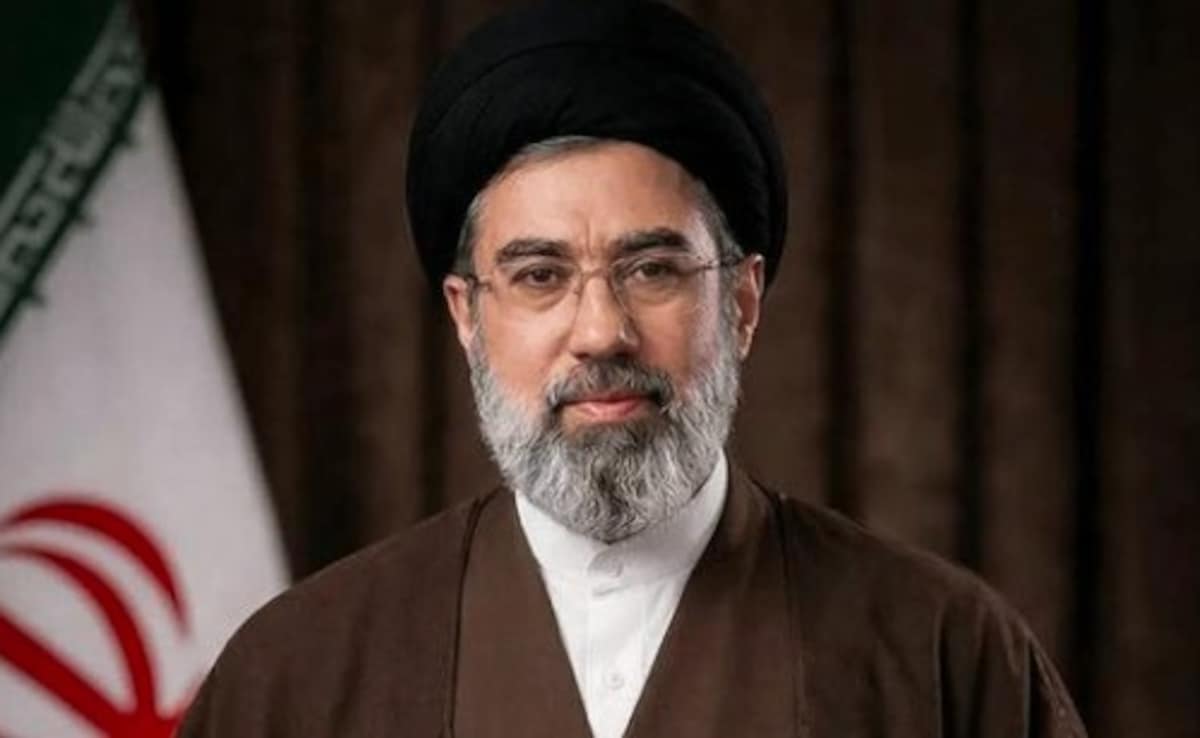
Mojtaba Khamenei isn't the sentinel of a permanent Cold War. He is the pragmatic insurance policy for a regime that knows its current business model is bankrupt. The "defiance" being broadcast right now is theater for a domestic audience that needs to see strength before the inevitable pivot. If you want to understand the Middle East, stop listening to the analysts who think ideological purity outweighs survival.
Survival is the only metric that matters in the Islamic Republic. More journalism by TIME explores related views on the subject.
The Succession Trap
The lazy take is that Mojtaba is a carbon copy of his father, Ali Khamenei. The "insider" logic suggests that a hereditary transition—or something close to it—requires a doubling down on the revolutionary ethos to maintain legitimacy.
That’s a failure of imagination.
In reality, Mojtaba’s rise is the ultimate signal that Tehran is ready to talk. Why? Because only a figure with unimpeachable revolutionary "bloodline" credentials has the political capital to sell a massive compromise to the hardliners. Nixon went to China. Only a Khamenei can go to Mar-a-Lago—or at least send the emissaries to do it.
The Iranian economy is not just "struggling." It is a hollowed-out shell. Inflation is a permanent guest. The rial is a joke. The "Axis of Resistance" is currently getting dismantled in Lebanon and Gaza, proving that Tehran’s forward-defense strategy has high costs and diminishing returns.
Mojtaba isn't preparing for a forty-year war. He’s preparing for a forty-year reign. You don’t start a dynasty on a foundation of starvation and crumbling infrastructure. You start it by clearing the decks.
The Trump Paradox
The media loves the narrative of the "unpredictable" Trump vs. the "principled" Iranians. This is a fairy tale.
Trump is the most predictable negotiator on the planet. He wants a "big" deal, his name on the paper, and a withdrawal of American attention from a region he finds tedious. Tehran knows this. They watched the Abraham Accords. They saw the direct outreach to North Korea.
The Iranian leadership doesn't fear Trump's volatility; they crave his transactional nature.
Unlike the Biden-era diplomats who obsessed over the minutiae of centrifuge counts and sunset clauses, Trump deals in the currency of "winning." For the Iranians, a transactional president is a godsend. It means everything is on the table—sanctions relief, regional recognition, and perhaps even a grand bargain that treats Iran like a regional power instead of a pariah.
The "tough talk" coming out of Mojtaba’s camp isn't a rejection of terms. It's the opening bid.
Dismantling the People Also Ask Nonsense
If you search for Iranian succession, you get a list of sanitized, useless questions. Let’s answer the ones that actually matter with the bluntness they deserve.
Does Mojtaba Khamenei have the support of the IRGC?
The IRGC (Islamic Revolutionary Guard Corps) isn't a monolith of religious zealots. It's a massive conglomerate that owns construction firms, telecommunications, and black-market shipping lanes. They don't care about the theology of the succession. They care about the bottom line.
I’ve seen how these power dynamics play out in closed systems. The IRGC wants a leader who keeps the money flowing and the borders secure. If Mojtaba promises a path to sanctions lifting—which puts billions back into the pockets of the Guard’s engineering firms—they will back him yesterday. The "ideological rift" is a ghost story told to keep Western observers confused.
Will Iran increase its nuclear enrichment to spite Trump?
Only as a bluff. Increasing enrichment to 90% is a suicide pact, not a strategy. The Iranians are masters of the "salami slicing" technique—taking small steps toward a goal to see who flinches. But they aren't stupid. They know that a nuclear breakout under a Trump administration invites a kinetic response that the regime might not survive.
The enrichment cycles are a thermostat. They turn the heat up when they want to be heard and down when they want to eat. Right now, they are hungry.
The Secret Strength of a "Hardline" Successor
There is a historical precedent the pundits ignore. Totalitarian regimes often find their most radical reforms coming from the perceived hardliners.
Consider the "Deep State" of the Iranian bureaucracy. If a "moderate" like Zarif or Pezeshkian tries to hand over concessions, they are branded as traitors. The project dies in the cradle. But if Mojtaba—the son of the Supreme Leader, the man backed by the security apparatus—says that a new "Heroic Flexibility" (a term his father used in 2013) is required, the opposition vanishes.
The "First Message" from Mojtaba’s circle isn't a declaration of war. It is a boundary marker. He is telling Trump: "I am the only one who can actually deliver what you want."
The Failure of "Exit" Analysis
The competitor piece argues that Iran won't give Trump an "easy exit."
This assumes Trump wants an exit. Trump doesn't want to leave the Middle East; he wants to stop paying for it. There is a massive difference.
An "easy exit" for the US usually means leaving a vacuum. The Iranians don't want a vacuum; they want a sphere of influence. The real deal on the table—the one nobody is talking about—is a regional security architecture where Iran is brought inside the tent in exchange for neutering its proxies.
Is it risky? Absolutely. Does it betray the "maximum pressure" crowd? Yes. But it’s the only move that aligns with the reality of 2026.
The Price of Admission
Let’s be clear about the downsides. A Mojtaba-Trump deal would be a cold, cynical arrangement.
- It ignores human rights.
- It solidifies a dynastic shift in Tehran.
- It keeps the IRGC in power, albeit as a "legitimate" economic player.
But for a US administration focused on "America First," these aren't dealbreakers. They are externalities.
The establishment is terrified because this reality bypasses the "Rules-Based International Order." It’s raw, bilateral power politics. It’s the kind of deal-making that happens in a smoke-filled room, not a UN summit.
The Strategic Pivot
Stop looking for signs of "moderation." Moderation is a Western fantasy projected onto a Persian reality. Look for signs of consolidation.
Every move Mojtaba makes over the next six months will be about tightening his grip on the domestic levers of power. Once that grip is absolute, the pivot to Washington will be swift and shocking.
The regime is currently clearing out the "reformist" clutter. They are streamlining the command structure. They are making the state more efficient, more authoritarian, and more capable of making a pivot without collapsing.
They aren't preparing to fight Trump. They are preparing to out-negotiate him.
Your Move, Mar-a-Lago
The "No Easy Exit" narrative is a comfort blanket for people who want to believe the world is stuck in 1979. It’s a way to avoid the uncomfortable truth that the Islamic Republic is evolving into something more dangerous and more durable: a pragmatic, nationalist autocracy.
If the Trump administration falls for the "unreachable hardliner" trope, they miss the biggest diplomatic opening in forty years.
If they see Mojtaba for what he is—a CEO of a failing firm looking for a merger—the map of the Middle East changes overnight.
Don’t watch the speeches. Watch the shadow banking channels. Watch the quiet meetings in Muscat and Doha. The real message isn't "We won't give you an exit."
The real message is: "Make us an offer we can’t refuse, and we’ll give you the win you’ve been waiting for."
Stop reading the tea leaves of "revolutionary defiance" and start reading the balance sheets of the Bonyads. The revolution is over. The era of the deal has begun.