Legacy media outlets love treating election days like the Super Bowl. They build massive graphics, bring in talking heads to parse fractions of a percentage point, and write breathless primers telling you "what to know about today's primary."
They are selling you a narrative built on a fundamentally flawed premise. For an alternative view, check out: this related article.
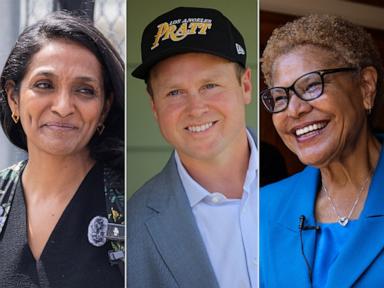
The traditional political press wants you to believe that the June 2 mayoral primary is a high-stakes showdown that will immediately decide the trajectory of Los Angeles. They focus on the horse race between incumbent Karen Bass, progressive challenger Nithya Raman, and conservative media personality Spencer Pratt. They track the tiny fluctuations in poll numbers and argue over who made the best final pitch.
It is a performance. The reality of municipal power in Southern California tells a completely different story. If you are watching tonight’s returns hoping to see the definitive next chapter of LA's future, you are looking at the wrong map. Similar coverage on the subject has been provided by The Guardian.
The Mirage of Executive Power in Los Angeles
The foundational lie of big-city mayoral coverage is that the mayor is a CEO who can single-handedly reshape the city. Journalists write articles asking how the candidates will solve homelessness, fix infrastructure, or balance a $14 billion budget.
But Los Angeles operates under what political scientists call a weak-mayor system.
I have spent years analyzing municipal governance structures and watching well-meaning executives smash their heads against the concrete wall of institutional reality. The Los Angeles City Council holds the real power. It is a 15-member legislative body where individual council members function like feudal lords over their respective districts. They control land use, zoning, and discretionary spending in ways the mayor can only dream of influencing.
When a mayor wants to initiate a major policy shift—whether it is housing density or law enforcement spending—they cannot just sign an executive order and make it happen. They have to horse-trade with a hyper-factionalized city council. Incumbent Karen Bass has spent her first term dealing with this exact friction. Progressive challengers like Raman promise sweeping systemic overhauls, while populist outsiders like Pratt promise to slash the bureaucracy. Both sides are selling a fiction. Neither can deliver without a compliant council, which they will not have.
The Farce of Election Night Coverage
The media still structures its coverage around the archaic idea of "Election Night." We are told to wait for the clock to strike 8:00 PM to see the numbers roll in.
It is an entertainment product, not a reflection of reality.
Thanks to California’s comprehensive vote-by-mail system, election day is no longer a day—it is a month-long process. Data from the Los Angeles County Registrar-Recorder reveals that roughly 95% of early ballots are cast by mail. Ballots postmarked by today can arrive up to seven days late and still be legally counted.
Furthermore, election workers must manually verify signatures on every single mail-in envelope. When a signature does not match the digitized file from a voter's driver's license from ten years ago, the county must initiate a cure process, contacting the voter to fix the discrepancy. This creates what election analysts call the "pig in the python" effect. A massive, dense clog of votes enters the system on election day and takes weeks to digest.
We will not know the actual composition of the vote tonight. We might not even know it next week. Reporting on early returns as if they indicate a definitive trend is like calling a football game based on the coin toss.
The Runoff System Makes the Primary an Expensive Warmup
Let’s look at the actual mechanics of the open primary. Under Los Angeles election rules, a candidate needs an outright majority—50% plus one vote—to win the mayoral seat securely in June.
With 14 candidates crowding the ballot and splitting the electorate, achieving an outright majority is statistically improbable. UCLA Luskin School of Public Affairs polling leading up to the election showed that a staggering 40% of likely primary voters were completely undecided. No single candidate came anywhere near the 50% threshold.
What does that mean? It means today is not an election to choose a mayor. It is a taxpayer-funded elimination round to narrow a crowded field down to two people.
The real campaign does not even start until the primary concludes. The next five months will be an exhausting, multi-million-dollar slugfest leading up to the November runoff. The policy debates happening right now are superficial posturing designed to capture narrow lanes of the electorate—progressives, institutional moderates, or disgruntled conservatives. The actual governing coalition will have to be built from scratch in the fall, rendering much of today's tactical maneuvers irrelevant.
The Turnout Crisis Nobody Wants to Address
Mainstream coverage treats low voter turnout as a minor footnote, an unfortunate detail to mention in the final paragraphs of an article. In reality, it is the defining characteristic of LA politics.
Historically, municipal primaries in non-presidential cycles draw dismal participation, often hovering between 15% and 25% of registered voters. When a tiny fraction of the city determines who advances to the general election, the system becomes highly susceptible to organized special interest groups.
Instead of a broad civic mandate, primary outcomes are dictated by hyper-motivated factions: municipal labor unions, real estate developers, and highly organized homeowner associations. The average Angeleno, struggling under the weight of an immense affordability crisis and long commutes, stays home. The candidates know this. Their ground games are not designed to inspire the masses; they are engineered to mobilize very specific, predictable voting blocs.
The Actual Question You Should Be Asking
If you want to understand where Los Angeles is heading, stop looking at the top of the ballot. Stop asking who will win the mayoral primary.
Instead, ask this: Which political factions are gaining ground in the City Council races?
That is where the real power dynamic shifts. A weak mayor backed by a hostile council is a figurehead. A weak mayor facing an organized, veto-proof legislative coalition is entirely obsolete. Watch the down-ballot council races in districts across the city. Look at whether the institutional center holds or if the legislative body fractures further between the democratic socialist wing and moderate pragmatists.
The mayor’s office is a bully pulpit, but the council holds the purse strings and the policy pen. Until the media shifts its focus from the glamour of the mayoral race to the gritty reality of legislative math, its election coverage will remain a noisy distraction from how the city is actually run.