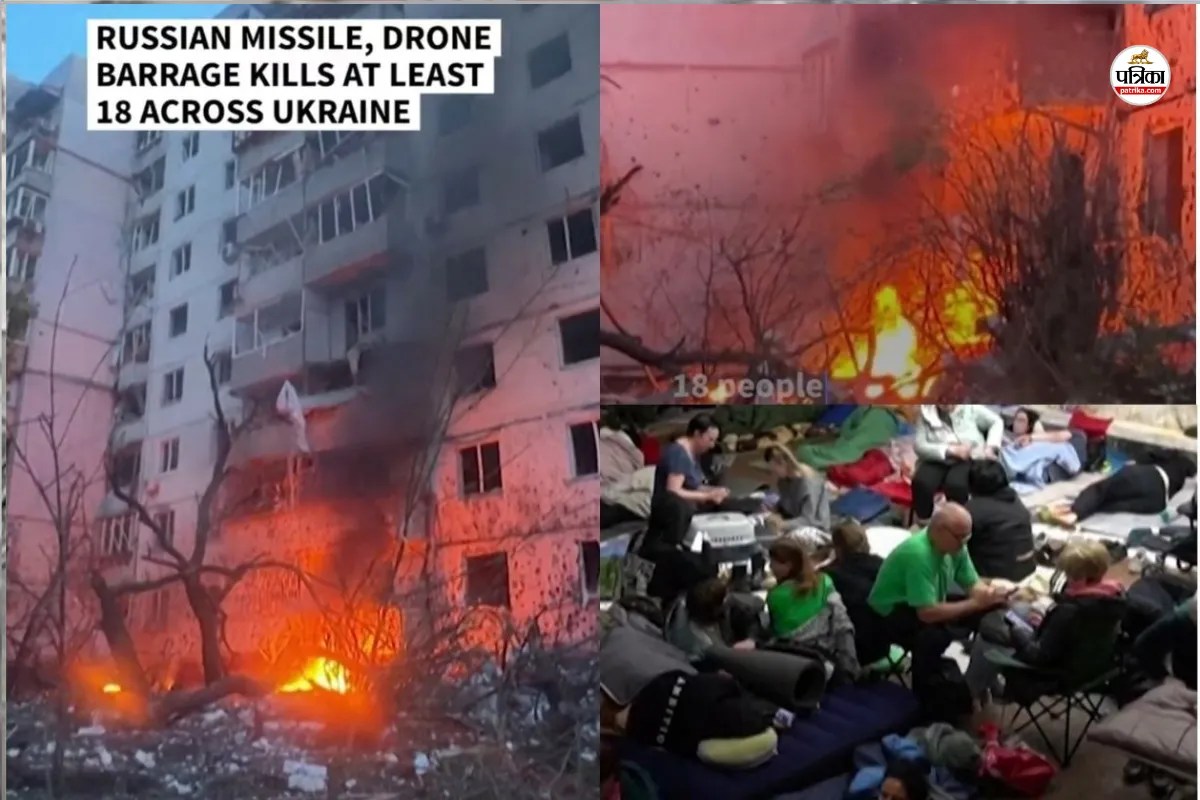
Imagine waking up at 2:00 AM to a sound that mimics a literal apocalypse. That's exactly what millions of Ukrainians went through when Russia unleashed its most suffocating aerial assault in months. This wasn't just another routine strike. The numbers are staggering: 656 drones and 73 missiles rained down in a coordinated attempt to completely overwhelm the country's air defenses.
By the time the sun came up, at least 18 people were dead, over 100 were injured, and rescue crews were digging frantically through the smoking rubble of collapsed apartment buildings. If you think the air war in Ukraine is a settled stalemate, this attack is a brutal wake-up call. It shows a dangerous shift in Kremlin strategy that should worry everyone.
The Night Kyiv and Dnipro Stood Still
The scale of this overnight bombardment was relentless. Ukraine's Air Force confirmed they managed to down an impressive 602 drones and 40 missiles. On paper, a 90% interception rate for drones sounds like a massive victory. In reality, it's a terrifying math problem. When you launch 656 drones, the remaining 10% that get through can still wreck total havoc.
And they did. The assault targeted major hubs across the nation, but the primary wrath fell on Kyiv and the southern industrial city of Dnipro.
- Dnipro Bear the Brunt: A four-story residential building partially collapsed after a direct hit. Emergency workers pulled the bodies of a mother, her eight-year-old son, and a three-year-old child from the debris. In total, 12 people lost their lives in Dnipro alone.
- Kyiv's Apocalypse: The capital shook for hours as air defense systems fired constantly into the night sky. Debris and direct hits damaged buildings in eight out of Kyiv's ten districts. Six people died here, and multi-story apartment blocks in the Solomianskyi and Podilskyi districts were gutted.
Residents described hiding in bathtubs with their children while blast waves blew windows entirely out of their frames. It's a miracle the death toll wasn't significantly higher, but the physical and psychological toll is immeasurable.
The Deadly Shift to Ballistic and Hypersonic Missiles
We need to talk about why Ukraine's air defense is suddenly struggling. While cheap, Iranian-designed Shahed drones act as the sacrificial pawns to deplete Ukraine's ammunition, Moscow is increasingly relying on heavy ballistic and hypersonic missiles to do the actual killing.
During this raid, Russia fired 41 ballistic and hypersonic missiles, including the dreaded Zircon. Ukraine's Air Force spokesperson Yuriy Ihnat admitted these are incredibly difficult to intercept. The numbers paint a grim picture: Ukraine managed to stop only 11 out of 33 Iskander-M ballistic missiles, and all eight of the hypersonic Zircon missiles tore right through the defense grid.
This isn't a failure of Ukrainian skill. It's a pure supply issue.
“A large-scale attack and an absolutely clear statement from Russia: if Ukraine is not protected from ballistic and other missile strikes, these attacks will continue,” - President Volodymyr Zelenskyy
To stop ballistic threats, you need sophisticated Western systems like the US-made Patriot or the European SAMP/T. Ukraine simply doesn't have enough of them to cover a country of its size. When an attack splits focus between Kyiv, Dnipro, Kharkiv, and Zaporizhzhia, the defense grid gets stretched to a breaking point.
Why Now? The Geopolitical Math Behind the Attack
Moscow isn't doing this randomly. This massive escalation comes at a time when Russian ground forces are hitting a wall. According to military monitoring groups like DeepState, Russian troops captured a mere 14 square kilometers of Ukrainian territory last month—their lowest monthly gain since late 2023.
When you can't win on the battlefield, you terrorize the home front.
Kremlin spokesperson Dmitry Peskov tried to frame the blitz as retaliation for a Ukrainian drone strike on a student dormitory in Russian-controlled Luhansk that killed 21 people. But military analysts know a 700-weapon strike takes weeks of planning, stockpiling, and targeting. The Luhansk strike was just a convenient excuse.
Russia is also testing the geopolitical waters. With Western attention heavily divided by ongoing conflicts in the Middle East and shifting political leadership in Washington, Moscow wants to see just how far it can push before the West steps up its military aid.
What Happens Next?
Ukraine cannot survive on high interception percentages if it runs out of interceptor missiles entirely. The current strategy of using mobile fire teams to shoot down drones with machine guns works for slow-moving targets, but it does nothing against a Zircon missile traveling at Mach 9.
If Western allies want to prevent Ukrainian cities from becoming completely unlivable, the next steps are clear and urgent:
- Expedite Patriot Deliveries: Zelenskyy has been begging for more Patriot batteries for months. Air defense needs to be treated as an immediate emergency, not a long-term contract.
- Loosen Restrictions on Counter-Strikes: Ukraine is currently forced to play goalie. The only way to stop these attacks permanently is to destroy the bombers and missile launchers inside Russian territory before they ever fire.
- Bolster Electronic Warfare: Jamming the guidance systems of hundreds of drones simultaneously is the only cost-effective way to handle mass swarm tactics.
The reality on the ground is stark. Russia has proven it can manufacture and deploy hundreds of long-range weapons a month. Unless Ukraine receives an immediate influx of advanced air defense systems and ammunition, these apocalyptic nights will become the norm rather than the exception.