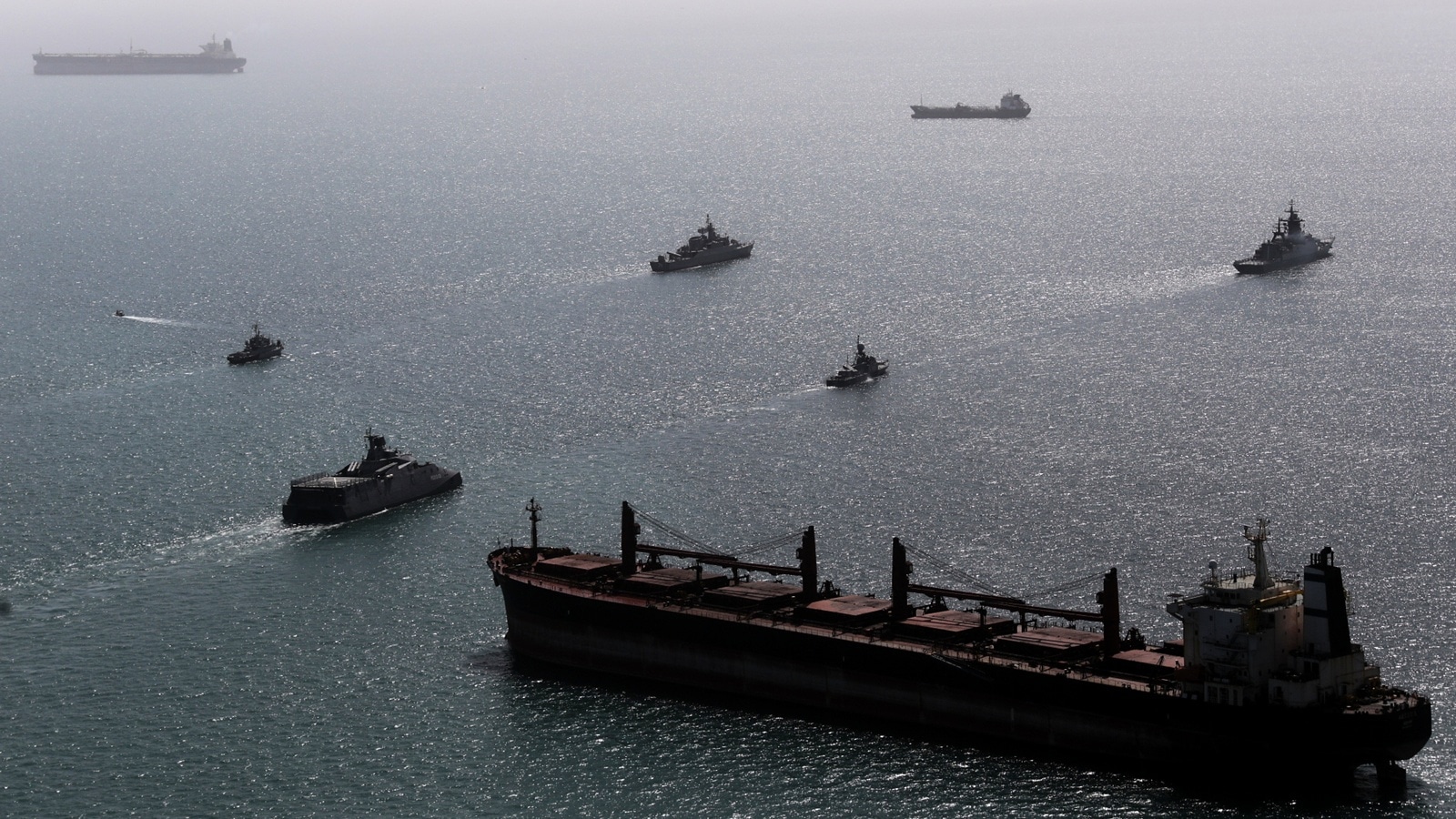
The steel of a carrier deck in the Persian Gulf doesn't just hold aircraft. It holds a specific, vibrating kind of silence. To an observer in Washington, the USS Abraham Lincoln is a coordinate on a map, a blue icon shifting across a digital screen. To the sailors on board, it is a floating city of five thousand souls, currently positioned within striking distance of a shoreline that has dominated American foreign policy for nearly half a century.
This isn't just about ships and planes. It is about the physical manifestation of a psychological standoff.
Across the Strait of Hormuz, the geography is claustrophobic. At its narrowest point, the waterway is only twenty-one miles wide. Imagine a highway where the world’s energy supply has to pass through a single lane, while onlookers on the shoulder hold lit matches. That is the daily reality of the Iranian coast. The United States has responded to this tension not with a single blow, but with a slow, methodical thickening of the air.
The Weight of the Fleet
Warfare in the twenty-first century is often described as invisible, fought with code and currency. Yet, when the temperature rises in the Middle East, the response remains stubbornly, massively physical. The U.S. has moved a staggering amount of hardware into the Central Command area of responsibility. We are talking about the USS Georgia, a nuclear-powered submarine capable of carrying 154 Tomahawk cruise missiles. We are talking about two carrier strike groups—the Lincoln and the Theodore Roosevelt—operating in tandem.
This concentration of power serves a dual purpose. It is a shield, certainly, but it is also a very loud, very expensive form of communication.
Consider a hypothetical young officer named Elias, stationed on a destroyer in the Gulf of Oman. His world is defined by the green glow of a radar screen. He isn't thinking about the grand "chess match" described by pundits on cable news. He is thinking about the "fast boats"—the small, agile Iranian vessels that swarm like hornets around the massive American hulls. For Elias, the "build-up" isn't a statistic. It’s the fact that he hasn’t slept more than four hours at a time in three weeks because the threat of a drone strike is no longer theoretical.
The Invisible Shield
The most significant part of this military surge isn't what can destroy; it’s what can intercept. The U.S. has deployed additional F-22 Raptors, the most advanced air-superiority fighters in existence. These aren't just planes; they are flying sensor suites. Their job is to see everything and be seen by no one.
When Iran launched a massive drone and missile attack toward Israel in April, the world saw a live demonstration of what this military infrastructure actually does. It wasn't a "dogfight" in the cinematic sense. It was a data-driven ballet. Computers on ships and in cockpits talked to each other, identifying incoming threats and neutralizing them before they could reach their targets.
That success changed the calculus. It proved that the "Iron Circle" isn't just a metaphor. It is a functioning, integrated web of hardware that stretches from the Mediterranean to the Arabian Sea.
The Logistics of Tension
Moving this much equipment isn't like flipping a switch. It is a Herculean feat of logistics that involves thousands of moving parts.
- Air Power: Squandrons of F-15E Strike Eagles and A-10 Warthogs have been moved to regional bases in Jordan, Qatar, and the UAE.
- Sea Power: Destroyers equipped with the Aegis Combat System are positioned to provide a multi-layered defense against ballistic missiles.
- Ground Power: Patriot missile batteries are being polished and prepped, their radars scanning the horizon for the telltale signature of an incoming launch.
The sheer cost of this presence is astronomical. Each hour an F-22 spends in the air costs tens of thousands of dollars. Each sailor's meal, each gallon of jet fuel, each spare part flown in from a warehouse in Germany represents a massive investment in the status quo. We are paying a premium to ensure that nothing happens. It is a paradox: we send the most violent machines ever built to ensure that the guns stay silent.
The Human Toll of the Watch
There is a specific kind of exhaustion that comes from high-alert boredom. The men and women currently stationed in the Middle East are living in a state of perpetual "almost." They are trained for the worst-case scenario, but they spend 99% of their time waiting for it.
The heat in the Gulf is unlike anything else on Earth. It is a wet, heavy blanket that saps the energy from your bones. On the deck of a ship, the temperature can easily soar past 110 degrees. The sailors working in these conditions are the ones holding the line. They are the human element in a story that is too often told through the lens of cold technology.
When we talk about "deploying assets," we are talking about fathers missing birthdays and mothers watching their children grow up over glitchy FaceTime calls. This is the hidden cost of the build-up. The geopolitical stability of the region is bought with the currency of human time and sacrifice.
The Strategic Shadow
Why now? Why this specific, massive surge?
The answer lies in the shifting nature of the threat. Iran has spent decades perfecting asymmetric warfare. They know they cannot win a head-to-head naval battle against the U.S. Navy. Instead, they focus on "the swarm"—using cheap drones, sea mines, and proxy forces to create a thousand small fires.
The U.S. build-up is an attempt to smother those fires before they can start. By placing a carrier in the Gulf and a submarine in the Red Sea, the U.S. is telling Tehran: We are everywhere at once. It is an effort to make the cost of escalation so high that it becomes unthinkable.
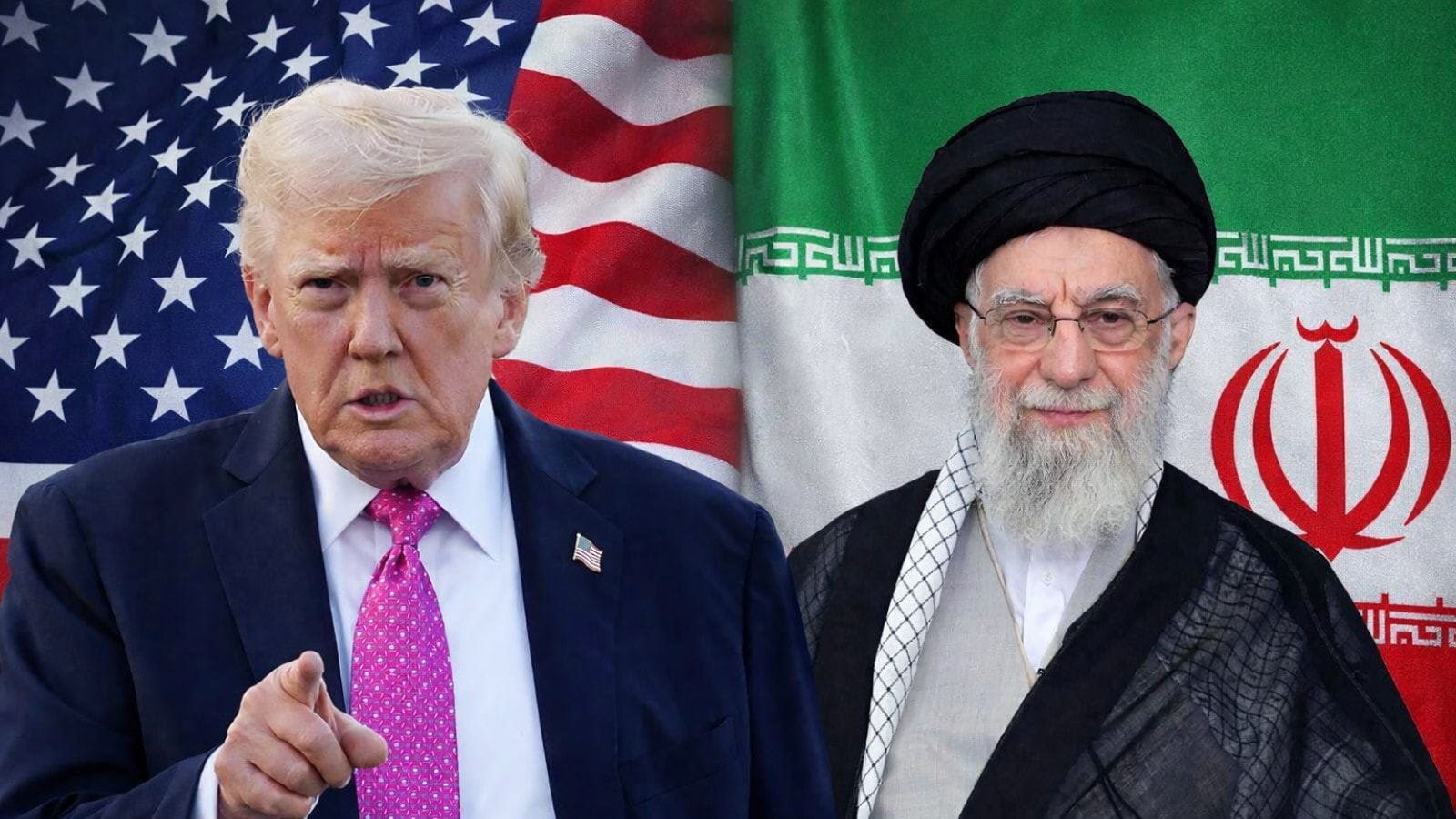
But the danger of a build-up is the "security dilemma." When one side increases its defenses, the other side sees it as a preparation for an attack. The very ships meant to deter a war can, through a single misunderstanding or a stray missile, become the catalyst for one. It is a high-stakes game of chicken played with nuclear-powered engines.
The New Architecture of the Middle East
We are witnessing the birth of a new kind of regional security. It is no longer just about American boots on the ground; it is about a coalition of technology. The U.S. is increasingly integrating its systems with regional partners. Radar data from a Saudi battery might be processed by an American ship to guide an Israeli interceptor.
This is the "holistic" defense—though the word feels too sterile for the reality of metal meeting metal in the night sky.
The build-up near Iran is a testament to the fact that the Middle East remains the center of the world's geopolitical gravity. Despite the "pivot to Asia" and the ongoing conflict in Ukraine, the Persian Gulf remains the place where a single spark can ignite a global crisis.
The steel stays in the water. The pilots stay in their cockpits. The radar screens continue their endless, circular sweep.
Everything is ready. Everyone is waiting.
The goal, the hope, and the ultimate strategy is that all of this power—the billions of dollars, the millions of man-hours, the sheer, crushing weight of the American military—is never actually used. We have built a cathedral of violence in the hopes that we will only ever have to pray inside it.
A single F-22 glides through the dusk over the Gulf, its engines a distant, low rumble that sounds like a storm that refuses to break.