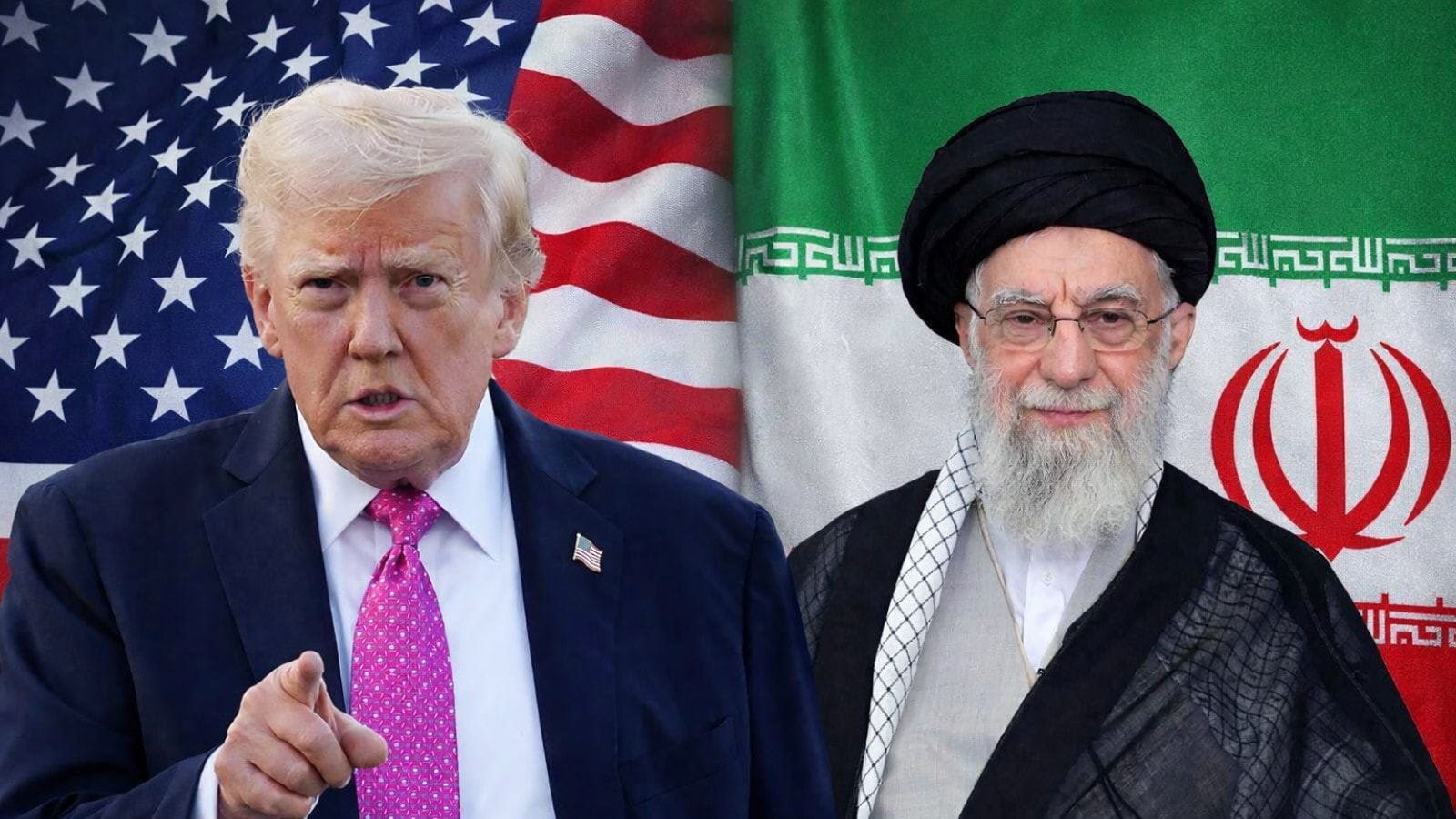
The air in the Situation Room doesn’t smell like history. It smells like stale coffee and the ionizing hum of high-end ventilation. But outside those reinforced walls, across the tectonic plates of global power, the air is thick with the scent of saltwater and JP-5 aviation fuel.
We are currently watching a clock that hasn't been wound this tight in decades.
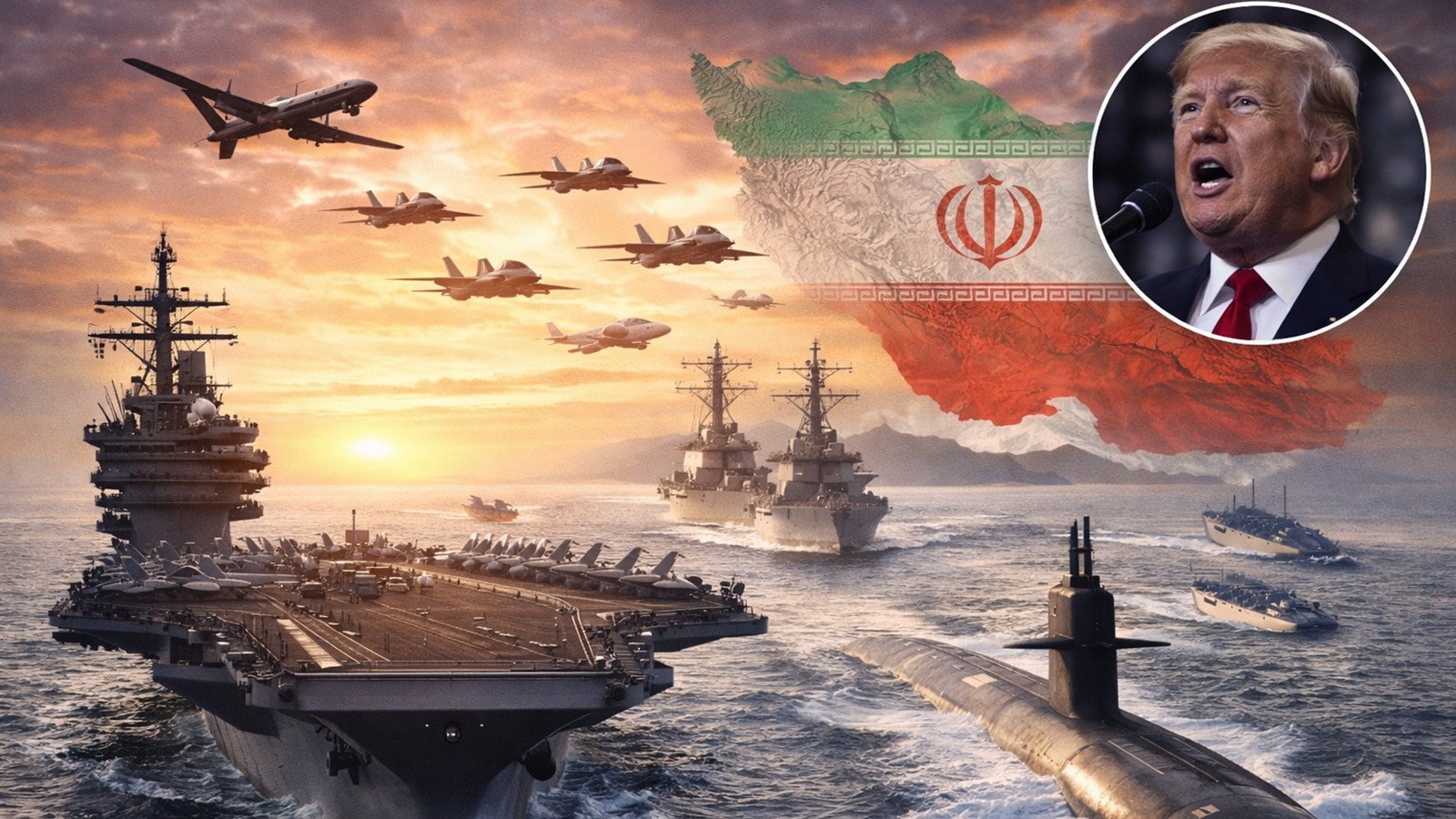
Donald Trump has issued a ten-day ultimatum to Tehran. To the casual observer scrolling through a newsfeed, it’s just another headline, another spike in the geopolitical EKG. But for the sailor on the deck of a guided-missile destroyer in the Strait of Hormuz, or the family in Isfahan watching the horizon, those ten days are a physical weight. They are the space between the world as we know it and a world we may no longer recognize.
War is rarely a sudden explosion. It is a series of clicks, like a roller coaster climbing the first steep hill. Each click is a deployment. Each click is a redacted memo. Right now, the clicks are getting faster.
The Anatomy of the Surge
Numbers are cold. They don't capture the reality of a surge. When we hear about thousands of additional troops and advanced missile defense systems being moved into the Middle East, we see dots on a map.
Consider the "Iron Desert." This isn't a place, but a state of readiness. The U.S. has begun repositioning assets not just for deterrence, but for execution. We are seeing the arrival of B-52 bombers—monstrous, ancient birds of prey that carry a specific kind of psychological terror. They don't just represent firepower; they represent the end of nuance. When a B-52 moves, the conversation has changed from "if" to "how."
The logistical tail of such a movement is staggering. It involves thousands of moving parts, from fuel bladders to surgical units. This isn't a drill. You don't move this much steel and blood just to make a point. You move it because you are preparing for the point to fail.
The Ten-Day Window
Why ten days? It’s a specific, jagged number. It’s long enough for a diplomat to catch a flight, but too short for a nation to truly pivot its entire foreign policy. It is a squeeze play.
In the world of high-stakes negotiation, this is known as "burning the bridge behind you." By setting a hard deadline, the Trump administration has removed its own room to maneuver. If the deadline passes and nothing happens, the concept of American "red lines" evaporates. If the deadline passes and action is taken, the cycle of escalation becomes a self-sustaining fire.
Imagine a negotiator sitting across a table. Usually, there is a back door. There is a way to "save face." But this ten-day countdown has locked the back door and tossed the key. It forces the opponent into a binary choice: total capitulation or total confrontation. In the history of Persian pride and American exceptionalism, neither side is particularly good at the former.
The Invisible Stakes
We often talk about the price of oil when we discuss Iran. We talk about $100 barrels and the choking of the global economy. That is a real, terrifying math. But the invisible stakes are found in the silences.
It’s the silence of a merchant mariner looking at a radar screen, wondering if the blip approaching his tanker is a patrol boat or a suicide drone. It’s the silence in the hallways of the UN, where the middle powers realize they have lost control of the narrative.
The Strait of Hormuz is a narrow throat. Through it flows the lifeblood of modern civilization. If that throat is constricted, the pain isn't felt just in Washington or Tehran. It’s felt by a truck driver in Ohio who can no longer afford his route. It’s felt by a factory worker in Vietnam whose plant loses power. We are all tethered to this narrow strip of water by invisible threads of trade and energy.
The Human Chessboard
Let’s talk about a hypothetical person named Elias. He’s twenty-two, a junior officer on a U.S. carrier. He spends his days calibrating sensors. He’s not a warmonger. He’s a kid who likes video games and misses his mom’s cooking.
Then there is Zahra, a student in Tehran. She wants to be an architect. She spends her evenings studying by a window that looks out over a city that has survived a thousand years of conquerors.
For Elias and Zahra, the "ten-day deadline" isn't a policy shift. It is the potential eclipse of their entire futures. When we strip away the "signals" and the "surges," we are left with the reality that war is the failure of imagination. It is the moment when we decide that the only way to solve a problem is to break things until the problem disappears.
But problems don't disappear when you break things. They just change shape. They become ghosts. They become grievances that last for generations.
The Logic of the Brink
There is a theory in international relations called "The Madman Theory." It suggests that if your opponent thinks you are volatile enough to do the unthinkable, they will blink. It worked, to an extent, during the Cold War. But the Madman Theory requires a rational actor on the other side to interpret the madness.
What happens when both sides believe they are the ones being rational?
The U.S. sees its surge as a necessary shield against a "rogue state" seeking nuclear capability and regional hegemony. Iran sees the U.S. presence as an existential threat, a modern-day crusade intended to dismantle their sovereignty. Both stories are "true" to the people telling them. And when two absolute truths collide, they don't merge. They shatter.
The signals we are seeing—the movement of Patriot missile batteries, the shifting of carrier strike groups, the heated rhetoric from the Rose Garden—are all part of a language. It is a language of force. The problem with this language is that it has no words for "I'm sorry" or "Let's talk." It only has words for "Stop" and "Die."
The Ghosts of 1914
History doesn't repeat, but it certainly rhymes. In the summer of 1914, a series of deadlines and mobilizations led the world into a trench-filled nightmare that no one actually wanted. They called it "The Slide." One country mobilized, so its neighbor had to mobilize in "self-defense," which triggered a treaty, which triggered a declaration.
We are currently sliding.
The ten-day deadline is the latest patch of ice. The surge is the momentum. We are told that this is about security. We are told this is about preventing a larger conflict. But there is a point in every escalation where the machinery takes over. Where the generals take the lead from the diplomats because the "window for talk" has closed.
When that window closes, the only thing left is the kinetic reality of metal meeting flesh.
The Cost of Being Right
Suppose the ten days pass. Suppose the surge works, and the other side cowers. Is that a victory? Or is it just a stay of execution?
True security isn't found in the shadow of a bomber's wing. It’s found in the tedious, unglamorous work of building systems where war is unthinkable. We have moved far away from that. We have embraced a reality where the "surge" is our primary tool of communication.
The weight of these ten days is felt most by those who have no say in the deadline. It’s felt by the soldiers, the civilians, and the children who will inherit the ruins of whatever we decide to break. We are standing on a pier, watching a massive ship pull away from the dock. We can see the destination. It’s a dark, stormy horizon. We are shouting at the captain, but the engines are too loud.
The hum of the ventilation in the Situation Room continues. The coffee goes cold. On the other side of the world, a B-52 breaks the sound barrier, a silent scream across a desert that has seen too many empires come and go.
The clock is ticking. It doesn't care who is right. It only knows that when it hits zero, the silence will be over.
A single, lonely buoy bobs in the dark waters of the Gulf, marking a path that fewer and fewer ships dare to take, while the stars above look down on a world holding its collective breath, waiting for the first spark to catch.