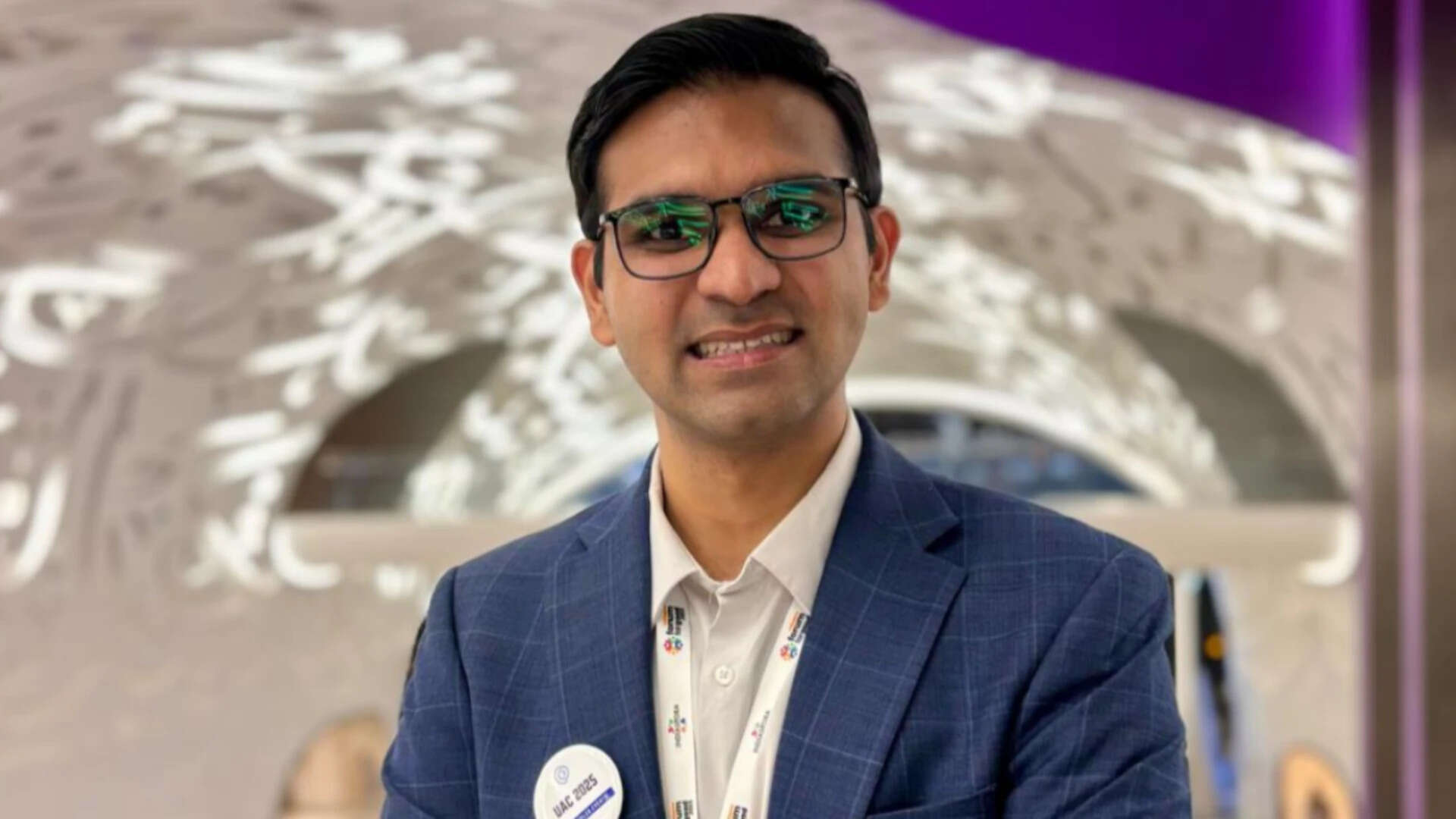
You think having a million-dollar company and a desk full of awards makes you a shoo-in for a Green Card. It doesn't. This is the brutal reality that Kunal Bahl, the co-founder of Snapdeal and Titan Capital, learned the hard way. Despite building one of India's most recognized e-commerce platforms and graduating from Wharton, he faced two soul-crushing rejections from the U.S. immigration system.
It's a wake-up call. The system doesn't care about your potential or your pedigree as much as it cares about the narrow, rigid boxes you fit into on a form. Most people think the "blind spot" in immigration is just a lack of paperwork. It’s not. It’s a fundamental disconnect between how an entrepreneur builds a life and how a government bureaucrat measures value. For a more detailed analysis into this area, we recommend: this related article.
The Wharton Trap and the Reality of EB1 Rejections
Bahl’s story isn't just about bad luck. It's about the systemic friction in the EB-1 visa process, often called the "Einstein Visa." To qualify, you have to prove extraordinary ability in your field. You need to show you’re at the very top of your game. But here’s where founders get tripped up. You spend years focused on growth, hiring, and scaling. You aren't focusing on collecting the specific, esoteric evidence that USCIS demands.
Bahl had the credentials. He had the backing. Yet, he still got the "no." Twice. This happens because the immigration officers reviewing these files aren't venture capitalists. They don't care about your burn rate or your user acquisition costs. They want to see original contributions of major significance. If your "original contribution" is a business model that looks similar to something else, you’re in trouble. For additional context on this issue, extensive coverage can also be found at Financial Times.
Most Indian-origin founders make the mistake of thinking their success is self-evident. It isn't. You have to prove it using a very specific vocabulary. If you don't speak their language, they don't see your value. It’s that simple.
Why Your Success Is Sometimes Your Biggest Hurdle
There’s a strange irony in the immigration journey of a high-achiever. The more you do, the more complex your case becomes. Bahl eventually had to return to India. This wasn't just a personal shift. It was a massive pivot for his entire career trajectory.
Think about the opportunity cost. While the U.S. was busy rejecting a Wharton-educated founder, India was ready to embrace him. Bahl didn't just sit around and mope. He took that rejection and turned it into the foundation of Snapdeal. He saw a gap in the Indian market that he might have ignored if he’d stayed in Philadelphia or moved to Silicon Valley.
But let's be honest. Not everyone has the luxury of a "Plan B" that involves starting a billion-dollar company. Most people get stuck in the H-1B lottery hell, waiting years for a priority date that never seems to move. The blind spot Bahl talks about is the assumption that the U.S. will always be the best place for your talent. Sometimes, the best thing that can happen to your career is a flat-out rejection from a country that doesn't recognize your worth.
Navigating the Extraordinary Ability Criteria Without Losing Your Mind
If you’re aiming for the EB-1A or the O-1 visa, you need to stop thinking like a CEO and start thinking like a curator. You’re building a museum of your own achievements.
The criteria are strict. You need to meet at least three out of ten specific markers. Most founders try to hit "high salary" or "original contributions." But those are the hardest to prove. Instead, look at things like:
- Judging the work of others. Have you been on a startup pitch panel? Have you reviewed technical papers?
- Published material about you. Not just a mention in a local blog. We're talking major trade publications or national media.
- Membership in associations. Not just something you pay for. It has to be an organization that requires outstanding achievements for membership.
Bahl’s experience shows that even if you think you’ve checked these boxes, the interpretation is subjective. One officer might see your startup’s exit as a triumph. Another might see it as just another business transaction. You can't leave it to chance.
The Indian Perspective on the Green Card Backlog
For Indian nationals, the Green Card wait isn't just a hurdle. It's a multi-decade sentence. Because of the per-country caps, the backlog for the EB-2 and EB-3 categories is effectively a lifetime for many. This is why everyone rushes for the EB-1. It’s the only way to skip the line.
But the EB-1 is becoming a victim of its own popularity. As more founders and tech leads apply, the "extraordinary" bar keeps moving higher. What was considered impressive five years ago is now considered baseline. If you’re an Indian entrepreneur, you’re competing against the best of the best from your own country, all fighting for a tiny sliver of the same pie.
Bahl eventually found his path by going home. He’s now a vocal advocate for the Indian startup ecosystem. He’s proof that you don't need a U.S. zip code to build global wealth. In fact, staying in the U.S. might have actually slowed him down. He would have been just another founder in a sea of founders. In India, he became a pioneer.
What You Should Do When the System Fails You
Don't wait for a rejection letter to start your contingency plan. If you’re an entrepreneur or a high-skilled professional, you need to be honest about your timeline.
First, get a second opinion on your case. Not from the lawyer your company provides, but from an independent expert who specializes in EB-1 petitions for founders. Company lawyers are often too conservative. They want to avoid "Requests for Evidence" (RFEs), so they might not push the envelope on your achievements.
Second, look at other jurisdictions. Countries like Canada, the UK, and even the UAE have created fast-track visas for tech talent that are far more logical than the U.S. system. They want you there. They want your tax dollars and your job creation.
Third, consider the Bahl route. If the U.S. says no, don't take it personally. Use that energy to build something where you’re actually wanted. The global economy is shifting. The "blind spot" isn't just yours—it's also the U.S. government's failure to realize that talent is mobile.
Start documenting everything now. Every talk you give, every internal award you win, every time you’re asked to mentor a junior—save the emails. Save the programs. These small pieces of paper are the bricks that build your case. If you wait until you’re ready to apply, you’ll forget half of what you’ve actually done.
If you’re currently in the middle of a visa struggle, stop checking the USCIS portal every five minutes. It won't make the process faster. Instead, focus on making your business so successful that a rejection doesn't actually matter to your bottom line. Bahl proved that a "no" from an immigration officer can be the "yes" your career actually needed.
Build your empire. If one country doesn't want you, another one will be begging for you to set up shop on their soil. That's the only way to truly beat a broken system.