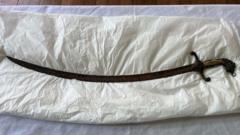
Environmental shifts regularly expose historic material culture long preserved beneath stabilizing sediment or water columns. The recent discovery of a two-hundred-year-old sword protruding from a receding lakebed illustrates a common intersection between hydrological volatility and cultural resource management. When prolonged drought or seasonal evaporation alters water tables, submerged archaeological assets transition rapidly from a stable, low-oxygen preservation environment to an active degradation zone. Understanding the mechanisms driving this exposure requires analyzing hydrological mechanics, material science, and the tactical deployment of salvage protocols.
The Hydrological Trigger Mechanism
Submerged heritage assets remain preserved for centuries largely due to the specific chemical properties of aquatic sediment. Water bodies, particularly lakes with fine-grained organic silt, create anoxic environments. Without dissolved oxygen, aerobic bacteria and oxidation processes halt, protecting ferrous metals, organic textiles, and wood from rapid decay. Meanwhile, you can find related events here: The Diplomatic Calculus of Dhaka and Delhi Why Extradition Defines the New South Asian Equilibrium.
When regional precipitation decreases and evaporation rates accelerate, the hydrostatic pressure maintaining this protective column diminishes. The immediate physical consequence is the receding shoreline, which exposes formerly submerged mudflats to atmospheric oxygen, ultraviolet radiation, and temperature fluctuations.
The Vector of Exposure
- Drop in Water Table: The primary hydrostatic buffer disappears, exposing sediment surface layers.
- Desiccation and Cracking: Silt and clay matrix shrink as water evaporates, creating micro-fissures that relieve sediment compaction and physically grip embedded objects.
- Mechanical Shear Forces: As receding water pulls away and wind action hits newly exposed mudflats, differential drying exerts lateral stress on protruding metalwork. A blade lodged vertically in silt experiences torque when the surrounding sediment shifts, increasing the risk of structural fracture along historic quench lines or forged weld points.
Material Degradation Kinetics
A historically forged steel weapon that spends two centuries underwater reaches a delicate electrochemical equilibrium. The metal surface develops a stable passivation layer consisting of mineralized corrosion products, silt encrustation, and organic biofilms. This crust isolates the core metal from active ionic exchange. To see the complete picture, we recommend the excellent analysis by The Guardian.
Exposure to air disrupts this equilibrium instantly. Oxygen re-enters the matrix, and residual chlorides trapped within the porous corrosion layers react with moisture in the humid morning air or retreating mud. This triggers active corrosion, often referred to as weeping or chloride sweating, which can structurally compromise the artifact within weeks of discovery.
Furthermore, rapid drying causes volumetric changes in any composite elements attached to the blade, such as wooden grips, leather wraps, or organic adhesives. Water molecules trapped within the cellular structure of organic materials evaporate too quickly, causing cellular collapse, warping, and irreversible splitting.
The Operational Protocol for Emergency Recovery
Finding an exposed artifact in a public, accessible water body initiates a high-stakes timeline. Standard archaeological excavation proceeds systematically across grid units with controlled stratigraphy. Emergency salvage, by contrast, operates under crisis logistics where the primary threat is unauthorized removal, vandalism, or environmental degradation.
[Hydrological Recession]
       │
       ▼
[Loss of Anoxic Sediment Buffer]
       │
       ▼
[Oxygen Influx & Desiccation]
       │
       ▼
[Active Chlorination / Structural Torque]
       │
       ▼
[Emergency Extraction or In-Situ Stabilization]
When institutional actors or local authorities confront an exposed metallic object, they must balance stabilization speed against documentation accuracy. Removing a sword by pulling it directly from drying clay often tears the metal free from hidden associated artifacts, such as scabbard fittings, organic debris, or coin hoards that establish precise dating contexts.
Field Triage Variables
- Matrix Consistency: If the mud is dense clay, mechanical suction must be broken slowly by introducing water around the blade profile before lifting. Yanking the artifact applies maximum leverage against the weakest point of the historic tang.
- Immediate Moisture Control: The object cannot be allowed to dry in ambient air. Transport requires immersion in containers filled with water sourced from the exact site to maintain chemical continuity until conservators assume control.
- Contextual Mapping: Global Positioning System coordinates and photogrammetry must capture the exact angle of protrusion, orientation relative to cardinal directions, and the morphology of the surrounding depression before the sediment dries and alters shape.
Macro-Level Implications for Heritage Management
The appearance of centuries-old military hardware in inland bodies of water serves as an indicator of broader climatic stress. Extended droughts are revealing submerged assets across multiple continents, shifting heritage management from passive conservation in deep water to active triage along volatile shorelines.
Cultural resource agencies face a widening resource gap. The volume of newly exposed material culture outpaces the analytical capacity of regional institutions. Consequently, site management strategies must transition toward predictive modeling. By cross-referencing bathymetric surveys with regional hydrological forecasts, authorities can identify high-risk lakes and riverbeds where historical shipwrecks, weaponry, and structural foundations are most likely to breach the waterline over the coming decade.
Establish rapid-response protocols incorporating local municipal workers, recreational divers, and regional museums to secure exposed artifacts before unauthorized extraction destroys their contextual value.