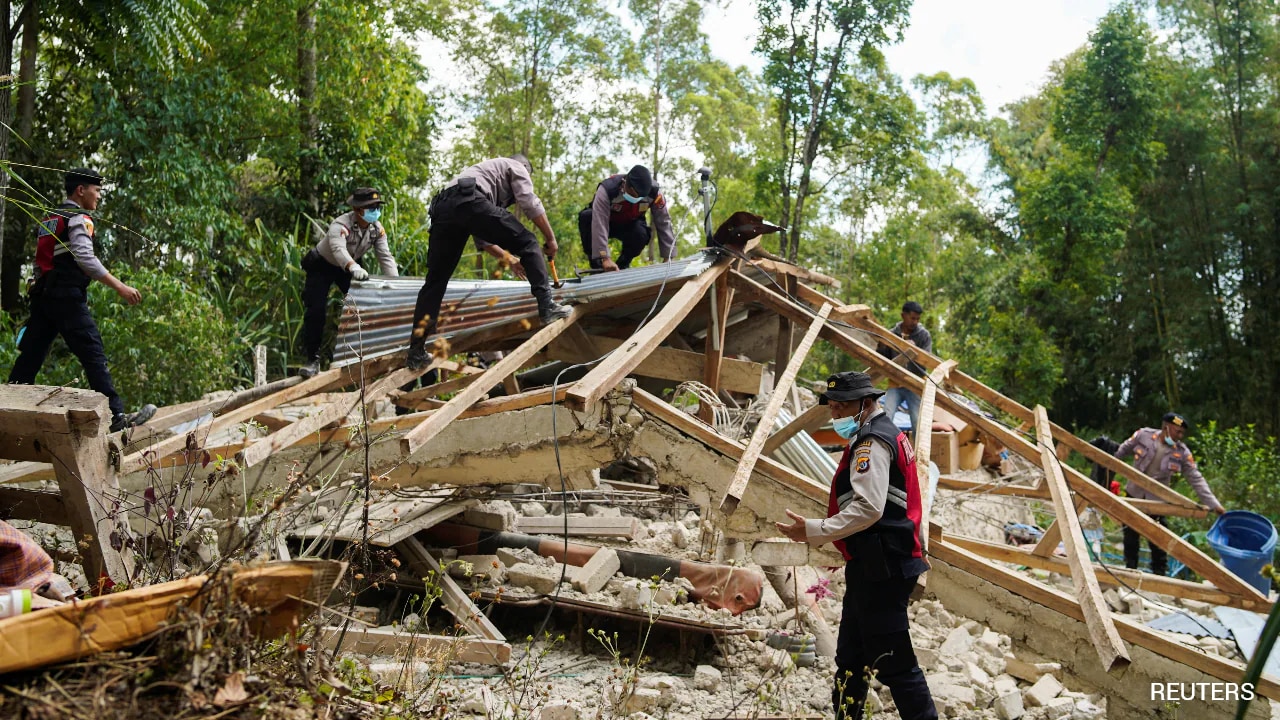
Ground zero on Flores Island felt like the world was tearing apart. When a magnitude 7.7 earthquake struck eastern Indonesia, it didn't just rattle windows; it crushed homes, triggered landslides, and sent thousands fleeing for higher ground in the dark.
The disaster management numbers are grim. Officials confirmed that at least 51 people lost their lives, while around 5,000 residents had to evacuate their homes across the East Nusa Tenggara province. Deputy Health Minister Benjamin Paulus Octavianus reported that dozens more suffered serious injuries, many trapped under the rubble of collapsed structures as rescue teams scrambled to clear blocked mountain roads.
If you are wondering why this specific region was hit so hard, the geography tells the story.
The Ring of Fire Reality Check
Indonesia sits squarely on the Pacific Ring of Fire, an arc of intense seismic activity where tectonic plates collide. Earthquakes happen here constantly, but a 7.7 magnitude quake at a shallow depth of just 10 kilometers packs an unusually destructive punch.
The epicenter hit about 68 kilometers north-northwest of Ende, sending violent shockwaves through the Sikka regency and the port town of Maumere. For older residents, the trauma carried a heavy echo. The exact same area was devastated back in 1992 by a magnitude 7.5 earthquake that caused catastrophic destruction. Nature has a cruel way of repeating itself.
Surviving the Night Outdoors
The initial tremor was only the beginning. More than 340 aftershocks followed the main event, terrorizing a population already dealing with destroyed infrastructure.
People simply didn't dare go back inside. In towns like Sikka, families spent the night huddled under makeshift tarps on porches, roadsides, and crowded sports arenas. State energy firm Pertamina reported that at least 20 petrol stations went dark due to power cuts, complicating logistics for emergency responders trying to bring in fuel, heavy machinery, and medical supplies.
The Indonesian government deployed over 3,500 military and police personnel to assist with relief operations. Emergency teams are cutting through landslide debris to reach isolated pockets of survivors, while local governments weigh declaring a full provincial emergency to fast-track funding.
Search and rescue operations remain active across Flores Island as crews work against the clock to locate anyone still missing beneath the concrete. Evacuees continue to rely on temporary relief camps while structural engineers assess whether homes left standing are safe to inhabit.