The operational restart of a blockaded maritime corridor is never an instantaneous event; it is a complex function of psychological risk premium, structural asset damage, and asymmetrical state incentives. While the successful transit of the Malta-flagged, Indian-managed liquefied natural gas carrier Disha across the Strait of Hormuz on June 15, 2026, was widely publicized as a diplomatic breakthrough following the provisional United States-Iran peace accord, it remains an isolated data point rather than a systemic recovery. Official data from the Ministry of Ports, Shipping and Waterways confirms a stark operational reality: zero subsequent Indian-flagged commercial vessels have exited the Persian Gulf.
This operational stagnation highlights a profound misalignment between political announcements and the microeconomics of maritime transport. Shippers do not react to treaties; they react to verified security baselines and insurance underwriting metrics. The current paralysis of the remaining 13 Indian-flagged vessels—and a broader cohort of 34 India-bound cargo ships carrying critical energy and agricultural inputs—reveals the limits of unilateral diplomatic assurances in restoring multilateral trade flows.
The Microeconomic Framework of Chokepoint Inertia
The decision-making process of a ship operator stranded within a high-risk maritime chokepoint can be mathematically modeled as a risk-adjusted net present value function. The reluctance of shipowners to follow the path cleared by the vessel Disha is governed by three specific operational friction points.
The War-Risk Insurance Premium Bottleneck
Commercial vessel operations within the Persian Gulf operate under strict Joint War Committee hull and machinery war-risk stipulations. Although a provisional peace agreement has been reached, underwriters have not systematically rescinded the high-risk designation for the waters west of the Strait of Hormuz. The cost function of transiting the strait includes a specialized premium that can reach up to 1% of the total hull value per transit. For an energy asset or a modern carrier, this introduces a direct variable cost penalty that distorts voyage profitability. Shipowners require sustained periods of zero-incident navigation before underwriters adjust these risk coefficients downward, forcing vessels to remain stationary to avoid compounding operational losses.
The Asymmetry of the Transponder Strategy
During its June 15 transit, the Disha maintained an active Automatic Identification System transponder, broadcasting its position openly to maritime traffic control and naval forces. While this tactical decision signaled transparency and compliance with the newly formed peace framework, it represents an operational anomaly. Over the preceding quarter, commercial vessels navigating the Persian Gulf utilized electronic obfuscation, running silent to minimize targeting vectors from non-state actors and regional paramilitary factions. The decision to switch from absolute signal concealment to absolute visibility introduces a game-theoretic dilemma for the remaining fleet. Until a predictable naval escort framework or a standardized communication protocol is established by regional authorities, operators view open transponder broadcasting as an unhedged operational vulnerability.
Memory of the April Escalation Counter-Shock
The current operational inertia is heavily influenced by empirical precedent. Following brief periods of diplomatic decompression in mid-March, several commercial entities attempted unescorted transits, which directly resulted in the April 18 tactical escalation where multiple merchant vessels were targeted by littoral forces. This historical data point erodes the credibility of current diplomatic declarations. The maritime industry treats the current peace framework as a provisional hypothesis that requires empirical validation rather than an immediate operational mandate.
Quantitative Mapping of Stranded India-Bound Assets
The macroeconomic impact on the domestic economy is directly tied to the specific cargo composition of the 34 vessels currently immobilized west of the chokepoint. Rather than representing a generalized shipping delay, the stranded fleet represents a highly concentrated risk to two primary domestic sectors: the agricultural supply chain and the industrial energy matrix.
The following structural classification outlines the specific volume and material vulnerabilities currently trapped within the logistical corridor:
Agricultural Nutrients Sector (16 Vessels Total)
- Urea Carriers: 8 vessels, representing a critical supply deficit for primary agricultural baseline planting cycles.
- Diammonium Phosphate Units: 4 vessels, creating immediate inventory drawdowns at major regional distribution hubs.
- Sulphur Carriers: 3 vessels, interrupting downstream chemical processing and fertilizer synthesis.
- Ammonia Tankers: 1 highly specialized pressurized vessel, stalling industrial chemical manufacturing plants.
Hydrocarbon and Industrial Energy Sector (15 Vessels Total)
- Crude Oil Tankers: High-capacity vessels holding long-term contracts bound for public and private refining infrastructure.
- Liquefied Petroleum Gas Carriers: Dedicated infrastructure vessels supplying critical consumer and industrial fuel networks.
- Liquefied Natural Gas Units: Specialized cryogenic assets managing fixed-delivery schedules to import terminals like Dahej.
Diversified Industrial Cargo (3 Vessels Total)
- General break-bulk and manufactured industrial components serving capital expenditure projects across the subcontinent.
The prioritization of energy over agricultural inputs during the initial phase of diplomatic intervention reflects a short-term crisis mitigation strategy. However, the prolonged detention of 16 fertilizer-related vessels presents a structural threat to food security metrics. The domestic agricultural framework relies on tight, season-specific chemical applications. Every week these 16 hulls remain static inside the Persian Gulf increases the probability of structural yield degradation in upcoming harvest cycles.
Infrastructure Degradation and Capacity Constraints
The exit of a vessel through a chokepoint assumes that the upstream supply infrastructure remains capable of maintaining nominal production and loading velocities. A critical variable omitted from superficial analyses of the US-Iran peace deal is the verified physical damage sustained by regional energy terminals during the active phase of the conflict. A shipping corridor cannot function efficiently if its loading topography is fundamentally compromised.
The primary disruption centers on two major regional processing nodes:
The Ras Laffan Liquefaction Trains
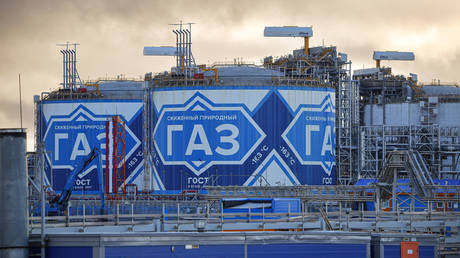
The vessel Disha successfully loaded 62,370 metric tonnes of liquefied natural gas from QatarEnergy’s Ras Laffan facility. However, structural intelligence indicates that two primary liquefaction trains at the facility sustained significant processing infrastructure damage during prior hostile actions. This damage has effectively neutralized approximately 17% of the facility's total processing capacity. Consequently, even if maritime safety is guaranteed by naval coalitions, the velocity of outbound LNG shipments will remain constrained by physical production bottlenecks. Shippers face extended layovers and demurrage accumulation because the shore-side infrastructure cannot match nominal pre-war loading rates.
The Habshan Gas Processing Matrix
A parallel infrastructure constraint exists at the United Arab Emirates' Habshan gas plant. Current operational data indicates that the facility is running at roughly 60% of total nominal capacity due to thermal processing damage and structural component failures incurred during the conflict period. While engineering projections suggest a recovery to 80% capacity by the end of 2026, full structural restoration is mathematically impossible until well into 2027. The implication for Indian industrial off-takers is severe: the lifting of a naval blockade does not automatically equate to the restoration of commodity volume flows. The supply chain must absorb both a maritime transit constraint and an upstream production deficit simultaneously.
Inter-Ministerial Coordination Protocols and Operational Limits
The institutional response led by the Ministry of Ports, Shipping and Waterways operates via an emergency inter-ministerial network comprising the Ministry of Petroleum and Natural Gas, the Ministry of Chemicals and Fertilizers, and the Ministry of External Affairs. While the Directorate General of Shipping has established an active maritime communications cell—processing 13,187 calls and 29,376 emails over the acute phase of the crisis—the limits of bureaucratic coordination must be recognized.
Emergency communications lines and repatriation frameworks are reactive risk-mitigation tools; they do not alter the physical security architecture of the Strait of Hormuz. The repatriation of 3,587 Indian seafarers from the conflict zone, while successful from a human welfare perspective, introduces an auxiliary operational challenge. Merchant vessels cannot be moved out of the Persian Gulf without certified, experienced crews. By systematically evacuating personnel from stranded vessels over the past 90 days, the maritime infrastructure has effectively mothballed these assets.
To reactivate the 13 stranded Indian-flagged ships, operators must execute a complex reverse-logistics operation: flying flight-crews back into regional hubs, securing safe-passage transit to vessels anchored in volatile waters, and conducting comprehensive mechanical re-commissioning of propulsion systems that have sat idle for over three months. This process introduces a baseline operational delay of at least 14 to 21 days per vessel, independent of geopolitical factors.
Strategic Realignment Mandate
The structural vulnerabilities exposed by the Persian Gulf crisis demand a fundamental departure from traditional maritime logistics frameworks. Relying on spot-market adjustments or post-incident diplomatic interventions is an insufficient risk mitigation strategy for an economy dependent on the Strait of Hormuz for 40% of its crude oil imports, 60% of its LNG imports, and 90% of its LPG imports.
The following three strategic operations must be executed immediately by state and private maritime entities to insulate the supply chain against future chokepoint failures:
First, ship operators and state agencies must transition from a reactive posture to a predictive, algorithmic routing model. This involves integrating real-time war-risk underwriting data directly with satellite-derived asset tracking to establish automated diversion thresholds before a vessel enters a chokepoint corridor.
Second, the Ministry of Chemicals and Fertilizers must establish permanent strategic reserves of agricultural inputs—specifically urea and diammonium phosphate—equivalent to a 90-day demand cushion. This buffer must be physically held at domestic ports of entry, completely decoupled from just-in-time supply chains, to prevent agricultural paralysis when maritime corridors close.
Third, state-owned shipping enterprises must legally restructure future long-term supply contracts to include mandatory bilateral naval escort clauses. These clauses must dictate that in the event of regional high-risk declarations, sovereign naval forces are legally empowered and logistically positioned to provide immediate kinetic escorts for flagged energy and chemical carriers, bypassing the delays inherent in multi-lateral diplomatic negotiations.