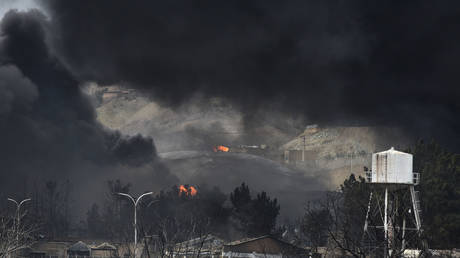
The ink on the ceasefire document is dry, but the dust in the streets of Bandar Abbas refuses to settle. For months, the world watched the screens. We tracked the trajectory of missiles, calculated the fluctuations of Brent crude, and listened to talking heads parse the strategic value of the Strait of Hormuz. Now, the tickers have stopped blinking. The anchors have moved on to domestic politics.
The war is over. But for those living in the wake of the kinetic exchange between the United States and Iran, the silence is heavier than the bombardment.
Wars do not actually end when governments sign papers. They simply transition from an acute crisis into a chronic condition. To understand the true cost of this conflict, we have to look past the macro-economic data and the clean military assessments. We have to look at the kitchen tables where chairs sit permanently empty.
The Microcosm of the Macro-Toll
Consider a hypothetical citizen named Dariush. Before the escalation, he managed a small logistics firm near the port. He is not a politician. He is not an ideologue. He is a man who knows the exact weight of a shipping container and the precise cost of a delayed customs clearance. When the embargoes tightened and the first precision strikes took out the radar installations near his office, his world contracted to the width of a cellar concrete floor.
Today, Dariush stands outside what remains of his warehouse. The structural steel is twisted into shapes that resemble skeletal remains. His business is gone. His savings, eaten by an inflation rate that soared into triple digits during the height of the naval blockades, are worthless.
This is the invisible ledger of modern warfare. When an infrastructure grid is dismantled, we measure the damage in megawatts lost or repair costs incurred. We rarely calculate the compounding human friction. Without reliable electricity, cold chains collapse. When cold chains collapse, insulin spoils. When insulin spoils, people die quietly in residential neighborhoods, miles away from the nearest craters.
The economic data points from the conclusion of the conflict are staggering. Analysts suggest the total regional reconstruction cost will exceed several hundred billion dollars. The global energy market suffered a shock that will depress GDP growth from Western Europe to East Asia for the next half-decade. But these numbers are too massive to truly comprehend. They lack teeth.
The real teeth are found in the daily realities of citizens trying to buy bread with currency that loses value between the morning and the afternoon.
The View from the Cockpit and the Cradle
On the other side of the ledger is another human face. Let us call her Sarah, a maintenance officer stationed on a carrier strike group that spent nine months in the Arabian Sea. She did not fire a weapon. She did not see the direct impact of the ordnance. Her war was measured in torque wrenches, sleep deprivation, and the constant, vibrating hum of the ship’s nuclear reactor.
Sarah returned to a port in Virginia three weeks ago. The welcome-home ceremony was loud, filled with flags and brass bands. But when the music stopped and she walked into a local grocery store, the bright lights and the sheer abundance of cereal choices felt overwhelming, almost violent.
The psychological toll on the service members tasked with executing high-tempo operations is a lagging indicator. It does not show up in the immediate post-war assessments. It manifests months later, in the sudden panic attacks triggered by the sound of a commercial airliner, or the inability to connect with a spouse who spent the war years dealing with the mundane realities of mortgage payments and school carpools.
The disconnect between the strategic victory claimed by policymakers and the lived experience of the participants is vast. The official narrative speaks of deterrence achieved and maritime lanes secured. The human reality speaks of fractured minds and disrupted lives.
The Intergenerational Debt
We must also confront the reality of the societal damage that cannot be rebuilt with concrete and steel. Trust is a non-renewable resource once it is scorched.
An entire generation of young people in the Middle East has just watched their aspirations evaporate. Educational institutions were shuttered. Tech startups that were beginning to connect local talent with global markets vanished when the fiber-optic cables were severed and the sanctions locked down digital platforms. The brain drain is accelerating. Anyone with a degree and a passport is looking for an exit, leaving behind a demographic landscape that is older, poorer, and deeply resentful.
The strategic thinkers argue that the conflict was necessary to prevent a larger, more catastrophic conflagration down the road. They might be right. In the cold logic of geopolitics, sometimes a smaller fire is used to create a firebreak. But sitting in the ashes, that logic feels remarkably hollow.
The real challenge begins now, in the gray zone between hostility and stability. Rebuilding a port is a matter of engineering. Rebuilding a society’s belief in its own future is a matter of decades.
The evening sun sets over the Persian Gulf, casting a long, amber glow across the oil slicks that still coat the rocky coastlines. A fishing boat, one of the few to venture out since the mines were cleared, cuts a slow path through the water. Its engine coughs, a lonely sound against the vastness of the sea. The conflict is written in the silence of the harbor, in the empty storefronts, and in the watchful, tired eyes of the people who survived it. They are left to pick up the pieces of a world that was broken in the name of a peace they have yet to feel.