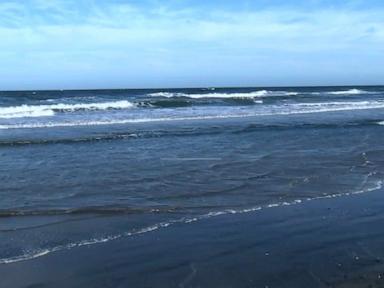
A school field trip to the beach is supposed to be a day of celebration, especially as the school year winds down. Instead, a trip to the Jersey Shore turned into every parent's absolute worst nightmare. Davoris Carter, a 14-year-old boy from Philadelphia, vanished in the ocean off Wildwood, New Jersey.
Emergency crews rushed to the scene near Schellenger Avenue and Morey’s Pier just before 1:30 p.m. on Monday. A Wildwood police officer courageously jumped straight into the rough surf, successfully pulling three struggling swimmers to safety. But Carter, a special needs student who was supposed to graduate from his program this week, never resurfaced.
As the massive search and rescue operation transitions into a grueling recovery mission, this devastating incident exposes massive gaps in school trip protocols, chaperone responsibilities, and off-season beach safety. It's time to talk about what went wrong and how to ensure it never happens again.
The Hidden Dangers of Pre-Season Beach Trips
The timeline of the Wildwood incident reveals a series of critical vulnerabilities that often catch school groups completely off guard.
First, there were no lifeguards on duty. While the boardwalk might be bustling by early June, most Jersey Shore municipalities do not staff their lifeguard stands on weekdays until later in the month. It is a common misconception that if the weather is warm, the beach is safe.
Second, the ocean conditions were treacherous. Wildwood Fire Chief Ernie Troiano III noted that the water was moving with extreme force from north to south. Strong rip currents and rough surf quickly overwhelmed the teens.
The most heartbreaking detail? Carter entered the ocean fully clothed. His family later found his unused swim trunks sitting on the sand. Heavy, water-logged clothing makes staying afloat nearly impossible, even for an experienced swimmer, let alone a child panic-stricken by a sudden current.
A Breakdown in One-on-One Supervision
This wasn't a standard field trip. The students on this outing had special needs, and according to Carter’s grandmother, Kenya Pippen, each child was assigned a dedicated one-on-one aide.
Accountability during water activities requires absolute, uninterrupted vigilance. Reports indicate that a family member who accompanied Carter on the trip briefly stepped away to get food. In those few unmonitored minutes, the teens moved toward the water.
Pippen expressed immense frustration over the apparent lack of intervention from the remaining adults on the scene, alleging that no staff members entered the water to stop the children or pull them back when they waded out too far. When dealing with vulnerable students, a breakdown in the chain of supervision can yield catastrophic results in less than sixty seconds.
The Multi-Agency Search Response
Once the alarm was raised, local and federal assets mobilized immediately. The initial response included:
- Local Police and Fire Personnel: Waded into the surf and deployed rescue swimmers.
- The U.S. Coast Guard: Dispatched boats and helicopters to scan the ocean up to 500 yards offshore.
- New Jersey State Police: Deployed drones and all-terrain vehicles to search the coastline and shifting sand dunes.
After two hours of battling intense waves, officials had to call off the active shoreline rescue efforts on Monday evening due to deteriorating conditions. Aviation and marine units have continued to scan the open water, but hope is dwindling as time ticks on.
Non-Negotiable Rules for Water-Based Field Trips
We cannot keep relying on hindsight to fix systemic safety issues. If a school district or youth program schedules a trip anywhere near a body of water, several strict rules must be enforced without exception.
Never Allow Water Entry Without Active Lifeguards
If lifeguards aren't sitting in the stands, the water is strictly out of bounds. Period. It doesn't matter how hot the day is or how shallow the water looks from the sand. School policies must explicitly state that un-lifeguarded waters are for viewing only, not swimming.
Maintain Clear Lines of Sight and Zero Distractions
Chaperones cannot look at their phones, read books, or leave their designated groups to grab food unless another vetted adult has formally taken over visual custody of the children.
Enforce Strict Dress Codes
Students should never be allowed near the surf zone in regular street clothes. If a student doesn't change into proper swimwear, they don't cross the dune line. Heavy denim, sneakers, and thick cotton sweaters act like anchors when wet.
Understand the Dynamic of the Ocean
The ocean isn't a swimming pool. Currents change by the hour based on the tide cycle. If you don't know how to spot a rip current—a dark, flat gap in the lines of breaking waves—you shouldn't be managing children near the water.
School districts must immediately audit their field trip approval processes. Any trip planned for a coastal area before mid-June requires a rigorous risk assessment. If the destination lacks active emergency personnel on the beach, the itinerary must be changed to keep students entirely off the sand.