The courthouse in downtown Los Angeles smells of old carpet, floor wax, and unmoored anxiety. Fluorescent tubes hum a steady, nervous frequency overhead. People sit on wooden benches with their shoulders pulled up toward their ears, guarding manila folders like shields. Inside those folders are text message screenshots, police reports with redacted names, photographs of bruised collarbones, and handwritten logs of footsteps heard outside a bedroom window at three in the morning.
They are looking for a piece of paper. A temporary restraining order. A legal membrane to keep a ghost from stepping back through the front door.
They think the court is a sanctuary. They do not yet know it is an accountant.
Statistically, the doors of that sanctuary remain bolted shut for most who knock. In Los Angeles County, only about one in every five petitions for a domestic violence restraining order is granted in full. Eighty percent of those who stand before a judge seeking an official barrier against an abuser walk away with a denial, a dismissal, or a watered-down directive that requires another hearing, another confrontation, another exposure to the very volatility they are trying to escape.
One in five.
Let those numbers sit in the quiet for a moment. They do not represent a clerical error. They represent a design.
Consider a hypothetical applicant, a woman we will call Elena. Elena sits on the hard wooden bench, tracing the frayed edge of her sleeve with a thumb that won't stop shaking. Three nights ago, her ex-partner stood outside her apartment building, his silhouette framed by the amber streetlamp, shouting promises of ruin. He did not touch her. He did not swing a fist. He simply stood there, breathing heavy fog into the chill night air, knowing she was watching from behind the thin glass of her kitchen window.
To Elena, that silhouette was a loaded gun. It was the culmination of two years of psychological erosion, of whispered threats in grocery store aisles, of broken dishes and locked bedroom doors.
To the law, a silhouette is ambiguous.
When Elena stands before the bench, the judge looks at her papers through wire-rimmed glasses. The judge is not cruel. The judge is exhausted, managing a docket that stretches to the horizon, operating under a statutory framework built like a medieval fortress. The law demands precision. The law demands a clear, imminent, provable threat of physical violence documented in ink or recorded on a server. A lingering shadow by a streetlight does not easily translate into a legal category.
"Has he struck you in the last thirty days?" the judge asks.
Elena shakes her head. She explains the mental cage, the relentless hum of terror.
The judge sighs, sliding the papers back across the polished wood. Insufficient evidence of immediate harm. Return when something tangible happens.
This is the great fracture at the heart of the system. The law views abuse as an event. Survivors experience abuse as an environment.
An event has a beginning, a middle, and a police report. An environment is the oxygen in the room. It is the way your stomach drops when a car horn sounds too much like his car horn. It is the phantom weight of footsteps on the stairs. Courts are built to adjudicate events. They are disastrously unequipped to measure atmospheres.
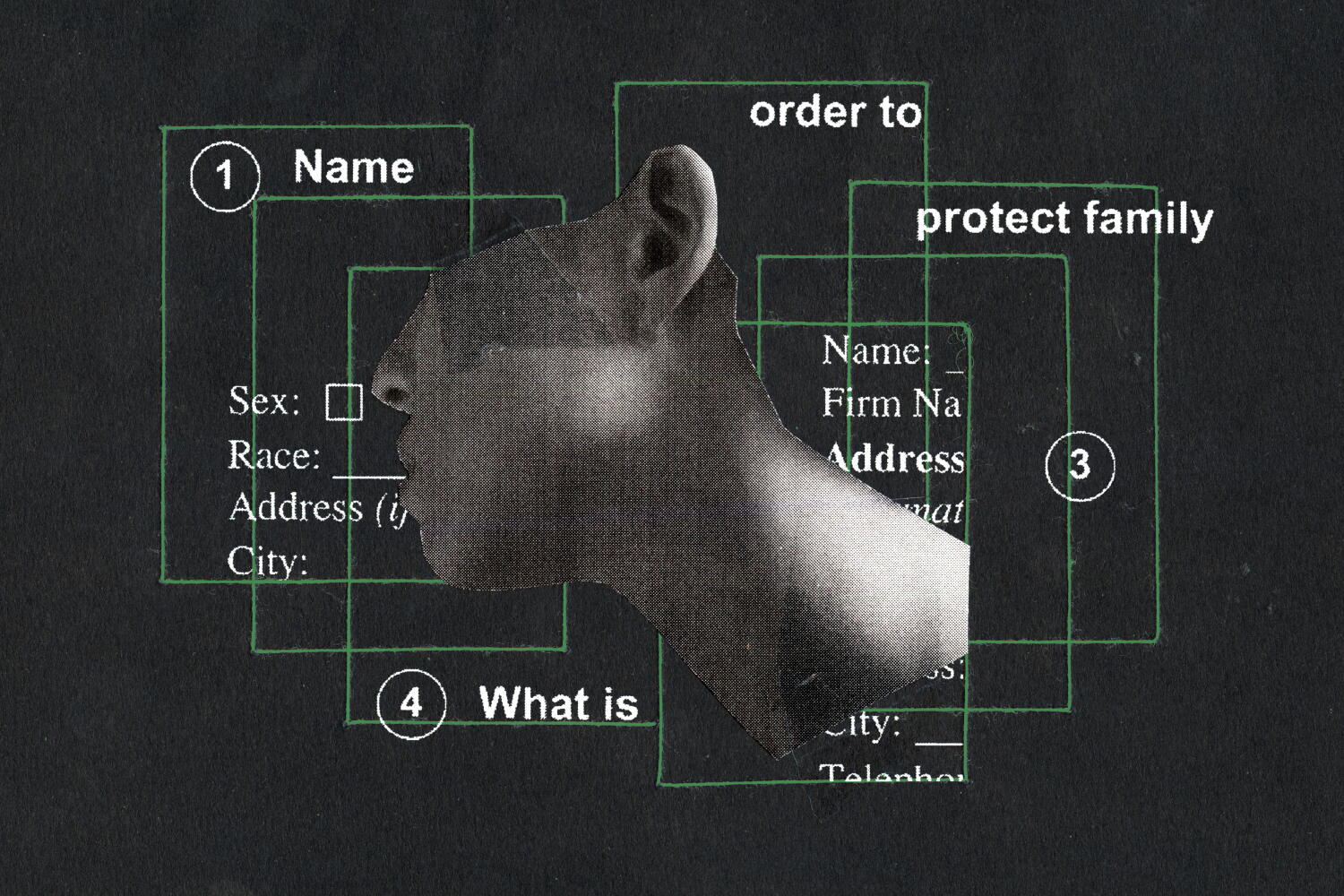
When a petitioner asks for protection, they are forced to translate a living, breathing nightmare into a rigid legal dialect. Every sigh must become an affidavit. Every glance must become a screenshot. If the threat is subtle—psychological attrition, financial strangulation, the slow-drip poison of control—it slips right through the wide mesh of statutory requirements.
The legal standard requires a demonstration of a credible threat of violence. But violence rarely arrives with a notarized RSVP. It creeps. It evolves. By the time an abuser’s actions cross the high, rigid threshold required by a harried magistrate, the damage is already structural.
Think about what it takes to compile a petition. It takes time. It takes money for filing fees or the stamina to navigate labyrinthine self-help centers. It takes a phone with enough storage to hold months of digitized menace. And, most cruelly, it requires proximity.
To gather the evidence that convinces a court you are in danger, you must often remain in danger long enough to document it.
If you block the number, you lose the text messages. If you move without a forwarding address, you cannot serve the papers. If you change your routine to avoid the parking lot where he waits, you fail to capture the confrontation on a security camera. The system demands that victims become amateur private investigators in their own theater of war.
Compounding this evidentiary burden is the stark reality of legal representation. The vast majority of petitioners walk into these courtrooms entirely alone, speaking a language they do not know, trying to cross-examine respondents who have saved up for counsel or possess a natural talent for institutional manipulation. A survivor with a trembling voice and a stack of unorganized papers stands little chance against a polished advocate pointing out procedural flaws in a filing.
And what happens when the petition is denied? The message sent to the abuser is not one of restraint. It is an authorization. A judicial stamp of approval that whispers that nothing illegal has occurred.
Denials do not pacify; they embolden. They strip away the victim’s last remaining institutional ally and hand the aggressor a weaponized narrative: even the court said I did nothing wrong.
Step into the courtroom itself and the bureaucratic machinery becomes visceral. The air is sterile. Cases are heard in minutes, sometimes seconds. A family law court in a sprawling metropolis like Los Angeles processes an astonishing volume of human misery daily. There is no time for nuance. There is no room for the slow unpacking of trauma histories.
Judges rely on bright-line rules because they must. Did he hit her? Is there a police report? Is there a voicemail with explicit intent? If the answer is no, the petition founders on the rocks of legal caution. The system errs on the side of caution—not for the person cowering in the kitchen, but for the theoretical rights of the respondent. The jurisprudence of civil liberties casts a long, heavy shadow over the jurisprudence of survival. After all, a restraining order carries consequences. It restricts movement. It affects firearms ownership. It stains a record.
So the scale dips toward preservation of the status quo, demanding mountains of proof while the ground beneath the petitioner’s feet continues to crumble.
Shift the lens. Look at what happens when we view protection not as a penal sanction against an individual, but as basic infrastructure for human safety. Imagine a society where asking for sanctuary does not require a law degree and a digital forensic lab.
We treat restraining orders like rare medals handed out only to those who survive the gauntlet with enough physical receipts. We treat safety as a scarce commodity to be rationed out through strict evidentiary gatekeeping.
This scarcity mindset creates perverse incentives. It forces victims to wait for escalation. It turns the legal system into a passive spectator waiting for blood to be drawn before it will hand out a cardboard shield.
The ripple effects of this failure extend far beyond individual courtrooms. When four out of five people leave empty-handed, trust in civic institutions evaporates. People stop calling. People stop filing. They retreat into silence, managing their own risk behind deadbolts and drawn curtains, carrying the quiet, exhausting labor of self-preservation alone.
A society that makes protection inaccessible does not prevent conflict; it privatizes it. It forces domestic disputes out of the cold light of legal scrutiny and back into the dark, unsupervised corners of domestic life where tragedy festers away from witnesses.
The courthouse doors swing open, and the afternoon sun of downtown Los Angeles cuts sharp, blinding angles across the concrete steps. Elena walks out. She does not have her piece of paper. She clutches her manila folder against her chest like a broken rib, her knuckles white.
Behind her, the building stands tall and heavy, built of granite and good intentions, engineered to weigh evidence and measure proof. But out here on the sidewalk, amidst the roar of traffic and the glare of the southern California sun, the weight of the world is not measured in affidavits.
It is measured in heartbeats. And right now, hers is the only sound keeping time.