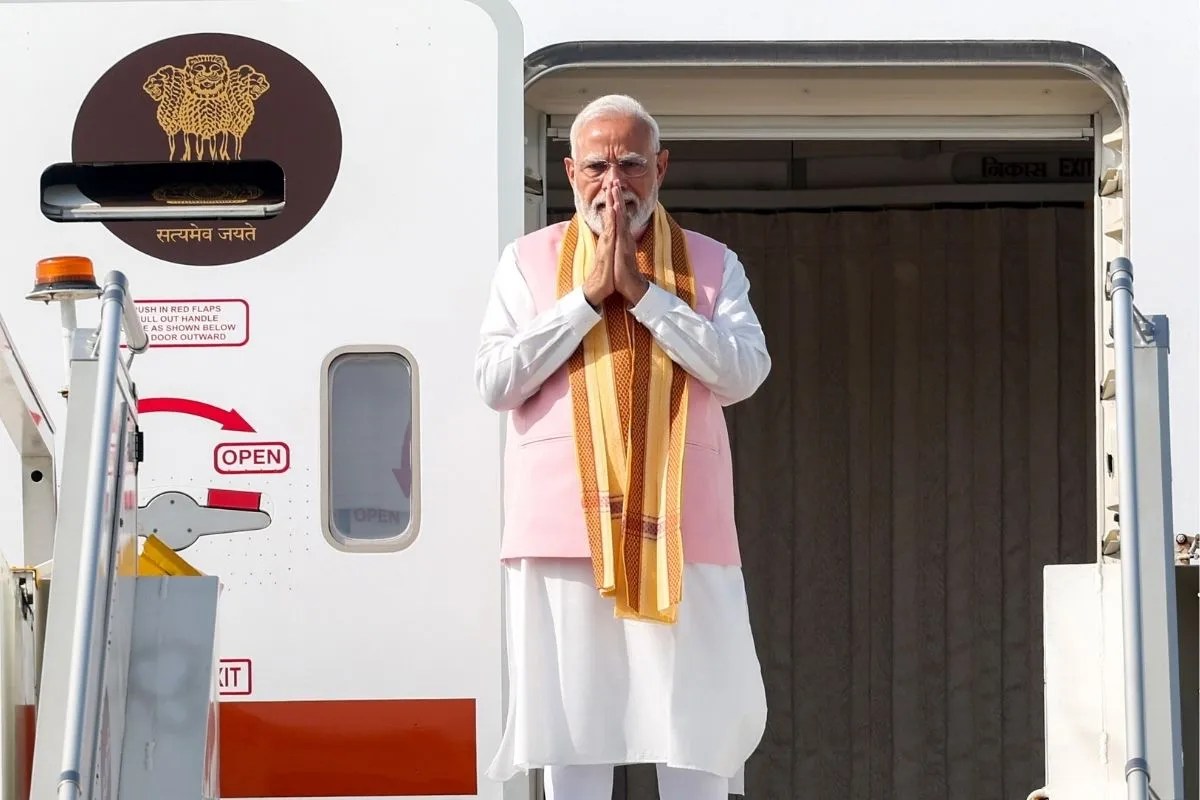
Prime Minister Narendra Modi’s four-day diplomatic blitz across Uzbekistan and the Kyrgyz Republic is not a routine diplomatic junket, but a calculated push to break through the geographic and geopolitical barricades strangling India's trade and security footprint in Eurasia.
Landing in Tashkent before heading to Bishkek for the twenty-sixth Shanghai Cooperation Organisation summit, New Delhi faces a stark reality. Central Asia holds the uranium, critical minerals, and hydrocarbons necessary for industrial scaling, yet India’s bilateral trade with the region sits at a meager one billion dollars.
Geography has historically treated South Asia unkindly. Pakistan persistently denies direct overland transit rights, effectively locking India out of its extended neighborhood. To bypass this blockade, Indian strategy relies heavily on the International North-South Transport Corridor and Iran's Chabahar port.
Progress remains agonizingly slow. Bureaucratic inertia, insurance complexities, and secondary sanction pressures on transit hubs turn what should be fluid trade routes into logistical hurdles. Modi’s meetings with Uzbek President Shavkat Mirziyoyev and Kyrgyz President Sadyr Zhaparov attempt to substitute slow-moving maritime corridors with digital connectivity, supply chain agreements, and targeted bilateral frameworks.
The Security Dilemma Inside the Eurasian Bloc
Security remains the founding anchor of the Shanghai Cooperation Organisation, yet member states hold divergent views on what constitutes an immediate threat. While New Delhi continuously presses the bloc to address cross-border terrorism, separatism, and extremism originating from the Afghanistan-Pakistan theater, other capitals juggle competing priorities.
The bloc operates on strict consensus, which frequently dilutes hard-hitting counter-terrorism mandates into broad diplomatic declarations. India stays inside the room because empty chairs yield zero influence. Walking away from the table surrenders strategic space directly to Beijing and Moscow.
Regional stability dictates that New Delhi maintains a physical and diplomatic presence in Bishkek. The twenty-sixth summit marks a quarter-century since the grouping’s inception. Over those twenty-five years, the organization expanded from a regional border-resolution mechanism into a ten-member Eurasian monolith accounting for a quarter of global economic output.
For India, the platform offers simultaneous, multi-directional engagement. It allows direct interaction with Russian leadership, cautious diplomatic testing with China following recent border disengagement talks, and unavoidable proximity to Pakistan. Managing these simultaneous vectors requires sharp diplomatic footwork without compromising strategic autonomy.
Economic Realities Behind the Bilateral Summitry
Bilateral talks in Tashkent target the convergence of India's long-term industrial ambitions with Uzbekistan's modernization agenda. Pharmaceutical exports, information technology, and digital public infrastructure serve as the primary commercial bridges.
Yet trade volumes fail to match political goodwill. Private Indian conglomerates historically view Central Asia as high-risk and logistically opaque, preferring more predictable western markets. Mitigating this hesitation requires institutional de-risking.
Central Asian republics possess vast reserves of copper, lithium, and rare earth elements essential for modern electronics and clean energy manufacturing. Securing long-term offtake agreements for these critical minerals requires competitive logistics networks. If transport costs through Iran and the Caspian Sea remain high, raw material acquisition becomes economically unviable.
Modi’s push for digital connectivity seeks to bypass physical bottlenecks by exporting India's digital public infrastructure stack. Establishing unified digital payment systems and regulatory frameworks across landlocked borders can reduce transaction friction, even if heavy cargo movement remains constrained.
Navigating the Great Power Currents
Multialignment defines India's foreign policy doctrine, yet executing it within an organization heavily shaped by the Sino-Russian axis grows increasingly complex. Beijing utilizes the bloc to promote alternative economic structures and counter Western-led financial dominance, sometimes attempting to align member states against traditional Western alliances.
New Delhi consistently resists attempts to turn the multilateral framework into an explicit anti-Western coalition. India maintains active partnerships through Western-leaning architectures like the Quad while simultaneously sitting at the table in Eurasia. Balancing these competing loyalties requires constant recalibration.
The presence of Iran and Belarus within the expanding membership adds another layer of friction. Tehran’s inclusion brings vital access to West Asian trade corridors via Chabahar, but it also ties the grouping closer to nations facing severe Western sanctions. India must carefully thread the needle, ensuring its economic engagement with sanctioned transit states does not trigger secondary penalties that could damage its broader global commerce.
Success or failure will not be decided by the rhetorical flourishes delivered during plenary sessions in Bishkek. The true test lies in whether bureaucratic machinery in New Delhi, Tashkent, and Bishkek can convert joint statements into paved roads, functioning trade agreements, and unhindered supply chains. Without sustained follow-through, Central Asia will remain a brilliant opportunity locked behind an impenetrable wall of geography.