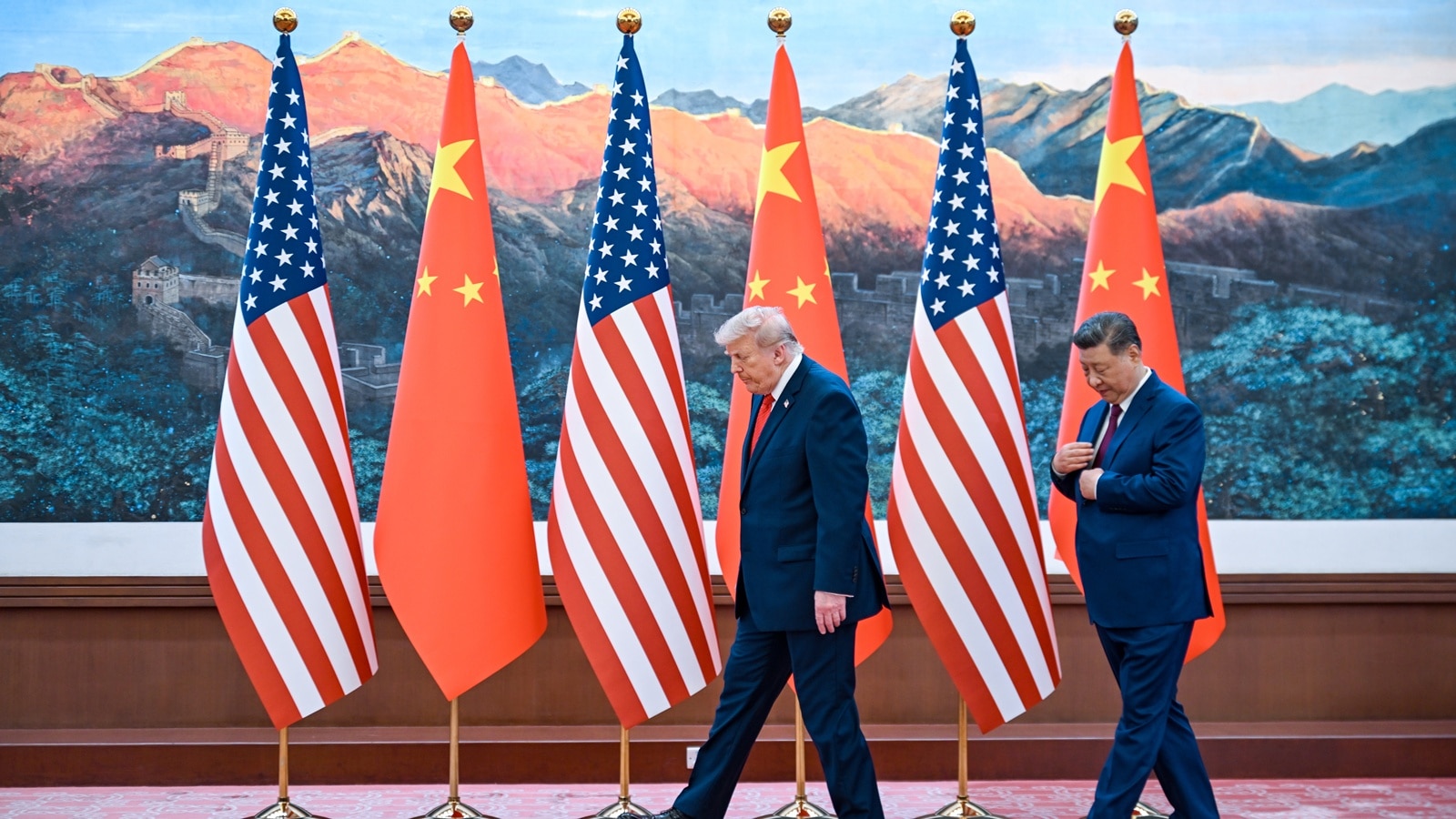
You’d think the tension between Washington and Beijing would keep American executives far away from the Forbidden City. Instead, a massive delegation of corporate heavyweights just landed in China, trailing right behind President Trump. It’s a scene we saw in 2017, but the stakes in 2026 feel much heavier.
The reality is simple. These CEOs aren't there for the photo ops or the state dinners. They’re there because their balance sheets are tied to Chinese consumers, Chinese factories, and the increasingly complex web of global supply chains. If you’re running a trillion-dollar company, you can’t afford to be on the outside looking in when the two biggest economies on earth start talking trade.
The heavy hitters on the manifest
This isn't a small group of mid-level managers. We’re talking about the titans of tech, finance, and manufacturing. The list reads like a Who’s Who of the S&P 500.
- Elon Musk (Tesla/SpaceX): Musk is basically a regular in Beijing at this point. With Tesla’s Giga Shanghai producing a massive chunk of his global output, he’s got more skin in the game than almost anyone else.
- Tim Cook (Apple): Even as Apple tries to move some production to India and Vietnam, the vast majority of iPhones still come out of China. Cook has spent years playing the diplomat, and he isn’t stopping now.
- Jensen Huang (Nvidia): His inclusion was a late-breaking story. With AI chip restrictions causing a massive headache for Nvidia's revenue, Huang is looking for any opening to keep his hardware in Chinese data centers.
- Cristiano Amon (Qualcomm): China accounts for roughly half of Qualcomm’s revenue. For them, a bad trade relationship isn't just a hurdle—it’s an existential threat.
- Jane Fraser (Citigroup) and David Solomon (Goldman Sachs): The finance giants want in on China’s massive wealth management market. They’ve been waiting for years for a real "opening up" of the financial sector.
What happened to the 2017 promises
If this feels like a sequel, that’s because it is. Back in November 2017, Trump brought a similar crew to Beijing. They signed over $250 billion in "deals." Boeing landed a $37 billion agreement for 300 planes. Qualcomm signed three non-binding memorandums of understanding worth $12 billion.
But here’s the thing. Most of those "deals" were just intentions. They weren't firm contracts. In the years that followed, the trade war kicked off, tariffs went up, and many of those grand promises evaporated. The CEOs on the plane this time are smarter. They’re looking for regulatory approvals and market access, not just flashy headlines.
The gamble for market access
Why take the risk? Why fly across the world to stand next to a president who often talks about "decoupling"?
Because the "China plus one" strategy is easier said than done. You can't just move a decade’s worth of specialized manufacturing to Ohio overnight. For companies like Apple and Tesla, China isn't just a factory—it’s the world’s most important market for high-end electronics and electric vehicles.
The tech leaders, specifically, are walking a tightrope. The US government wants to block high-end AI chips from reaching China. Meanwhile, the Chinese government is pushing its own domestic chip industry to catch up. If US companies like Micron or Nvidia get locked out of China entirely, they lose a massive revenue stream that funds their R&D back home. It's a brutal cycle.
The agricultural and energy angle
It's not all about silicon and software. Agriculture is a massive piece of the puzzle. Brian Sikes of Cargill is on this trip because China is the top buyer of US soybeans and corn. When trade relations sour, American farmers are the first to feel the burn.
Energy is the other big player. US firms are desperate to lock in long-term Liquefied Natural Gas (LNG) contracts. China needs the energy to power its industrial base, and the US has a surplus. It’s one of the few areas where both sides actually want the same thing.
Why the snubbed matter
It’s also worth looking at who isn't there. Noticeably absent from the early lists were many of the pure-play internet companies. If your business is built on data and social media, China basically closed its doors to you a decade ago.
The companies on this trip are "hardware and money" firms. They make physical things or move actual capital. That’s the only language the current trade environment speaks.
What to watch for next
Don't get blinded by the big dollar signs the White House might announce in the coming days. The real wins for these CEOs will be quiet ones:
- An obscure license for a bank to operate a wholly-owned subsidiary.
- A regulatory sign-off for a new medical device from Illumina.
- A commitment from Beijing to stop pressuring tech firms to hand over their source code.
The most practical thing you can do as an investor or observer is to ignore the "handshake deals" and watch the quarterly earnings calls. If these CEOs start talking about "improved regulatory clarity" in China three months from now, then the trip was a success. If they stay silent, they likely came home empty-handed.
Keep an eye on the specific export licenses for companies like Nvidia and Qualcomm. If those start getting approved shortly after this summit, you'll know exactly what the "price" of this trip was. Trade isn't about friendship—it's about leverage. And right now, both sides are trying to see who has more.