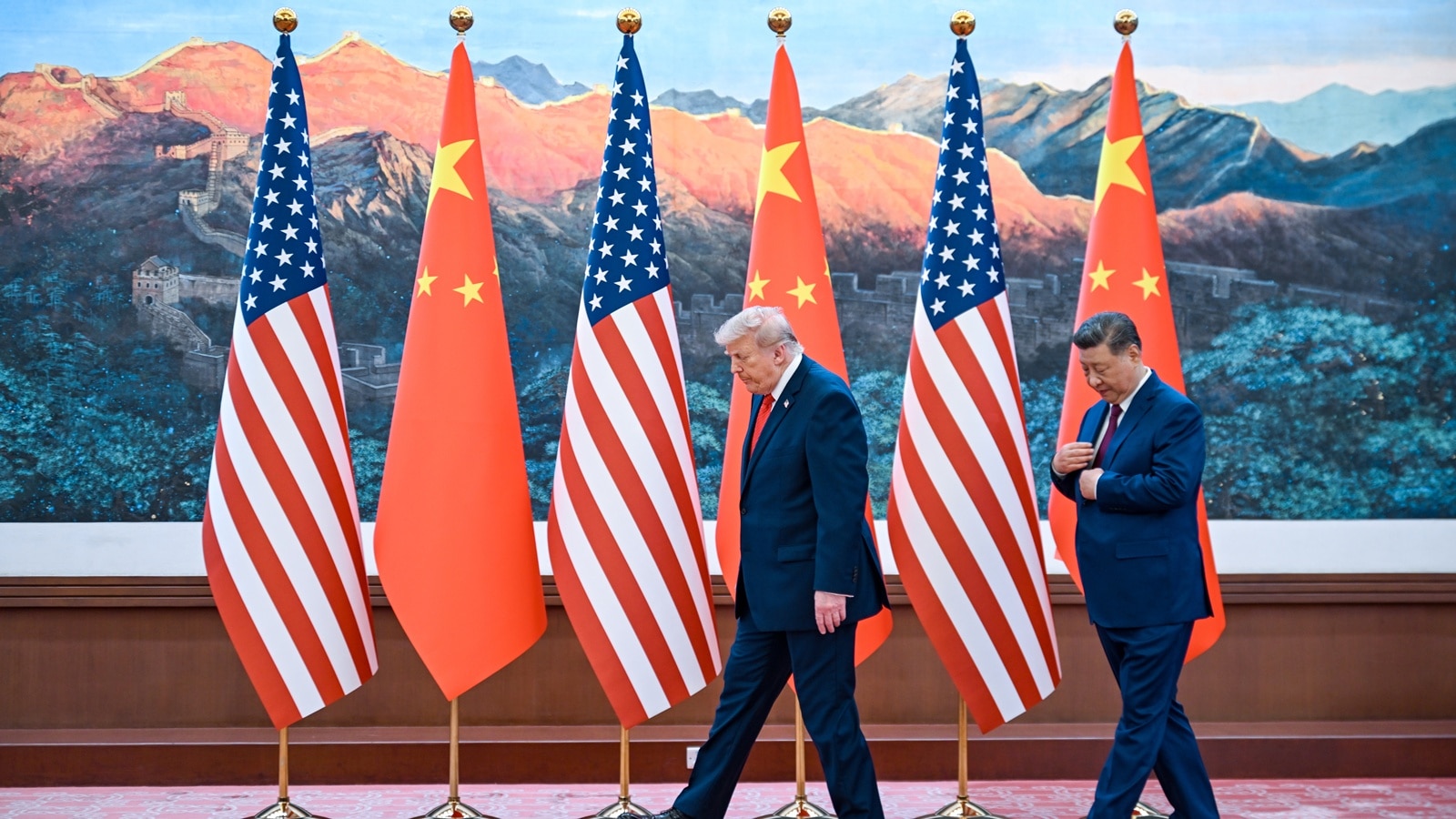
The American energy machine is pumping out crude at record levels, and Washington insists that President Xi Jinping wants a larger slice of that pie. Yet, as the White House signals a potential surge in exports to the Far East, Beijing has maintained a stony, calculated silence. This disconnect highlights a fundamental friction in global trade where energy security and geopolitical posturing have become inseparable. While the U.S. looks to solidify its position as the world’s top producer by locking in the world’s largest importer, China is playing a much longer, more cautious game that involves diversifying its suppliers to avoid over-reliance on a rival.
The Disconnect Between Verbal Overtures and Hard Data
Public statements from U.S. officials often paint a picture of a China eager to stabilize its economy through reliable American energy. They point to closed-door discussions where "interest" is expressed. However, in the world of high-stakes commodities, interest is cheap; infrastructure and long-term contracts are expensive. If China were truly pivoting back to U.S. crude in a massive way, we would see it in the tanker tracking data and the term-contract registrations. We don't.
Instead, the numbers show a China that is increasingly comfortable sourcing its "baseload" energy from Russia, Iran, and the Middle East. American crude remains a swing supply for Chinese refiners—a luxury they indulge in only when the price spread between West Texas Intermediate (WTI) and Brent crude makes the long journey across the Pacific mathematically irresistible.
Why the White House Needs This Win
For the current administration, exporting oil to China isn't just about balancing the trade deficit. It is a tool for domestic stability. If American producers can't find a home for their burgeoning Permian Basin output, prices at the wellhead drop, investment slows, and the domestic energy boom withers. By framing Xi as a willing buyer, Washington attempts to reassure the markets and the domestic oil lobby that demand is "sticky" even in a fractured geopolitical environment.
The strategy is transparent. If you tell the market the world’s biggest buyer is interested, you keep the floor under the price of WTI. It’s a psychological play as much as an economic one. But the silence from the Zhongnanhai leadership suggests they are not interested in helping Washington tell that story.
The Strategic Petroleum Reserve Factor
A significant portion of the tension involves the optics of the Strategic Petroleum Reserve (SPR). When the U.S. releases oil to curb domestic gasoline prices, some of those barrels inevitably end up in the hands of international traders who sell them to the highest bidder—often Chinese state-owned enterprises like Unipec. This creates a political firestorm in the U.S., where critics argue that "American oil" is being used to fuel a competitor’s military and industrial complex.
Beijing watches these domestic American squabbles with intense interest. They understand that any deal to buy "more" American oil comes with massive political strings attached. Why would Xi commit to a long-term purchase agreement that could be torn up by the next Congress or used as leverage in a dispute over Taiwan or semiconductor chips?
The Logistics of Distrust
Shipping oil from the U.S. Gulf Coast to Qingdao is a logistical feat that takes roughly 45 to 50 days. During that time, the cargo is at the mercy of maritime bottlenecks and shifting Sanctions regimes. China has spent the last decade building pipelines from Russia and Central Asia specifically to bypass the vulnerabilities of sea-borne trade. To Beijing, American oil is "at-risk" oil.
- Political Risk: The threat of sudden export bans or tariffs.
- Geographic Risk: The reliance on the Malacca Strait or the Panama Canal.
- Currency Risk: The ongoing push to settle energy trades in Yuan rather than Dollars.
Energy as a Chess Piece in the Trade War
The silence from China regarding American oil purchases is a deliberate negotiating tactic. By not confirming interest, they deny the U.S. a "win" in the public arena. They are essentially telling Washington that if they want China to buy more crude, the U.S. will have to offer concessions elsewhere—perhaps in the realm of tech exports or tariff reductions.
Refiners in China’s Shandong province—the "teapots" that drive a huge portion of independent demand—are pragmatic. They want the cheapest barrel. Currently, discounted Russian Urals and Iranian blends are far more attractive than U.S. light sweet crude, which carries a premium and requires complex blending for their specific refinery configurations. Until the U.S. is willing to compete on price and guarantee "sanctity of contract," the talk of Xi’s interest remains little more than diplomatic hopeful thinking.
The Refined Product Reality
While the focus remains on crude, the real story is often in the refined products. China is rapidly expanding its own refining capacity, aiming to become the world’s gas station. They don't just want to buy oil; they want to control the value chain. If they buy American crude, it is only to process it and sell it back to the global market, competing directly with American-based refiners. This creates a circular rivalry that the "Xi is interested" narrative conveniently ignores.
Infrastructure Versus Rhetoric
To truly believe that a surge in exports is coming, one must look at the Gulf Coast infrastructure. We are seeing massive investments in Deepwater Ports capable of loading Very Large Crude Carriers (VLCCs). These projects are built on the assumption of long-term Asian demand. However, the capital behind these projects is increasingly private and wary. They aren't waiting for a signal from the White House; they are waiting for a signal from the Chinese state banks.
The silence from Beijing is the loudest signal in the room. It says that for all the talk of "stabilizing the relationship," energy remains a contested battlefield. China is not looking to be a customer of the United States; it is looking to be a peer that chooses its suppliers based on strategic advantage rather than convenience.
The Fragile Balance of the Permian
The American shale industry is a victim of its own success. Efficiency gains have led to a glut of light oil that the aging U.S. refinery system—built for heavy sour crudes from Venezuela and the Middle East—can't handle. This oil must go overseas. If China doesn't take it, the U.S. must find homes in Europe or India, often at lower margins.
Washington’s insistence on Xi’s interest is an admission of vulnerability. It reveals that the U.S. energy boom is fundamentally dependent on the appetite of its greatest rival. Every barrel of oil produced in West Texas that doesn't have a guaranteed buyer is a liability for the American economy.
The standoff continues. Washington will continue to broadcast China’s supposed hunger for American energy to keep the markets buoyant. Beijing will continue to say nothing, quietly filling its tanks with barrels from America’s adversaries and waiting for the moment when it can use its status as the "buyer of last resort" to extract the maximum possible price from a desperate seller. In this game, the one who speaks first usually loses the most ground.
Stop looking at the press releases and start watching the tankers leaving the Louisiana Offshore Oil Port. If they aren't heading for China in record numbers, the "interest" Washington speaks of is nothing more than a ghost in the machine.