The moral grandstanding from the usual suspects regarding Iran is exhausting. Critics love to weaponize the word "extortion" when describing Donald Trump’s approach to Tehran, claiming he needs a mirror to see the real bully. This perspective isn't just tired; it is fundamentally blind to the mechanics of power. It assumes that international relations should operate like a faculty lounge mixer where everyone plays by a set of rules that haven't existed since 1945.
The lazy consensus suggests that Trump’s maximum pressure campaign was a chaotic failure of character. The reality? It was a cold, hard recognition of how the world actually works. While the ivory tower screams about "unpredictability," the people actually moving money and missiles understand that predictability is the fastest way to get fleeced at the negotiating table.
The Extortion Fallacy
Calling a nation’s foreign policy "extortion" is a cheap rhetorical trick used by those who don't have the stomach for leverage. In the private sector, we don't call it extortion when a dominant player dictates terms to a distressed competitor; we call it a Tuesday.
Foreign policy is the management of interests, not the curation of friendships. When the U.S. leverages the global financial system to squeeze a regime that exports instability, it isn't "hypocrisy." It is the application of the only language the Iranian leadership speaks: economic survival.
The critics argue that Trump "looked in the mirror" and saw a reflection of the very tactics he criticized. That isn't the "gotcha" they think it is. It is the definition of effective competition. If your opponent is using asymmetric warfare, proxy militias, and regional intimidation, you don't fight back with a strongly worded letter from the UN. You fight back by cutting off the oxygen to their bank accounts.
The Myth of the "Rules-Based Order"
We need to stop pretending there is a "rules-based order" that Iran follows. The Joint Comprehensive Plan of Action (JCPOA) was a desperate attempt to buy time with a regime that never stopped its ballistic missile program or its funding of regional chaos.
Critics claim Trump’s withdrawal was the "original sin." I’ve seen boards of directors cling to failing mergers for years because they were too proud to admit they got a bad deal. The JCPOA was a bad deal. It provided upfront sanctions relief for back-ended promises. In any high-stakes negotiation, if you give away your best chips in the first round, you’ve already lost.
Trump’s "transactional" approach—often mocked as crude—is actually the most transparent form of diplomacy we’ve seen in decades. He told the world exactly what he wanted: a better deal or total economic isolation. There was no "tapestry" of hidden agendas. It was a binary choice.
Leverage is Not a Dirty Word
Most people don't understand how $leverage$ functions in geopolitics. It’s not a static asset. It’s a perishable good.
- Economic Sanctions: These aren't "punishment." They are a tool to force a change in the cost-benefit analysis of the target.
- Unpredictability: Critics call it "instability." I call it a tactical advantage. If your adversary knows exactly how you will react, they can price that reaction into their strategy.
- Primary vs. Secondary Sanctions: This is where the real power lies. By telling the rest of the world they can trade with the U.S. or trade with Iran, but not both, the U.S. isn't "bullying." It is exercising its market dominance.
The downside to this approach? It’s messy. It creates friction with allies who would rather stay comfortable in a status quo that benefits them. It requires a stomach for short-term volatility. But the alternative—the "polite" diplomacy of the last twenty years—resulted in a nuclear-adjacent Iran with a reach that extends from Lebanon to Yemen.
The Counter-Intuitive Truth About Stability
The "experts" will tell you that Trump’s rhetoric made the world more dangerous. They point to the 2020 tensions as proof. But look at the data of the Abraham Accords. By signaling that the U.S. was no longer interested in the old, failed "peace process" and was instead focused on realigned interests, the administration facilitated the most significant shift in Middle Eastern diplomacy in a generation.
This didn't happen because people were being "nice." It happened because the U.S. broke the old model. It stopped trying to be the world’s therapist and started being the world’s biggest stakeholder.
When you stop treating foreign policy as a moral crusade and start treating it as a series of high-stakes transactions, you get results. You might not get invited to the best dinner parties in Brussels, but you move the needle.
The Mirror is Actually a Window
The claim that Trump needs to "look in the mirror" implies that he doesn't know what he's doing. It suggests his actions are an accidental reflection of the regimes he opposes.
This is a fundamental misunderstanding of the man and the method. He knows exactly what the reflection looks like. He's using the same mirror to show the world that the U.S. is no longer willing to pay for the privilege of being ignored.
The critics are stuck in a 1990s fever dream where U.S. power was so absolute that we could afford to be "magnanimous" to regimes that wanted us dead. That era is over. We are in a multipolar world where every interaction is a negotiation and every negotiation is about who has the most to lose.
If the U.S. is "extorting" its way back to a position of strength, then so be it. The alternative is a slow, polite slide into irrelevance while we wait for a "rules-based order" that isn't coming back to save us.
Stop looking for a moral center in a cage fight. The "extortion" people complain about is just the sound of the U.S. finally asking for its money's worth. If you find that offensive, you aren't paying attention to the scoreboard.
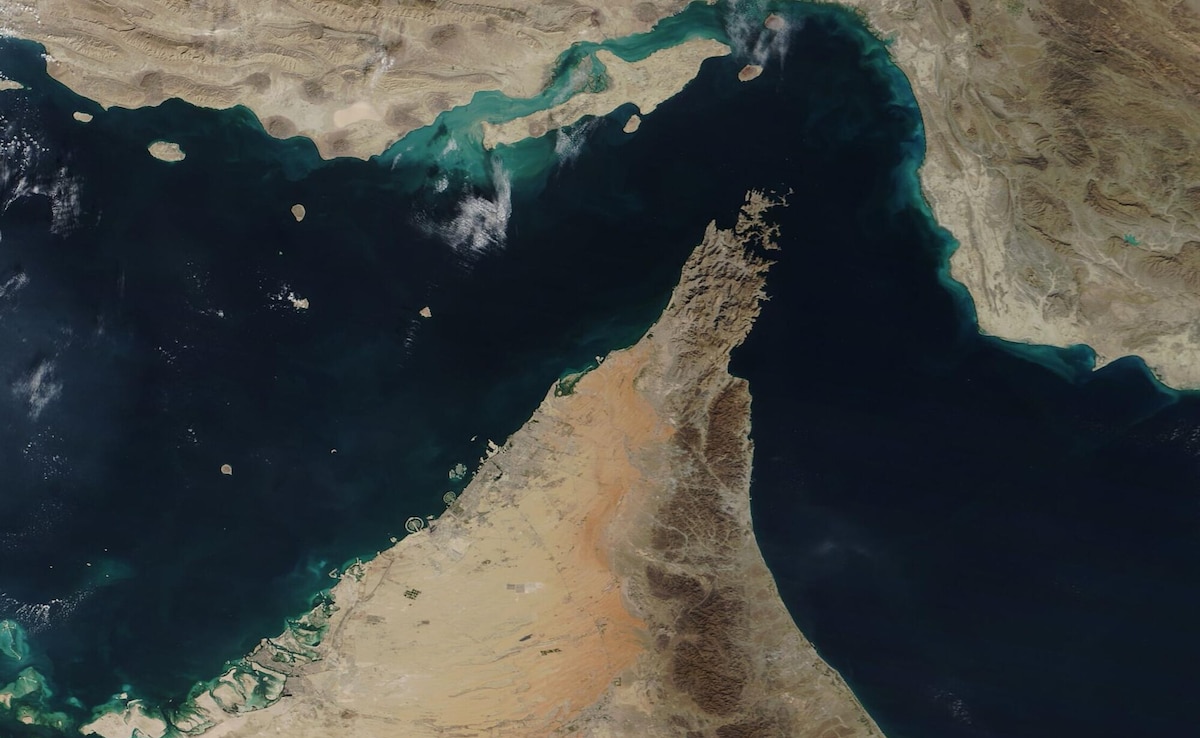
Quit crying about the tactics and start looking at the map. The old rules didn't keep Iran from the brink of a bomb; they paved the way. Trump didn't break the system; he just pointed out that it was already a pile of glass.
Pick up a shard and start cutting or get out of the way.