American foreign policy has historically functioned as a tension between liberal internationalism and realist containment. Donald Trump’s administration introduced a third, distinct mechanism: Mercantilist Realism. While critics often conflate his actions with traditional American interventionism or isolationism, he fundamentally re-engineered the cost-benefit analysis of global engagement. To understand the "one thing" that separates his tenure from his predecessors, one must look past the rhetoric and analyze the shift from Value-Based Hegemony to Asset-Based Transactionalism.
The Three Pillars of Conventional US Interventionism
To isolate the Trump deviation, we must first define the baseline of 20th and 21st-century American power. Since 1945, US presidents have generally operated within a framework defined by three structural constants:
- Systemic Maintenance: The belief that the US must subsidize the global security architecture (NATO, freedom of navigation) to ensure the stability of the global markets it dominates.
- Ideological Export: The utilization of military and economic pressure to expand liberal democratic norms, often framed as a moral imperative but functioning as a tool for political alignment.
- Forward Presence as Deterrence: A heavy reliance on permanent overseas basing and "tripwire" forces to prevent regional conflicts before they start.
The cost function of this strategy is high. It requires a permanent defense tax on the domestic economy and an acceptance of "sunk costs" in regions with diminishing returns. Every president from Truman to Obama viewed these costs as the necessary price of leadership.
The Trump Inversion: The Mercantilist Cost Function
Trump’s approach broke the systemic maintenance model by applying a Private-Equity Logic to sovereign alliances. In this framework, an alliance is not a shared ideological bond; it is a service contract. This created a new set of operational variables:
1. Protection as a Service (PaaS)
The administration treated military deployment as a billable asset. When demanding that NATO members meet the 2% GDP spending threshold or that South Korea increase its contribution to the cost of US troops (under the Special Measures Agreement), the underlying logic was not about collective security. It was about reducing the "carrying cost" of the American empire.
2. Radical Unpredictability as Negotiating Leverage
Standard US policy prizes "credibility," which is maintained through consistent, predictable behavior. Trump utilized what game theorists call The Madman Strategy, but applied specifically to trade and defense. By threatening to withdraw from long-standing treaties (NAFTA, the JCPOA, the Paris Agreement), he created a "liquidation" threat. If the "deal" was not re-negotiated on better terms for the US, he signaled a willingness to burn the existing equity.
3. The Decoupling of Security and Human Rights
Unlike the Bush or Obama administrations, which at least rhetorically linked military support to democratic progress, the Trump model removed the "moral premium." This made the US a more flexible actor for transactional autocracies, reducing the friction of intervention in areas like the Middle East (e.g., the Abraham Accords), while simultaneously withdrawing support from traditional "moral" projects like nation-building in Afghanistan.
Quantifying the "Warmonger" Label
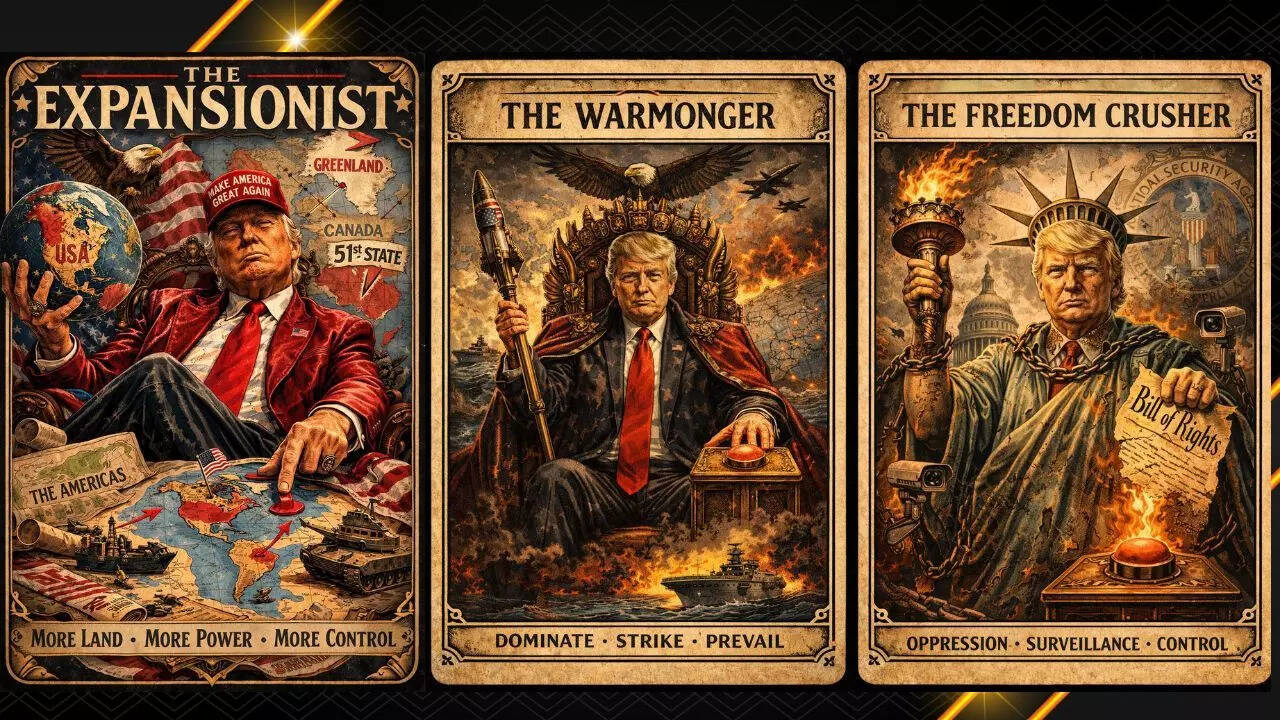
The assertion that Trump was "like every other warmongering president" fails under a rigorous data check regarding kinetic engagement. While he maintained—and in some cases increased—the intensity of specific air campaigns (such as the territorial defeat of ISIS), the fundamental metric of "new conflict initiation" shows a sharp divergence.
- Kinetic Expansion: Most modern presidents initiated new theaters of operation (Bush: Iraq/Afghanistan; Obama: Libya/Syria/Yemen). Trump focused on the "Optimization of Existing Engagements."
- Risk Aversion to Ground War: The administration showed an allergic reaction to long-term troop commitments that did not have an immediate resource or trade-based ROI.
- The Escalation Ladder: Trump’s use of force was "Punctiform" rather than "Linear." The 2020 strike on Qasem Soleimani or the 2017/2018 strikes in Syria were high-intensity, low-duration events designed to reset a deterrent boundary without committing to a sustained campaign.
The Strategic Bottleneck: Loss of Soft Power Equity
While the transactional model may have yielded short-term financial concessions from allies, it created a long-term erosion of Systemic Trust. In strategy consulting terms, Trump "monetized the brand" at the expense of "brand equity."
When an ally views the US as a reliable partner, they provide "intangible assets": intelligence sharing, diplomatic cover, and voluntary alignment with US sanctions. When the relationship becomes purely transactional, those allies begin to diversify their "security portfolio." We see this currently in the European Union’s push for "strategic autonomy" and the hedging behaviors of Gulf states toward China.
The China Variable: From Containment to Competition
The most significant shift in the Trump era was the redefinition of the US-China relationship from a Geopolitical Challenge to an Existential Economic Rivalry.
Previous administrations sought to integrate China into the global rules-based order, hoping that economic liberalization would lead to political reform. The Trump administration’s 2017 National Security Strategy formally ended this era, identifying China as a "revisionist power."
The mechanism used here was the Tariff-as-Weapon. By weaponizing the US consumer market, the administration attempted to force a restructuring of the global supply chain. This was not a war of ideology, but a war of industrial capacity. It marked the first time since World War II that the US prioritized domestic manufacturing resilience over the efficiency of globalized trade.
Operational Realities vs. Rhetorical Deviance
To accurately assess the "warmonger" claim, one must distinguish between Rhetorical Escalation and Operational Restraint.
- Rhetoric: Trump frequently used "Fire and Fury" language that suggested imminent total war.
- Operations: The actual deployment of force was often more cautious than his predecessors. He was the first president since Jimmy Carter not to enter the US into a new, sustained armed conflict.
This creates a paradox for analysts. If "warmongering" is defined by the frequency and duration of new military interventions, Trump was an outlier of restraint. If it is defined by the degradation of diplomatic norms and the use of aggressive economic coercion, he was an outlier of escalation.
The Structural Legacy of Transactionalism
The current administration has not fully reverted to the pre-2016 status quo. This indicates that the "Trump Shift" was not merely a personality-driven anomaly but a response to shifting global tectonic plates.
- The End of the "Blank Check": No future US president can ignore the domestic demand for "burden-sharing" among allies. The 2% NATO target is now a hard floor, not a soft suggestion.
- Trade as Security: The integration of trade policy and national security (The "Small Yard, High Fence" approach to technology) is now bipartisan consensus.
- Prioritization of the Indo-Pacific: The pivot away from the Middle East, while messy and prone to reversals, has been accelerated by the need to focus resources on the primary peer competitor.
The Strategic Play: Navigating a Post-Certainty World
For global actors, the takeaway is that the "uniquely different" aspect of the Trump presidency was the destruction of Permanent Interests. In the old model, certain alliances were sacrosanct. In the new model, every relationship is subject to a periodic audit.
To thrive in this environment, stakeholders must move away from "relationship-based" planning and toward "value-delivery" planning. Alliances are no longer static; they are dynamic contracts that require constant renegotiation based on current utility.
The move is to hedge. Treat the US not as a guaranteed security umbrella, but as a powerful, volatile vendor. Diversify security dependencies, build domestic industrial redundancy, and prepare for a world where the "Leader of the Free World" is more interested in the balance sheet than the democratic ideal. This is the new baseline of global power dynamics.