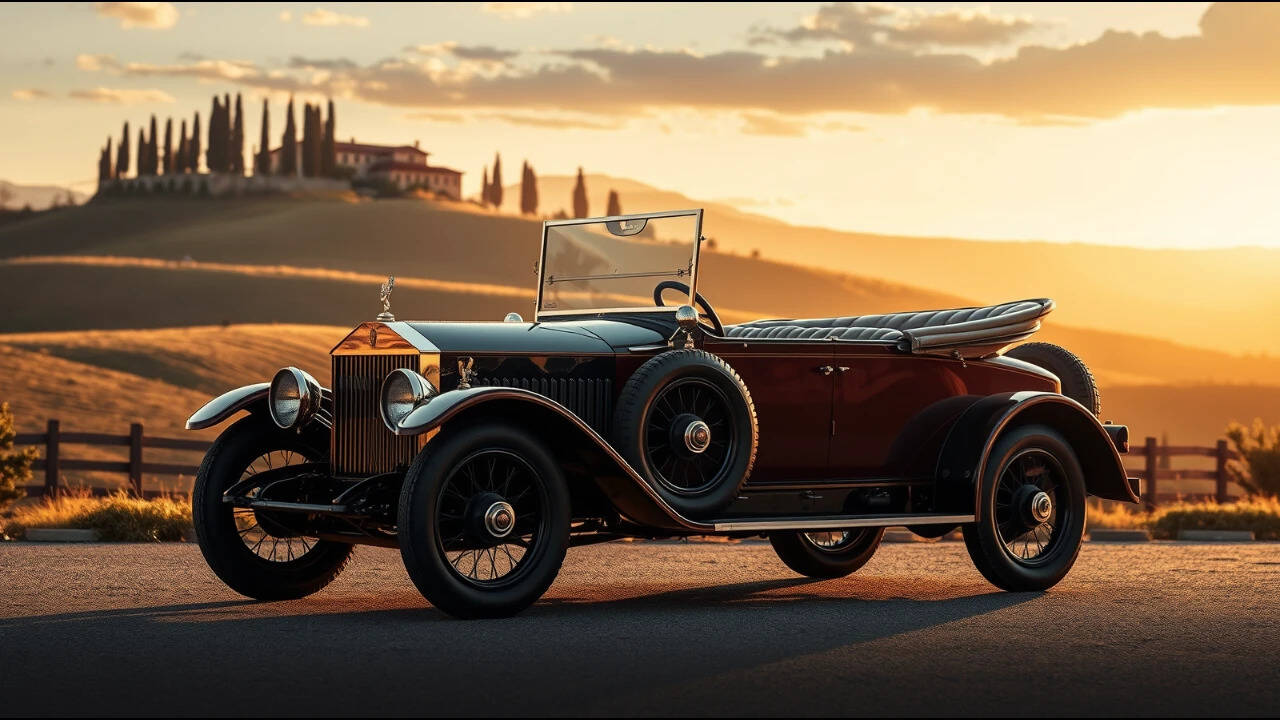
The romantic consensus surrounding century-old automotive artifacts needs a reality check. Every time a pre-WWI relic emerges from long-term single-family storage—such as the widely celebrated 1915 Rolls-Royce Silver Ghost that spent a hundred years under familial lock and key before heading to auction—the enthusiast press goes weak at the knees. They write breathless homages to "unbroken generational stewardship," framing the vehicle as a pristine capsule of Edwardian engineering purity.
It is time to puncture this comforting illusion. Keeping a complex machine stationary for multiple human lifetimes is not preservation. It is slow mechanical execution.
The Cult of Originality is a Form of Vandalism
Let us look past the misty-eyed folklore of the auction catalog. When an automobile sits stagnant for decades, a silent, destructive physics takes over. Oils oxidize into varnish. White metal bearings pit and corrode. Rubber components, where they exist, petrify into masonry. Moisture trapped within a massive seven-bearing cast-iron or aluminum crankcase works a slow, invisible ruin on precision-machined tolerances that measured in fractions of a thousandth of an inch.
When commentators praise a car for retaining its "un-restored factory integrity" after a century of neglect, they are usually celebrating an object that has been rendered permanently inert. Henry Royce did not build his 7,428cc inline-six powerplants to serve as static lawn ornaments or dry-storage paperweights. These machines were over-engineered touring behemoths designed to eat thousands of miles of brutal dirt roads, demanding regular maintenance, fluid replacement, and kinetic friction to keep their metallurgy alive.
When the aforementioned Australian Silver Ghost had its engine inspected decades into its slumber, it required a rebore. Why? Because static corrosion pits cylinders just as surely as hard running does, except running at least gives you the utility of the mileage. Treating a high-compression, hand-fitted Edwardian masterpiece like an amber-encased mosquito does nothing for its mechanical soul.
The Myth of Gentle Family Custodianship
The lazy consensus dictates that keeping a car within one family for a hundred years guarantees its safety. The opposite is frequently true. Multi-generational domestic custody is a lottery where the car usually loses.
In the real world of family estates, an inherited pre-war car transitions through predictable phases:
- The patriarch who drove it passes away.
- The children move it into a damp shed, outbuilding, or corner of a barn while sorting out probate and estate logistics.
- The grandchildren view it as an immovable anchor of family lore rather than a mechanical device, lacking both the specialized coachwork knowledge required to grease its leaf springs and the financial appetite to service its massive running gear.
By the time the vehicle finally hits the auction block, it commands a multi-million-dollar valuation not because it was lovingly tended to every weekend, but precisely because of its survivor scarcity. It survived despite the family, not because of them. If you left a modern high-performance engine unattended in a shed for a century, society would call it scrap. Slap a Spirit of Ecstasy on the radiator shell, however, and suddenly stagnation becomes sacred history.
What Real Preservation Looks Like
True automotive custodianship looks ugly. It looks like proactive wear. It looks like replacing perishable consumables, tearing down gearboxes before they seize, and driving the wheels off a piece of history so that the oil galleries stay clear and the babbitt bearings remain properly seated under thermal expansion.
Imagine a scenario where vintage car collectors stopped treating these chassis like religious relics in a glass case and started treating them like living machinery. The market would panic, sure. The obsessive-compulsive obsession with matching-number factory grime would plummet. But the cars would actually run.
The next time a century-old survivor emerges from a decades-long hibernation to fetch a king's ransom, do not applaud the family for letting it rot gracefully in the dark. Pity the machine for the decades of silence it had to endure.
Stop locking history away. Drive the damn thing.