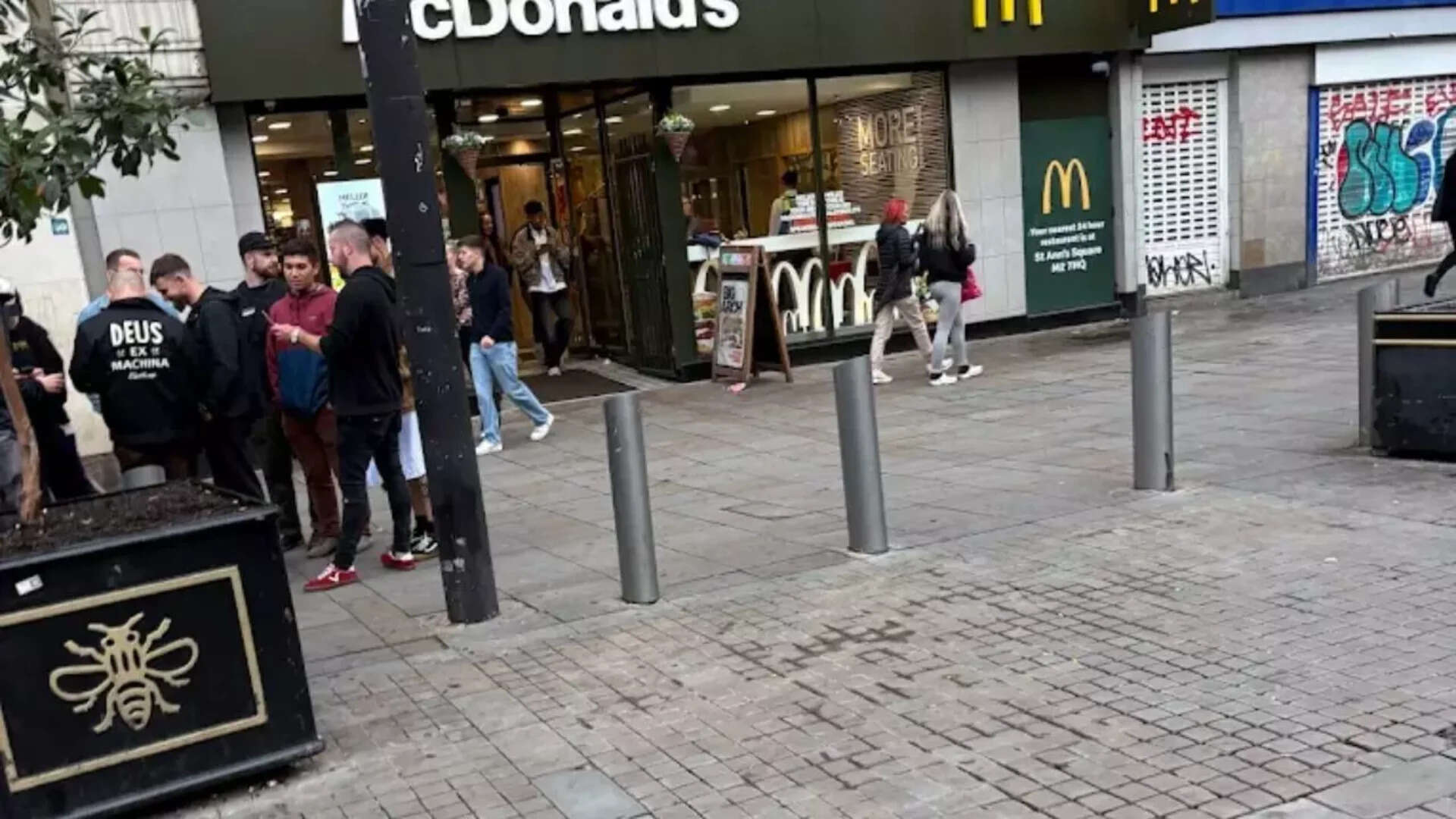
The internet loves a martyr, especially one with a birthday cupcake and a "victim" narrative. When news broke of a woman in Manchester being slapped with a £150 fine for tossing a crust of bread to a pigeon, the outrage machine went into overdrive. People called it "authoritarian," "cruel," and "a war on joy."
They are wrong.
This isn't about a lonely bird or a heavy-handed council officer. This is about the fundamental breakdown of urban order. We have spent decades indulging a culture of "soft rules" where personal whims—like feeding vermin—are prioritized over the structural integrity of our public squares. If you think a £150 fine is steep, try calculating the millions spent on cleaning acidic bird droppings off Grade II listed architecture or managing the public health risks of hyper-concentrated pest populations.
The outrage is lazy. It’s time to look at why these fines exist and why we actually need more of them.
The Myth of the "Innocent" Bird Feeder
The narrative usually goes like this: a kind-hearted citizen shares a snack with nature, and a faceless bureaucrat ruins their day.
Here is the reality: You aren't "feeding nature." You are subsidizing a nuisance.
Pigeons in high-density urban environments like Manchester’s Piccadilly Gardens are not part of a balanced ecosystem. They are an invasive presence sustained entirely by human waste and intentional feeding. When you toss bread, you aren't helping a bird; you are signaling to hundreds of others that this specific coordinate is a dumping ground.
This creates a "sink" effect. Birds congregate in numbers the environment cannot naturally support. They become aggressive, they spread pathogens, and their excrement—which is highly acidic—literally dissolves the limestone and mortar of the cities we claim to love.
I have seen city managers in London and Paris struggle with "pigeon lung" (extrinsic allergic alveolitis) among maintenance staff and skyrocketing costs for anti-bird spikes and netting. All of this is paid for by the taxpayer. The £150 fine isn't a "money grab." It’s a drop in the bucket compared to the damage caused by a thousand "innocent" crumbs.
The Broken Windows of the High Street
The "Broken Windows Theory," introduced by social scientists James Q. Wilson and George L. Kelling, suggests that visible signs of disorder and misbehavior create an environment that encourages further, more serious crime.
When a council allows a city center to become a free-for-all for littering and feeding pests, it sends a message: No one is in charge here.
- Step 1: You allow pigeon feeding.
- Step 2: The pavement becomes slick with droppings and rotting food.
- Step 3: Pedestrians avoid the area.
- Step 4: Street-level retail dies because the "vibe" is one of decay.
The fine isn't about the bread. It’s about maintaining a standard of civic behavior. If we don’t enforce the small things, we lose the moral and practical authority to enforce the big things. The woman in Manchester wasn't targeted because it was her birthday; she was fined because she broke a clear, posted ordinance designed to prevent the degradation of a shared space.
Poverty of Logic: "Don't You Have Real Crimes to Solve?"
The most tired argument in the comments section is the classic redirection: "Why aren't the police catching burglars instead of fining people for birds?"
This is a logical fallacy known as the "relative privation" trap. The existence of more serious problems does not grant a hall pass for smaller violations. By this logic, we should stop issuing speeding tickets because murders are still happening.
Furthermore, the officers issuing these fines are often Enforcement Officers, not detectives from the Major Crimes Unit. They have one job: keep the streets clean. Expecting them to ignore littering to go solve a cold case is like asking a lifeguard to go perform heart surgery because "it's more important."
If we want safer, cleaner cities, we need a multi-tiered approach. We need detectives for the big stuff and enforcement officers for the small stuff. One does not preclude the other. In fact, a city that manages its "small stuff" is almost always a city that has a tighter grip on its overall safety.
The Economics of "Free" Bread
Let’s talk numbers. The cost of removing pigeon guano from a single large public building can exceed £10,000 per cleaning cycle. Manchester spends hundreds of thousands of pounds annually on street cleansing.
When you feed pigeons, you are effectively shifting a private cost (your desire to feel "connected to nature") onto the public ledger. You get the warm fuzzy feeling; the rest of us get the bill for the pressure-washers.
A £150 fine is a deterrent. If it were £20, people would treat it as a "feeding fee" and keep doing it. It has to hurt enough to change behavior. If you are "scared to go out" because you might get fined for littering, the solution is remarkably simple: Stop littering.
The Hidden Cost of Empathy
We have become a society that prioritizes individual feelings over collective utility. We feel bad for the woman who cried on her birthday, so we want the law to bend.
But laws that bend are laws that break.
The moment you create "exceptions for nice people," you destroy the fairness of the system. Who decides who is "nice"? Does a 20-year-old man getting a fine deserve it more than a woman on her birthday? If you start picking and choosing based on the "victim's" social media appeal, you end up with a corrupt, inconsistent mess.
The enforcement must be binary. Did you drop food? Yes or no.
How to Actually Fix the High Street
If you truly care about the state of our cities, stop defending the people making them dirtier. Instead, demand that your councils use that fine money for:
- Better Waste Infrastructure: More bins that are actually bird-proof.
- Public Education: Clearer signage that explains the why (the acid, the disease, the cleaning costs) rather than just the "Don't."
- Strict Enforcement: Apply these rules to everyone—including the businesses that leave trash bags on the curb overnight.
I have consulted with urban planners who have watched beautiful plazas turn into no-go zones within eighteen months because of "minor" disorder. It starts with the birds. It ends with a vacant high street.
Stop Being a "Casual Litterer"
Most people who feed pigeons don't think they are littering. They think they are being "natural."
You need to reframe your perspective. Anything you put on the ground that wasn't there before—whether it's a plastic wrapper or a piece of sourdough—is waste. The birds are just mobile, feathered garbage disposals that leave a toxic trail in their wake.
If you want to support wildlife, donate to a conservation trust. If you want to enjoy your birthday, eat your cupcake and put the wrapper in the bin.
The "scary" reality of Manchester isn't the council officers; it's the fact that we've reached a point where people feel entitled to degrade public spaces and then play the victim when held accountable.
Own your actions. Protect your city. Stop feeding the rats with wings.
Don't wait for the council to put up more signs. Look at the pavement. If everyone did what you just did, would the city be a place you’d actually want to live in? If the answer is no, then keep your bread in your pocket and your "outrage" to yourself.