The coffee was likely still warm in the pot.
In the high-stakes world of national governance, the morning usually begins with the rhythmic clinking of porcelain and the low hum of briefings. At The Lodge, the Prime Minister’s official residence in Canberra, there is a specific kind of quiet—a dignified, historical stillness that suggests the weight of the nation is being handled with care. But that stillness was shattered on a Sunday morning that felt too ordinary for drama.
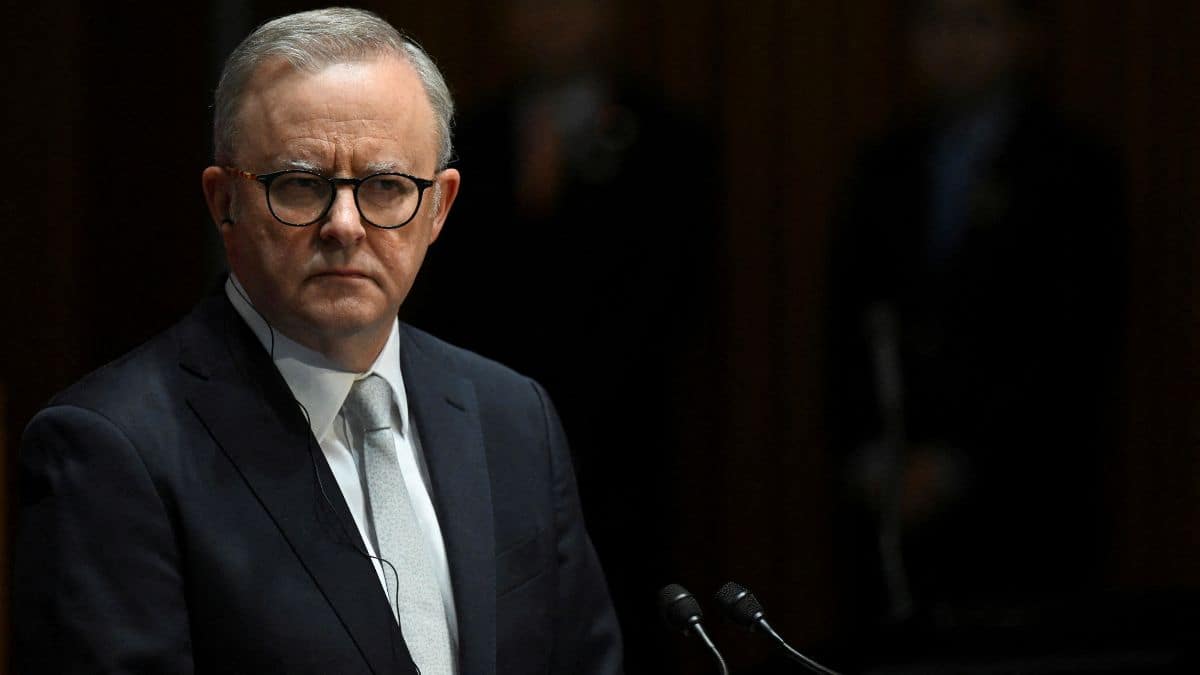
Anthony Albanese was not just a world leader in that moment. He was a man being told his home was no longer safe.
When the security detail moves, they don't move with the frantic energy you see in cinema. It is a practiced, cold efficiency. A bomb threat is a theoretical exercise until the moment the heavy doors of a black armored vehicle thud shut. Within minutes, the leader of the country was being whisked away from the white-walled heritage of Deakin toward an undisclosed location. The "official residence" ceased to be a home and reverted instantly to a crime scene.
The Anatomy of an Invisible Threat
Canberra is a city designed for order. Its circles and spokes are a testament to human planning, a grid intended to make sense of the wild Australian bush. Yet, a phone call or a digital message can bypass every physical barrier. The threat of an explosive device isn't just about the potential for fire and glass; it is a psychological breach. It tells those in power that the perimeter is an illusion.
ACT Police and specialist tactical units descended on the leafy suburb. While the public sees the flashing lights and the yellow tape, the real work happens in the silence between the sirens. It is the meticulous sweep of the grounds. It is the canine units sniffing the damp earth of the gardens. It is the realization that the democratic process, as robust as it may seem, relies on a fragile social contract.
The evacuation of a Prime Minister is a logistical nightmare disguised as a safety precaution. It ripples outward. Staff are cleared. Neighbors are briefed. The surrounding streets, usually populated by Sunday morning joggers and families heading to the lake, become a restricted zone. The "Canberra Bubble" is often mocked by those outside the capital, but in moments like these, that bubble feels terrifyingly thin.
The Human Cost of the High Office
We often view our leaders as caricatures of their policies. We see them behind lecterns or in the combative arena of Question Time. We forget that they have a favorite chair. They have personal effects. They have a sense of sanctuary that is tied to the roof over their heads.
When a bomb threat targets a residence, it isn't just an attack on a politician; it is an intrusion into the private psyche. Consider the mental shift required to go from reviewing economic papers to being told you must leave immediately because your house might explode. The adrenaline spike doesn't just disappear once the "all clear" is given. It lingers in the way you look at a package on the doorstep or how you react to a sudden noise in the hallway.
This wasn't an isolated incident of eccentricity. It was a calculated disruption. Even if no device is ever found—as is often the case with these hollow displays of power—the objective is achieved. The objective is the disruption of peace.
The Protocol of Uncertainty
Security experts often speak of the "Hardened Target." The Lodge is a fortress, but a fortress is only as strong as its ability to react to the unknown. The evacuation was a validation of protocol.
- Detection: The initial communication is vetted. Most threats are dismissed by intelligence filters before they even reach the inner circle. This one was different.
- Extraction: The Prime Minister is the "High Value Asset." His physical presence at the site complicates the sweep. He must be removed to allow the experts to work without the pressure of a human life in the balance.
- The Sweep: Every inch of the 1927 Georgian-style mansion must be cleared. This isn't just about looking under beds; it involves checking ventilation, sub-flooring, and the digital infrastructure.
- Validation: Only when the bomb squad is satisfied can the gears of government begin to turn again.
While the police worked, the rest of the country watched the news tickers. There is a specific kind of tension that grips a nation when its leadership is under perceived siege. It’s a reminder that the stability we take for granted is maintained by a small army of people who spend their lives looking for things that shouldn't be there.
The Shadow Over the Capital
Canberra in autumn is a city of gold and red leaves, a place of immense beauty and bureaucratic stoicism. But as the sun climbed higher over the Brindabellas, the shadow over The Lodge grew longer. The threat, whether a cruel hoax or a narrow miss, served as a jarring wake-up call.
We live in an era where the distance between a grievance and a threat has narrowed. The digital age has democratized the ability to cause chaos. You no longer need a physical presence to shut down a street; you only need a connection and a motive. This is the new reality of political life—a constant, low-level hum of risk that occasionally screams into the foreground.
The Australian Federal Police eventually confirmed that the area was safe. The barricades were packed away. The tactical teams returned to their bases. The Prime Minister eventually returned to the house.
But you don't just go back to normal after a day like that. You walk back into a house that has been searched by strangers. You look at the walls and you wonder about the person on the other end of the threat. You realize that while the "all clear" has been given, the invisible stakes of the job have never been higher.
The Lodge stands once more as a symbol of the Commonwealth. It is a white building against a blue sky, quiet and dignified. But for those who were there when the sirens started, the silence that followed will always feel a little more fragile.
Somewhere in a secure office, a file was closed, but the ink was barely dry. The coffee in the pot was cold. The world kept spinning, but the boundary between the public man and the private sanctuary had been crossed, and that is a line that can never be un-crossed.