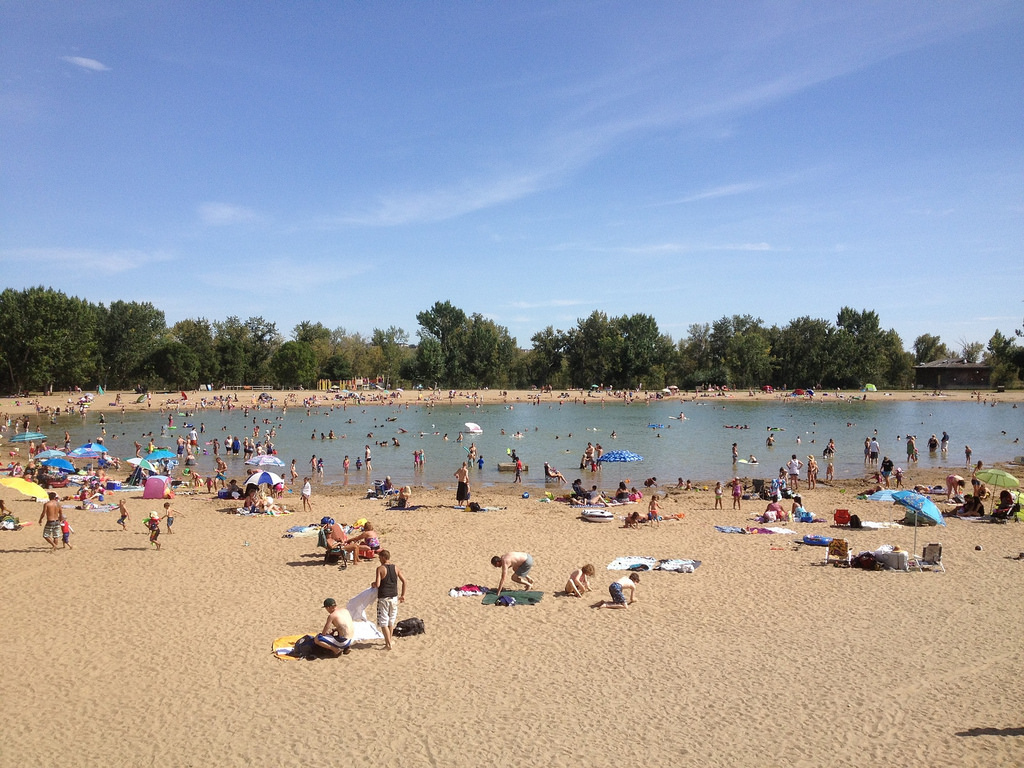
The air in south Calgary during August doesn't just sit; it heavy-presses against your skin, smelling of dry prairie grass and baking asphalt. For decades, the cure for that heat wasn't found in a backyard plastic pool or a basement air conditioner. It was found at the edge of a massive, man-made basin of turquoise water nestled in Fish Creek Provincial Park.
Sikome Aquatic Facility is more than a public utility. It is a shared memory.
But memories can leak. They can fade. They can become choked by the very silt and time that defines them. For the past few seasons, the "beach" was beginning to feel like a relic of a different era, struggling under the weight of outdated infrastructure and the harsh realities of Alberta’s environmental shifts. The news that Sikome is receiving a massive overhaul ahead of the 2026 season isn't just a municipal update about pumps and liners. It is an act of civic CPR.
The Anatomy of a Prairie Ocean
To understand why a million-dollar upgrade matters, you have to understand the physics of the place. Sikome is a "beach" in a province that hasn't seen an ocean in millions of years. It’s a delicate, artificial ecosystem that requires constant, aggressive care to remain safe for the thousands of families who descend upon it every weekend.
The water isn't just sitting there. It’s breathing. Or, it’s supposed to be.
Over the last few years, the mechanical heart of the facility—the filtration systems and the heavy-duty pumps—began to show their age. Imagine trying to keep a massive, open-air bathtub crystal clear while thousands of people, covered in sunscreen and sand, jump in every hour. The math of hygiene is brutal. Without high-efficiency turnover, the water loses its sparkle. It becomes sluggish.
The 2026 upgrades target this hidden machinery. The province is replacing the primary filtration units with systems that can handle higher volumes with less energy. They are moving away from the "patch and pray" method of the last decade. This is about ensuring that when a toddler inevitably swallows a mouthful of water near the shoreline, the parents don't have to spend the next four hours worrying about bacteria counts.
The Invisible Stakes of a Summer Day
Consider a hypothetical family: let’s call them the Millers. They live in a high-density townhouse in deep southeast Calgary. They don't have a cabin in Invermere. They don't have a membership at a private lake community like Mahogany or Auburn Bay. For the Millers, Sikome is their only access to a shoreline. It is their vacation, squeezed into a Saturday afternoon.
When the facility is forced to close due to water quality issues—as has happened in the past—the loss isn't just "recreational." It’s a blow to the mental health of a community. The stakes of these upgrades are found in that equity. By stabilizing the water treatment systems and improving the shoreline integrity, the government is essentially guaranteeing that the "poor man's resort" stays open for everyone, regardless of their postal code.
The work currently underway involves a complete regrading of certain beach areas. Over time, the sand migrates. It washes into the deeper sections, creating muddy shallows where weeds thrive. By hauling in fresh, high-quality sand and re-sculpting the basin's floor, crews are fighting a war against entropy. They are reclaiming the "beach" from the "pond."
The Engineering of Joy
It’s easy to look at a construction crew and see orange vests and dirt. But what they are actually building is a buffer against the 30°C days of the future.
The 2026 upgrades include a significant focus on the "Building and Site Infrastructure." This is the less-glamorous side of the project: the changerooms, the washrooms, and the concession areas. These spaces are the friction points of any public pool. They are the places where the joy of a beach day can easily evaporate into frustration or discomfort.
The redesign is about flow. It’s about more accessible stalls for families. It’s about materials that can be cleaned in minutes, not hours. It’s about a concession stand that can serve a thousand ice creams without a meltdown.
Consider the mechanics of a single change-room floor. Over a day, thousands of pairs of wet, sandy feet will walk across it. If the drainage isn't perfect, it becomes a slurry. If the ventilation isn't powerful, it becomes a humid, echoing chamber of discomfort. The 2026 upgrades are addressing these details with the surgical precision that only comes after forty years of observation.
The Hidden Price of a Free Swim
The province of Alberta doesn't do these things for fun. They do them because the alternative—the complete closure of the facility—would be a civic failure.
The 2026 season represents a new contract with the public. It says: we will provide the water, and you will provide the laughter. The project is a massive, multi-million dollar gamble on the idea that public spaces still matter. That we still want to sit on a towel, next to a stranger, and feel the sun on our backs.
The real work is happening beneath the surface. It’s the pipes you will never see. It’s the filtration media that will scrub the water clean while you sleep. It’s the sand that has been sifted to the perfect grain size so it doesn't stick to your car seats for a month.
As the crews work through the winter of 2025 and into the spring of 2026, they are building a bridge to a better summer. They are ensuring that when the first heatwave of June hits, the gates will open. The water will be blue. The sand will be hot.
And for a few hours, everyone in Calgary—no matter where they live or how much they make—will have a beach to call their own.