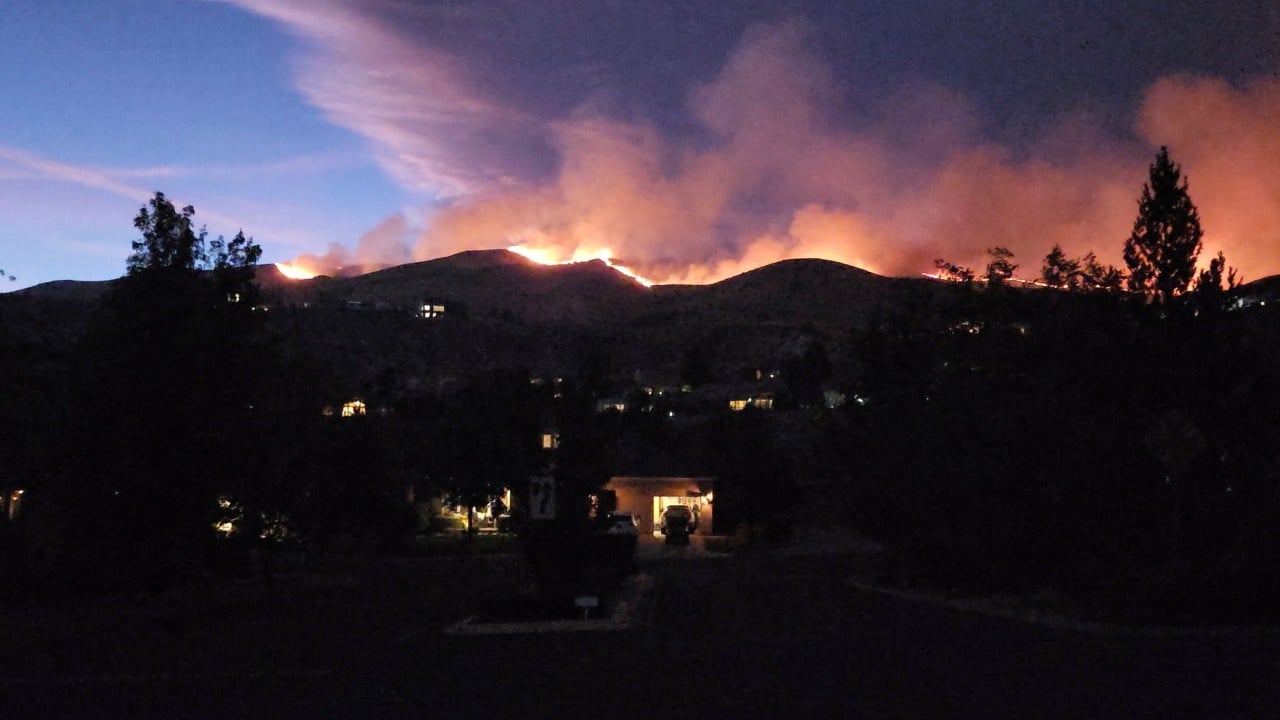
Ash rained down on football games and heavy smoke turned the midday sky an angry orange as the Hawk Fire ripped through the foothills of northwest Reno, Nevada. When a wildfire moves this fast, normal life stops instantly. Roughly 42,000 residents faced immediate evacuation orders, while another 45,000 people were told to pack their bags and prepare to flee as the "GO NOW" zone crept toward the edge of the University of Nevada campus.
If you live anywhere near the wildland-urban interface, this disaster is a harsh reminder that standard emergency tracking apps and local alerts often lag far behind reality. If you found value in this post, you should read: this related article.
How the Hawk Fire Blasted Through Reno
The fire started on a Saturday in the rugged terrain of the Humboldt-Toiyabe National Forest around Peavine Mountain. Local authorities confirmed the blaze was human-caused, though investigators are still working through the exact details. Driven by intense gusty winds, low humidity, and bone-dry vegetation, the flames didn't just crawl—they exploded.
The math of modern wildfires is terrifying. Within hours, the fire ballooned past 15,000 acres, jumping over ridges and threatening densely populated neighborhoods. Residents like Cari Kieffer watched real-time tracking maps show safety while ash and embers fell right outside their windows. When they finally looked outside, the wall of flames was already barrelling down the hillside. Families had minutes to grab dogs, critical documents, and get out before escape routes choked with traffic. For another perspective on this story, refer to the latest update from The New York Times.
Governor Joe Lombardo declared a state of emergency for Washoe County, mobilizing the Nevada National Guard with helicopter crews and dozens of troops to secure abandoned neighborhoods. Major arteries like U.S. Route 395 saw closures, and nearly 10,000 local customers lost power as utility lines went down in the wind.
The Reality of Mass Evacuations in Washoe County
Managing a sudden evacuation for nearly 90,000 people strains every local resource imaginable. Washoe County emergency officials scrambled to open the Reno-Sparks Convention Center for human evacuees, while setting up separate facilities for small and large animals. Local casinos stepped up by offering steep discounts on hotel rooms for displaced families who needed a place to sleep.
Yet, the logistical nightmare exposes gaps in how families prepare for rapid-onset disasters:
- Real-time tracking apps can lag behind actual fire fronts, giving a false sense of security.
- Emergency shelters have strict rules about pets, requiring families to split up drop-offs between multiple locations.
- Essential items like birth certificates and physical photo albums are often left behind in the panic of a two-minute warning.
Sheriff Darin Balaam noted that shifting winds made the fire extraordinarily confusing for first responders, who had to navigate jumping flames while trying to guide panicked residents out of narrow mountain roads. Three civilians and three first responders sustained injuries during the frantic initial push.
What You Must Do Before the Next Warning Hits
Waiting for an official alert to start packing is a massive gamble. If you want to protect your household from a fast-moving urban wildfire, you have to operate on your own timeline.
First, ignore the radar apps if you see smoke or ash near your ridge line. If local authorities issue an evacuation warning, treat it as an order and leave immediately. Clearing out early keeps the roads clear for fire engines and gives crews room to work.
Second, build a grab-and-go bin today. Store physical copies of titles, birth certificates, insurance papers, and irreplaceable family heirlooms in a single waterproof container near your door.
Third, harden your property against embers. Clean out gutters, clear dry brush for at least thirty feet around your foundation, and remove flammable mulch from exterior walls. Defensible space buys precious minutes when the wind shifts.
Check your evacuation routes right now, map out secondary backroads, and make a plan for your pets before smoke fills your street.