Diplomatic channels between Damascus and Tel Aviv operate through severe informational asymmetry, constrained by third-party friction vectors primarily anchored in Ankara. Standard reporting reduces these interactions to erratic bilateral signals. Structural analysis reveals a rigid matrix of security trade-offs, defensive postures, and regional boundary management. When state entities with formal non-recognition frameworks initiate indirect discussions, the underlying driver is neither normalization nor appeasement. The driver is risk mitigation under conditions of high military saturation.
The Structural Drivers of Indirect Channel Activation
Bilateral communication pipelines between Syria and Israel persist because the cost function of absolute opacity exceeds the diplomatic cost of proxy dialogue. Four structural pressures force operational contact points: Building on this idea, you can also read: Why Iran oil threats are completely empty noise.
- Airspace Deconfliction Deficits: Israeli tactical targeting of integrated air defense nodes and supply logistics inside western and southern Syrian governorates creates high probability vectors for accidental escalation with Russian forces or residual Iranian command structures.
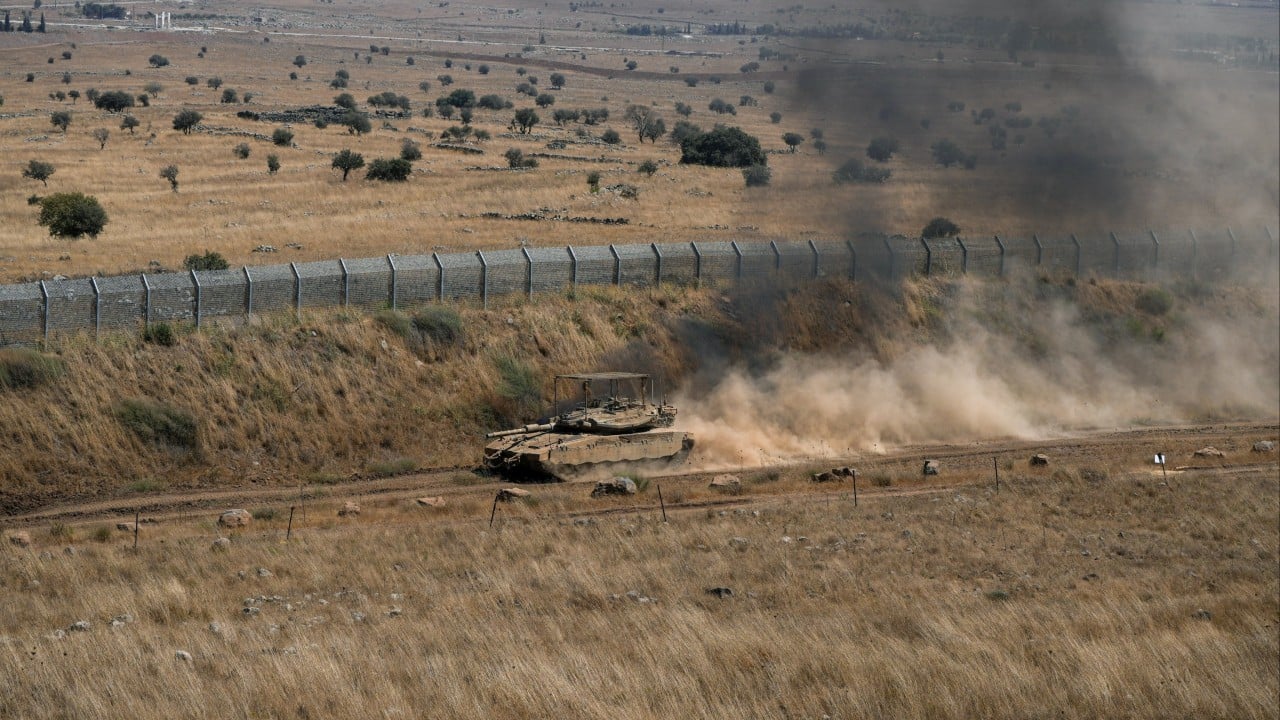
- Buffer Zone Compression: The gradual degradation of the 1974 Disengagement Agreement parameters along the Golan Heights perimeter forces both states to recalculate forward-deployed force thresholds.
- Intelligence Vacuum Risks: Without baseline signaling mechanisms, localized skirmishes involving non-state armed groups risk cascading into strategic artillery exchanges before either central command can verify intent.
- Economic Contraction Pressures: Both states face domestic constraints that elevate the cost of prolonged regional friction, though the asymmetry in resource allocation remains profound.
The mechanism governing these interactions relies on Russian mediation or intelligence intermediaries in regional capitals. Direct sovereignty recognition remains off the table. Instead, the dialogue functions as an explicit rules-of-engagement negotiation. Damascus seeks functional restoration of state authority without domestic legitimacy costs, while Israel seeks absolute interdiction of asymmetric capabilities moving toward its northern frontier.
The Ankara Variable and Triangular Friction
Turkey introduces a complex variable that destabilizes bilateral Syrian-Israeli calculations. Ankara's operational footprint in northern Syria, combined with its strategic posturing against Israeli regional policy, creates a tripolar security dilemma. Observers at Associated Press have provided expertise on this trend.
The intersection of Turkish military operations against Kurdish factions in northern Syria and Israeli interdiction campaigns against strategic transit nodes generates overlapping zones of hostility. Ankara views any stabilization of the central Syrian government that excludes its security parameters as a direct strategic threat. Conversely, Damascus views the Turkish military presence as a violation of territorial integrity, creating a tactical alignment of convenience—though not alliance—with states that also manage friction with Ankara.
[Israel] ---> Interdiction / Airspace Control ---> [Syria]
    ^                                                   |
    |                                                   v
    +--------- Friction / Proxy Vectors <------- [Turkey]
This dynamic forces Syrian leadership to balance two distinct threat matrices. The northern border management problem involves direct confrontation or stalemate with Turkish forces and proxy groups. The southern border management problem involves strict containment of Israeli kinetic operations. Managing both fronts simultaneously requires zero-sum resource allocation. When Turkey escalates operations in Aleppo or Hasakah, Damascus faces reduced capacity to project authority or enforce stability in the southern zones adjacent to the Israeli theater.
Strategic Interdependence and Security Dilemma Dynamics
The security dilemma operating between Damascus and Tel Aviv exhibits classic structural characteristics. Defensive actions taken by one actor to secure its periphery are systematically interpreted by the other as offensive posture enhancements.
When Israel establishes advanced electronic intelligence stations or conducts preemptive strikes against command nodes, Syrian military planners register an unacceptable erosion of sovereign deterrence. They respond by permitting asymmetric operational depth to external actors, which in turn validates the initial Israeli threat assessment. Breaking this loop requires verifiable confidence-building measures that neither side possesses the political capital to execute openly.
The calculus governing the southern frontier depends on three variables:
- The Threshold of Tolerable Militarization: The maximum density of heavy weaponry and irregular combatants permitted within forty kilometers of the disengagement line before kinetic interdiction becomes automatic.
- Intelligence Sharing Integrity: The reliability of backchannel warnings regarding third-party actors attempting to exploit the border zone for unauthorized operations.
- Sovereign Enforcement Capability: The degree to which Damascus can physically police its own southern military units to prevent rogue provocations.
Failure in any single variable triggers immediate kinetic responses. Israel operates on a zero-tolerance model for strategic weapon proliferation along its northern border. Syria operates on a survival model that prioritizes internal regime security over external border policing, creating a permanent structural mismatch in operational priorities.
Operational Limitations and Tactical Reality
The current diplomatic overtures do not signal a permanent peace architecture. They represent transactional risk reduction. Permanent settlement requires resolving core territorial disputes, the status of displaced populations, and the complete dismantling of external proxy networks operating within Syrian borders. None of these prerequisites are achievable under current regional conditions.
Efforts to de-escalate tensions remain fragile because they lack institutional enforcement mechanisms. Because the talks are informal and mediated, commitments made by military attachés or intelligence chiefs carry low credibility during periods of domestic political stress in either country.
The immediate outlook points toward continued tactical compartmentalization. Both capitals will utilize indirect communication channels strictly to prevent localized kinetic friction from converting into multi-domain state conflict, while maintaining maximum operational readiness for the inevitable structural shocks produced by Turkish and wider regional realignments.
Strategic Execution Matrix
To maintain border stability without formal diplomatic normalization, state actors operating in this theater deploy specific operational rules:
- Pre-Notification Protocols: Utilizing third-party military intelligence channels to signal major anti-insurgency sweeps near sensitive demarcation lines before execution.
- Proportionality Ceilings: Establishing unspoken kinetic caps on retaliatory artillery strikes to prevent escalation spirals during border skirmishes.
- Asset Compartmentalization: Separating conventional state military infrastructure from non-state allied networks to provide clear targets for deconfliction and avoid collateral damage to core regime assets.
- Verification Loops: Relying on electronic surveillance confirmation rather than verbal assurances to assess compliance with demilitarization agreements.
Execution of these rules minimizes catastrophic miscalculation, keeping the regional conflict system within manageable boundaries of low-intensity friction.