Donald Trump left Beijing with a suitcase full of empty promises and verbal concessions that will likely evaporate before Air Force One clears Chinese airspace. While the official narrative broadcasts an incredible breakthrough in bilateral relations, a cold look at the mechanics of the summit reveals that Chinese President Xi Jinping gave up virtually nothing of strategic substance. Xi traded cheap, non-binding corporate commitments and orchestrated theatrical pageantry for something far more valuable: a free hand in Asia and the quiet unwinding of American economic pressure. The United States walked into a masterfully engineered diplomatic ambush designed to project American strength while delivering absolute Chinese dominance.
The Illusion of the Two Hundred Jet Windfall
The centerpiece of the administration's economic victory lap is a massive commitment by China to purchase 200 Boeing aircraft, with a vague rhetorical path to 750 planes. To the untrained eye, this looks like a historic win for American manufacturing and domestic jobs.
It is not. Experienced trade analysts recognize this maneuver as standard operating procedure for the Chinese Ministry of Commerce. These are not ironclad, legally binding procurement contracts; they are memorandum-of-understanding statements intent on purchasing, structured precisely to be dialed back or delayed the moment geopolitical friction returns.
State-run airlines in China operate under the strict central planning of the Civil Aviation Administration of China. Beijing routinely pools normal, pre-scheduled fleet renewals and packages them into a single, headline-grabbing announcement to award as political gifts during state visits.
By dangling the prospect of future orders involving General Electric engines, Beijing ensures that major American industrial conglomerates will lobby their own government in Washington to keep trade relations smooth. Trump was handed a public relations victory; Xi secured long-term leverage over the American corporate lobby.
The Secret Garden and the Reciprocity Deficit
The administration spent months building up a posture of confrontational economic nationalism, yet the moment the American delegation set foot in Beijing, the strategy dissolved into a display of overt flattery. Trump repeatedly praised Xi as a warm, great leader, an effusiveness that was met with cool, calculated professionalism from the Chinese side.
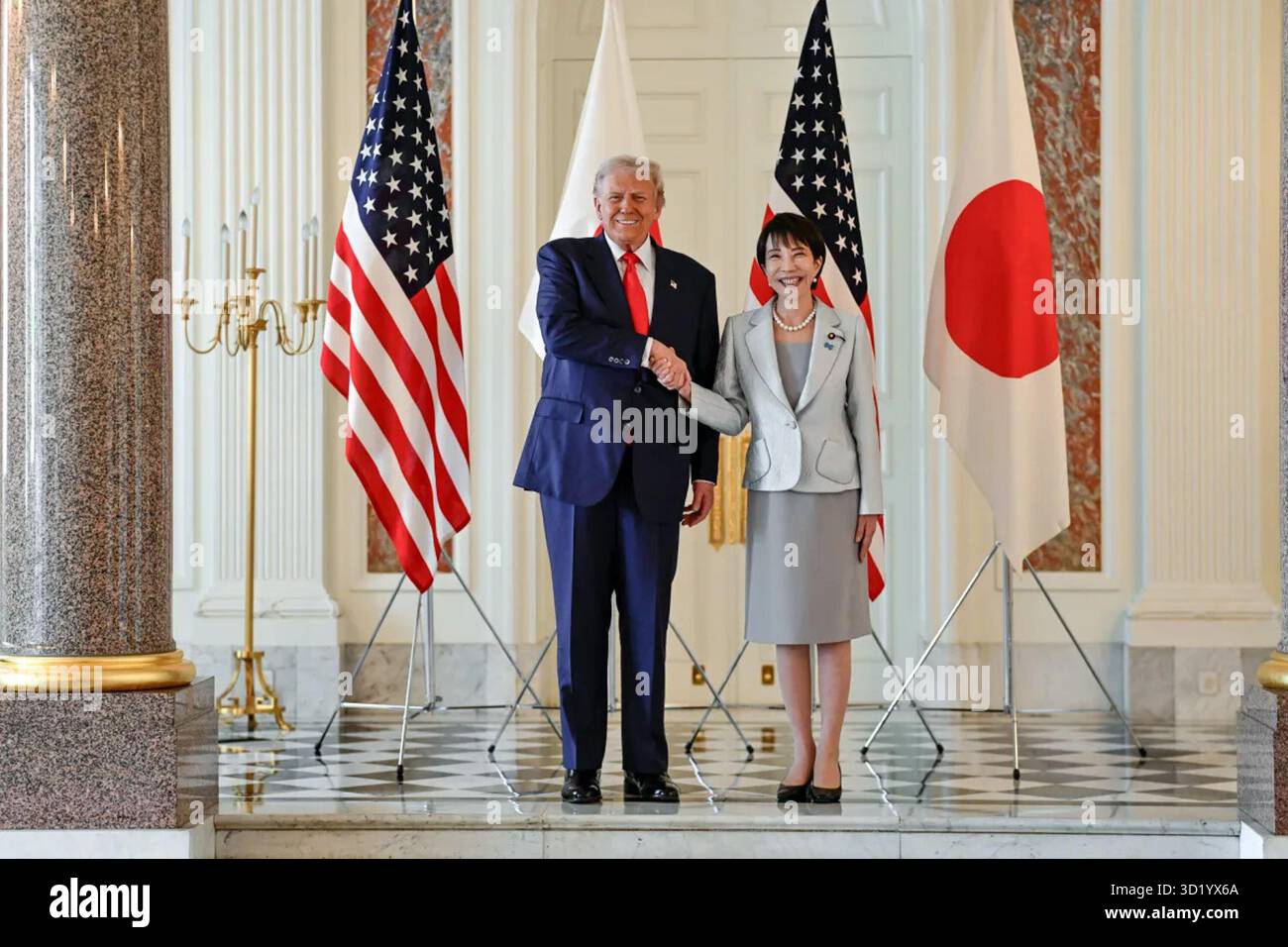
The apex of this charm offensive occurred at Zhongnanhai, the heavily guarded compound that serves as the heart of Chinese Communist Party power. Xi treated Trump to a rare tour of the private imperial gardens, framing the gesture as a personal favor to reciprocate for his 2017 visit to Mar-a-Lago.
This was a calculated display of asymmetric diplomacy. Xi understands that symbolic gestures cost Beijing nothing but carry immense weight with an American president obsessed with personal optics and respect. While Trump marveled at the roses, the Chinese delegation was quietly locking in a framework that preserves their core industrial policies.
The newly announced trade and investment boards are designed to slow down American enforcement actions, burying concrete grievances over intellectual property theft and market access into endless committees.
The Silence on the Taiwan Red Line
Behind the smiles and the luxury dinners lay a stark, unyielding geopolitical reality that Washington chose to ignore. Xi used the summit to issue a blunt, unmistakable warning on Taiwan, declaring that any mishandling of the self-governing island would lead to open conflict.
The American response was complete public silence. Trump held his tongue entirely on the issue until he was safely out of the country, a massive departure from traditional American foreign policy doctrine that actively signals deterrence against unilateral cross-strait aggression.
This silence is dangerous. For decades, strategic ambiguity kept the peace in the Taiwan Strait by keeping Beijing guessing about American resolve. By failing to push back against Xi's explicit red line while standing on Chinese soil, the administration signaled a distinct lack of appetite for confrontation.
This hesitation is being read in Beijing as a green light to escalate gray-zone military pressure against Taipei. Washington's focus on securing short-term agricultural purchases has effectively decoupled American economic policy from national security priorities in the Pacific.
The Irrelevant Alignment on Middle East Energy
The administration attempted to paint the talks as a unified front regarding the ongoing war in Iran and the disruption of energy corridors through the Strait of Hormuz. Trump claimed that he and Xi felt very similar about the conflict and that China would help broker an endgame to protect global oil supplies.
This assertion ignores the fundamental architecture of Beijing’s energy security strategy. China is the largest buyer of Iranian oil, and it has spent years constructing a sanctions-proof financial pipeline to keep that crude flowing.
While global oil prices spike and threaten to push Western economies into a deep recession, Beijing views the chaos as a distinct strategic advantage. High energy costs drain American economic momentum while forcing Middle Eastern producers to sell to China at steep discounts.
The Chinese Foreign Ministry’s subsequent statement that any solution must take into account the concerns of all parties is diplomatic code for maintaining the status quo. Xi will not pressure Tehran to capitulate to Western demands because an embattled, anti-Western Iran keeps American military resources permanently tied down in the Middle East, away from the Indo-Pacific theater.
The Fragile Truce on Critical Minerals
To secure an immediate reduction in the 20% tariff penalties tied to the flow of illicit fentanyl precursors, Trump claimed to have permanently resolved the critical roadblock over rare earth elements. The administration announced a one-year agreement where China will keep these vital minerals flowing to Western markets, pausing export controls that threatened global defense and technology sectors.
This represents a tactical retreat disguised as a breakthrough. China controls over 70% of global extraction and a staggering 90% of the refining capacity for rare earths. A temporary, twelve-month suspension of export restrictions does not solve the underlying American dependency; it merely institutionalizes it.
Beijing can reinstate these limits at a moment's notice under the guise of national security or environmental protection laws. In exchange for this temporary reprieve, the U.S. paused its 50% penetration rules on high-tech export controls, allowing China to regain access to critical semiconductor supply chains.
The deal trades long-term tech dominance for a temporary drop in inflation data ahead of the upcoming congressional midterms.
The High Cost of Strategic Stability
The Chinese state media has heavily pushed a new phrase to describe the outcome of the summit: strategic stability. This terminology is a victory for Beijing's long-term diplomatic strategy. To the Chinese leadership, stability means an explicit agreement where the United States respects China’s core interests, stops interfering in its internal affairs, and accepts its regional hegemony in Asia.
The framework established during this trip is set to govern relations for the remainder of the presidential term, locking Washington into a defensive posture where competition is severely limited.
The administration’s belief that it can manage a superpower rivalry through transactional, personalized deal-making is a profound miscalculation. Beijing does not view international trade as a series of isolated business transactions; it views it as an extension of state power.
The corporate commitments made in Beijing will be systematically dismantled or delayed the moment Washington attempts to reassert its influence in the South China Sea or enforce intellectual property protections. The U.S. delegation walked away with a handful of non-binding agreements and a temporary economic truce, leaving behind the strategic leverage required to win the defining geopolitical contest of the century.