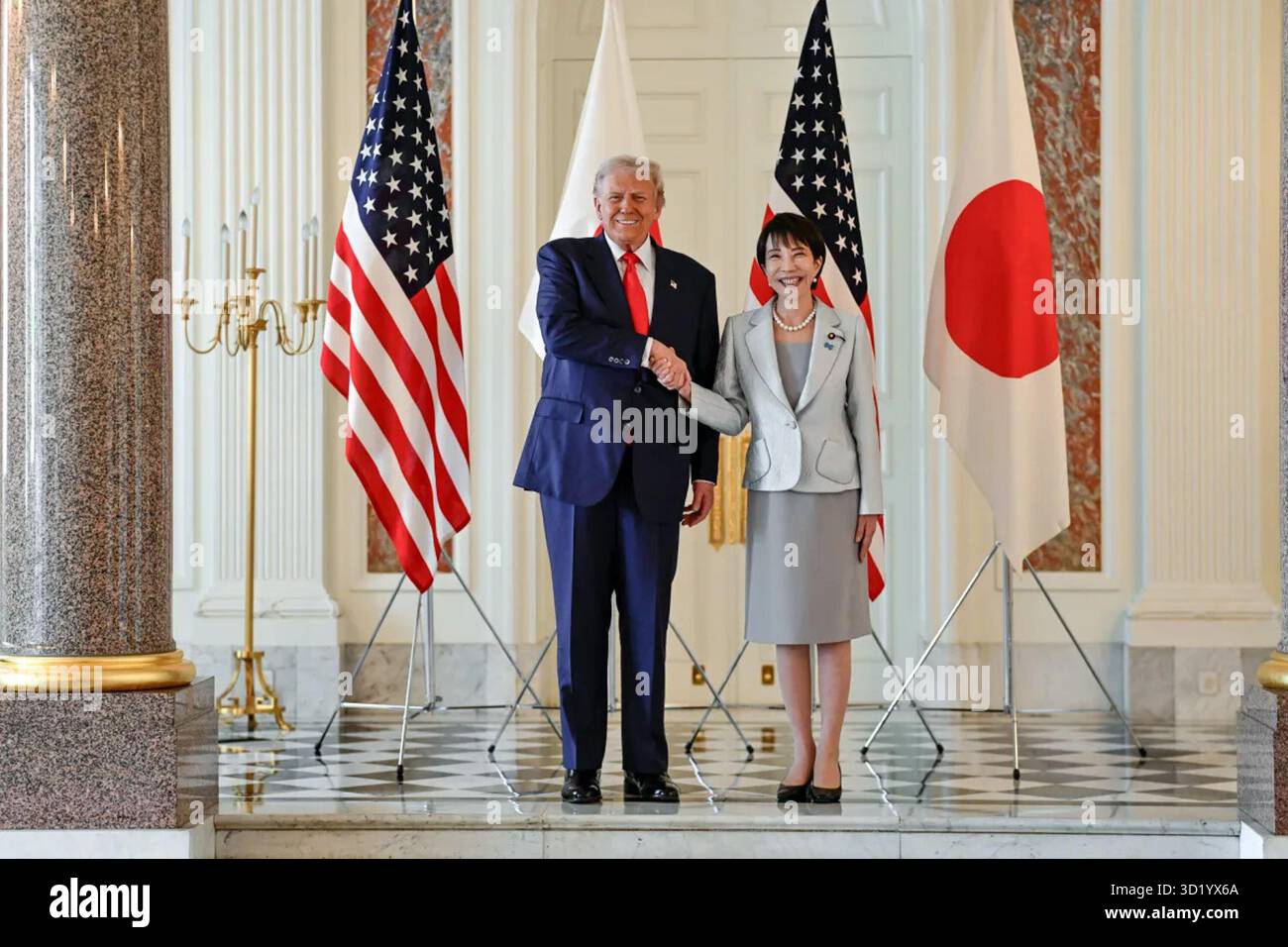
Prime Minister Sanae Takaichi is wasting no time. Tokyo is signaling a clear, unyielding message to Washington. The Japan-US alliance isn't just surviving the political shifts of 2026. It's tightening. Japan's first female prime minister intends to work hand in hand with President Donald Trump, and she isn't waiting for events to dictate terms.
This isn't standard diplomatic fluff. Security realities in the Indo-Pacific are worsening by the day. Beijing is flexing its muscles in the Taiwan Strait. North Korea is launching missiles on a regular basis. Moscow is tightening ties with Pyongyang. For Tokyo, sitting on the sidelines isn't an option. Takaichi knows it. Trump knows it. If you think Japan is going to take a passive backseat in regional defense, you're looking at an outdated map.
Beijing and Pyongyang are watching closely. They want to see if the historic ties between Washington and Tokyo will fray under populist pressures. Takaichi is betting everything that they won't.
The Reality of Takaichi Strategy with Trump
Many political analysts expected friction. They thought a nationalist Japanese leader and a "Japan First" American president would clash over trade and defense spending. They were wrong. Takaichi understands Trump's transactional approach to foreign policy. She isn't fighting it. She's leaning into it.
Tokyo is rapidly boosting its defense budget toward 2% of GDP. That aligns perfectly with long-standing American demands for allies to carry their own weight. Takaichi is showing Washington that Japan is a net provider of security, not a free rider. It's a calculated move. By meeting Trump on his own terms, she secures a stronger commitment for Japan's own defense priorities.
The Ministry of Defense is locking in purchases of Tomahawk cruise missiles. Counterstrike capabilities are no longer a theoretical debate in the Diet. They are active policy. Takaichi is building a military that can punch back, which makes Japan a much more valuable partner for the White House.
Why Conventional Wisdom Got the Relationship Wrong
Pundits love to predict doom for transpacific ties whenever a shift occurs in Washington or Tokyo. They assume Trump's skepticism of traditional multilateral treaties means he wants to dismantle the alliance. That misses the point. Trump values strong, decisive leaders who invest in their own militaries.
Takaichi fits that bill perfectly. Her hawkish reputation on national security is a feature, not a bug. She isn't arriving at the negotiating table looking for handouts. She's bringing concrete defense upgrades to the table. This shared focus on hard power creates a surprisingly functional alignment between the two leaders.
Countering the Threats from China and North Korea
Let's look at the actual geography. Japan is on the front line. The senkaku islands face daily pressure from Chinese coast guard vessels. Takaichi's administration recognizes that deterring a conflict over Taiwan requires a seamless coordination of military doctrine with American forces.
The strategy focuses on several critical fronts.
- Joint intelligence sharing networks that monitor submarine movements in the East China Sea.
- Standardizing missile defense systems to intercept multi-vector threats from North Korea.
- Integrated supply chains for ammunition and parts to keep forces ready for prolonged conflicts.
It's about survival. North Korea's recent solid-fuel missile tests mean warning times are shrinking. Takaichi's emphasis on deep cooperation with Trump isn't about ideology. It's about ensuring that the American nuclear umbrella remains credible and immediate.
The Economic Security Front
Military hardware is only half the battle. The real conflict is happening in semiconductor fabs and supply chains. Takaichi previously championed economic security laws in Japan, and she's doubling down now.
Washington wants to choke off Beijing's access to advanced chip-making equipment. Japan is a critical player in that sector, alongside the Netherlands. Takaichi is aligning Tokyo's export controls with American restrictions. It hurts some domestic tech firms in the short term, but she views it as a necessary cost to secure long-term protection. The goal is clear. Build a secure, high-tech supply chain that excludes hostile actors.
What This Means for Regional Security Architecture
Don't expect the Takaichi administration to rely solely on Washington, though. The strategy is smarter than that. She is using the strong relationship with Trump as a foundation to build out wider networks.
Look at the growing ties between Tokyo, Canberra, and Manila. The Quad remains a pillar, but minilateral groupings are where the real work happens. Japan is selling air defense radars to the Philippines. It's conducting complex naval drills with Australia. By strengthening these secondary nodes, Japan makes the entire network more resilient, even if American attention occasionally wanders elsewhere.
This isn't your grandfather's self-defense force. The constraints of Article 9 of the constitution are being reinterpreted in real-time to match the danger of the era. Takaichi isn't shy about it. She believes a strong nation must be able to defend itself and its allies without hesitation.
Overcoming the Domestic Hurdles
It won't be smooth sailing at home. Takaichi faces pushback from pacifist factions within Japanese politics. Public opinion is anxious about getting dragged into a major war over Taiwan. High defense spending also puts pressure on a national budget already strained by an aging population.
But Takaichi is a skilled communicator. She frames defense spending not as a luxury, but as an insurance policy. She's gambling that voters will prefer a well-armed Japan to a vulnerable one. Her strong stance alongside Trump is a key part of this narrative. It proves to the public that Japan isn't standing alone in an increasingly dangerous neighborhood.
Steps for Navigating the New Geopolitical Reality
If you are running a business with exposure to East Asian supply chains, you need to adapt immediately. The alignment between Takaichi and Trump isn't just political theater. It has real-world economic consequences.
First, audit your supply chains for exposure to restricted Chinese technology sectors. The export controls coming out of Tokyo and Washington are going to get tighter, not looser.
Second, diversify your manufacturing footprints outside of the immediate Taiwan Strait area. The risk of sudden blockades or gray-zone gray activity is at its highest point in decades.
Finally, track the joint statements coming out of the upcoming bilateral summits. They will give you the exact roadmap for where government subsidies and infrastructure spending will flow next, particularly in AI, quantum computing, and aerospace defense. The alliance is changing, and anyone relying on old assumptions is going to get left behind.