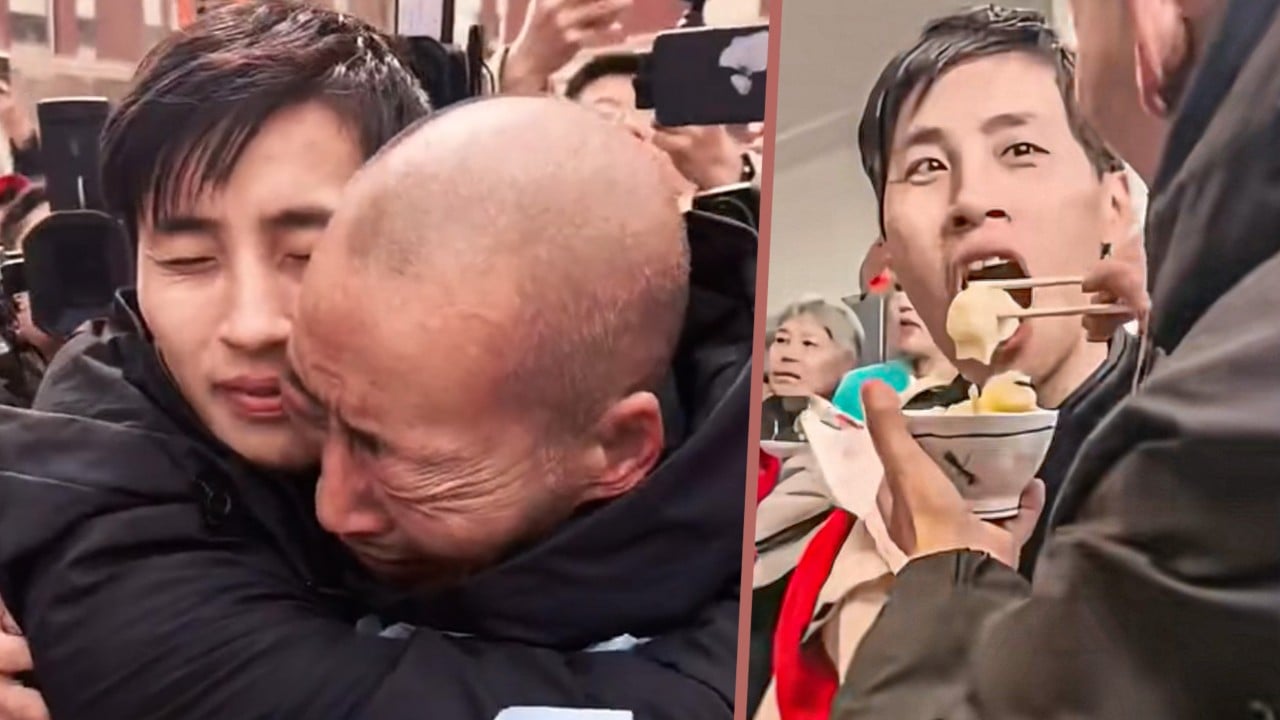
Finding a birth parent isn't always the cinematic, tear-filled masterpiece we see in viral TikTok clips. For Gui Min, a Chinese man adopted by a Canadian family who finally stood face-to-face with his birth father after 30 years, the moment was less about a perfect ending and more about answering a question that had haunted his entire existence. Why was I left behind?
International adoption creates a unique kind of internal friction. You grow up with one culture, one language, and one set of parents, yet your face belongs to a history thousands of miles away. When Gui Min started his search, he wasn't just looking for a man named Qian Parent. He was looking for the version of himself that never got to live in China. The story of his reunion in Sichuan Province breaks down the oversimplified narrative that adoption is just a "better life" and shows the messy, beautiful, and often painful truth of biological reclamation.
The Long Road from Sichuan to Canada
Gui Min’s journey didn't start in a sterile adoption agency. It started in 1994, in the bustling streets of a Sichuan town where a young boy was separated from his family. Whether it was a moment of distraction at a market or the crushing weight of economic desperation that led to his displacement, the result was the same. He ended up in the state welfare system. By the time he was a toddler, he was on a plane to Canada, heading toward a life of hockey, maple syrup, and a language his birth parents would never understand.
His Canadian parents didn't hide his heritage. They were supportive, which is more than some adoptees get. But support doesn't stop the "staring in the mirror" moments. You look at your reflection and see a stranger’s eyes. That’s what drives people like Gui Min to spend thousands of dollars on DNA kits and private investigators.
Genetic testing has changed the landscape for the "lost generation" of Chinese adoptees. In the past, you needed a paper trail. Today, you just need a saliva sample and a bit of luck. Gui Min used a combination of DNA databases and the tireless work of Chinese volunteers who specialize in reuniting abducted or lost children with their families. These volunteers, often working through platforms like "Baobeihuijia" (Baby Come Home), are the unsung heroes of these stories.
Why We Should Stop Calling These Stories Miracles
The media loves the word "miracle." It’s a lazy way to describe years of grinding detective work and emotional labor. When Gui Min finally landed in Chengdu to meet his father, it wasn't a miracle. It was the result of a relentless pursuit of truth.
We need to talk about the father’s side of this. For thirty years, Qian lived with the ghost of a son. In many of these cases, the parents never stopped looking. They spent decades blaming themselves, posters fading in the sun, checking every face in the crowd. When they finally met, the elder Qian’s reaction was a mixture of soul-crushing relief and the realization that he’d missed an entire lifetime. He didn't know the man standing before him. He only knew the ghost of the boy he lost.
This is the part that isn't "heartwarming." It’s heavy. They don't speak the same language. Gui Min’s Mandarin was either non-existent or rusty, and his father didn't speak English or French. They had to rely on translators and the universal language of weeping. It’s a stark reminder that while a DNA match can prove biological kinship, it can't instantly bridge a thirty-year cultural chasm.
The Role of Sichuan Volunteer Networks
Sichuan has a high density of these cases, and the local police have become surprisingly adept at using their national DNA database to close old files. The "Tuanyuan" (Reunion) campaign by the Chinese Ministry of Public Security has been a massive factor here. Since its launch, they've found thousands of children, some who are now middle-aged adults with families of their own.
- DNA Collection: The police allow parents of missing children to register their DNA for free.
- Cross-Referencing: When adoptees like Gui Min submit their data, the system looks for "hits" against these grieving parents.
- Local Intelligence: Volunteers on the ground go to the villages, verify the stories, and make sure the "reunion" isn't a scam or a mistake.
Without this infrastructure, Gui Min would still be wondering. The tech is there, but the human element—the people who walk the muddy roads of rural China to find a specific house—is what makes it happen.
Navigating the Identity Crisis Post Reunion
What happens the day after the cameras stop rolling? That’s the question nobody asks. Gui Min has a life in Canada. He has a career, friends, and the parents who raised him. Meeting his birth father doesn't erase that, but it does complicate it.
Adoptees often feel a sense of "dual loyalty" or guilt. Are you betraying your Canadian parents by loving your Chinese father? Is your Chinese father disappointed that you're "too Western"? These are the psychological hurdles that follow a reunion. It’s a total shift in how you perceive your own origin story. You go from being "the boy who was abandoned" to "the man who was found."
The "abandoned" label is often a misunderstanding anyway. In many Chinese cases from the 90s, children were lost or even abducted. The narrative that parents just "didn't want" their kids is frequently a lie told to simplify the paperwork. For Gui Min, learning the truth of how he ended up in the system was likely the most healing part of the entire trip.
Practical Steps for Adoptees Starting Their Search
If you're in a similar position, staring at an old adoption file and wondering where to start, don't just wing it. The process is grueling and can be emotionally draining.
First, get your DNA into the right systems. 23andMe or Ancestry are great for Western connections, but for China, you need to look into services that bridge the gap to Chinese databases like MyHeritage or specifically Chinese-centric DNA projects.
Second, connect with organizations like Nanchang Project or ResearchChina. They have expertise in navigating the specific provincial bureaucracies of the Chinese welfare system. They know which orphanages kept good records and which ones didn't.
Third, prepare for any outcome. Sometimes the parents don't want to be found. Sometimes they've passed away. And sometimes, as in Gui Min’s case, they've been waiting for you every single day. You need a support system in place before you send that first message or book that flight to Chengdu.
Gui Min’s story is a powerful testament to the fact that our roots matter. You can give a child a "better" life in a wealthy country, but you can't give them a sense of peace until they know where they came from. He went back to China to find a father, and he ended up finding the missing pieces of himself.
Start by gathering every scrap of paper from your adoption file. Even a blurry photo of a street corner or a handwritten note from a social worker can be the key that a volunteer in China needs to find your home. Don't wait for a "sign" to start looking. The data is out there, and the people who remember you aren't getting any younger. Take the first step by uploading your raw DNA data to international platforms today.