The media fell for the logistical trap again.
When the death of Iran’s Supreme Leader Ayatollah Ali Khamenei was announced, mainstream news outlets immediately scrambled to publish the same stale, predictable narrative. They fixated on the timeline. They questioned why the funeral took days to materialize. They spun breathless conspiracy theories about the whereabouts of his body, whispering about secret vaults, security threats, and deep-state panic in Tehran.
It is classic clickbait masquerading as geopolitical analysis. They are asking the wrong questions because they do not understand how authoritarian power structures actually survive a succession crisis.
The delay was not a logistical failure. It was a deliberate, calculated political maneuver.
In a totalitarian system, a funeral is never just a burial. It is a theatre of continuity. The Western press looked at the empty days on the calendar and saw chaos. The regime looked at those exact same days and saw a window of opportunity to consolidate power, backroom-deal the succession, and ensure that the transition of the Islamic Republic’s absolute authority happened without a single fracture showing on the surface.
The Myth of the Unprepared Regime
The lazy consensus among Western analysts is that the delay proved Tehran was caught flat-footed. We heard the same tired talking points: "The regime is scrambling," "Infighting has paralyzed the leadership," "They don't know where to hide the body safely."
This is a fundamental misunderstanding of the Assembly of Experts and the Office of the Supreme Leader.
I have spent years analyzing Middle Eastern power dynamics, watching intelligence agencies misread the internal mechanics of the Iranian state. Totalitarian regimes do not leave the death of a supreme dictator to chance. They have playbooks for this. They have had a succession script drafted, revised, and kept under lock and key for over a decade.
The delay was the script working exactly as intended.
When a dictator dies, the biggest threat to the regime is not an external enemy. It is an internal power vacuum. If you bury the leader too quickly, you force the public’s attention onto the empty chair before you have locked down the person who will fill it. You do not hold a massive public gathering of millions of emotional, unpredictable people when the top tier of the military and clerical elite are still arguing over who gets the keys to the state.
The Geography of Power: Where Was the Body?
While mainstream journalists were busy speculating whether the body was flown to a secret bunker in Mashhad or hidden in an underground military complex beneath Tehran, they missed the tactical reality.
The physical location of the corpse is irrelevant to the regime; the monopoly on the narrative is what matters.
In Islamic tradition, burial is supposed to happen swiftly, usually within 24 hours. When an Islamic state explicitly violates this religious norm, it is a massive signal. The regime chose to absorb the religious criticism because the political stakes were infinitely higher.
Imagine a scenario where the state announced the death and immediately held the funeral the next morning. The factions within the Islamic Revolutionary Guard Corps (IRGC) and the traditional clerical elite in Qom would not have had time to project absolute unity. A rushed funeral invites chaos. A delayed funeral creates an artificial pause—a controlled environment where the security apparatus can lock down major cities, deploy the Basij paramilitary forces to prevent protests, and iron out any last-minute defiance from rival political factions behind closed doors.
The body was exactly where it needed to be: under total state control, serving as a political prop waiting for its cue.
The IRGC vs. The Clerics: The Hidden Negotiation
The media wants you to believe the funeral delay was about security logistics or building a massive stage. The brutal truth is that the delay was required to finish a hostile takeover.
The position of Supreme Leader requires a delicate balance between religious legitimacy (the jurist's authority, or Velayat-e Faqih) and raw military power. Over the last two decades, the IRGC has systematically eaten away at the economic and political power of the traditional clerics.
The period between the death and the funeral was the final, tense negotiation of this transition.
- The Clerical Demand: Retain religious veto power and ensure the new leader maintains the theological purity of the regime.
- The IRGC Demand: Ensure the new leader is a pliable figurehead who will not interfere with the military’s multi-billion-dollar economic empire or its regional proxy wars.
You cannot broadcast that fight to the world. You use the excuse of "national mourning preparations" to buy 72 to 96 hours of radio silence. While the public is told to prepare for a historic day of grief, the real history is being written by men in military uniforms forcing old men in turbans to sign off on pre-selected candidates.
Dismantling the "People Also Ask" Flawed Premises
If you look at what people are searching for, the ignorance of the collective commentary becomes glaringly obvious.
"Why do Islamic funerals get delayed for leaders?"
They don't. That is the point. The premise of the question ignores the rule to look at the exception. In mainstream Sunni and Shia practice, immediate burial is the standard. When a regime delays it, they are signaling that state survival trumps religious law. It is an act of political secularism by a supposedly theological regime.
"Was there a security threat to Khamenei's body?"
The threat wasn't to the dead body; the threat was to the living institutions. The regime doesn't delay a funeral because they are scared someone will steal a coffin. They delay it because they are terrified that millions of people gathering in one place before the new leader is solidified could turn a state-mandated mourning session into a full-scale revolution.
The Downside of the Playbook
This contrarian strategy of deliberate delay is not without its risks. The regime plays a dangerous game when it stops the clock.
By stalling the funeral to manage internal politics, the state inadvertently confirms its own fragile nature to its population. The citizens of Iran are not stupid. They know that a deviation from religious burial customs means the elites are fighting over the spoils of the empire. It breeds cynicism, fuels the rumor mill, and exposes the cracks in the facade of divine rule.
But to the autocrat, a cynical population is highly manageable. An organized opposition during a chaotic transition is not. They choose the cynicism every single time.
Stop Looking at the Coffin
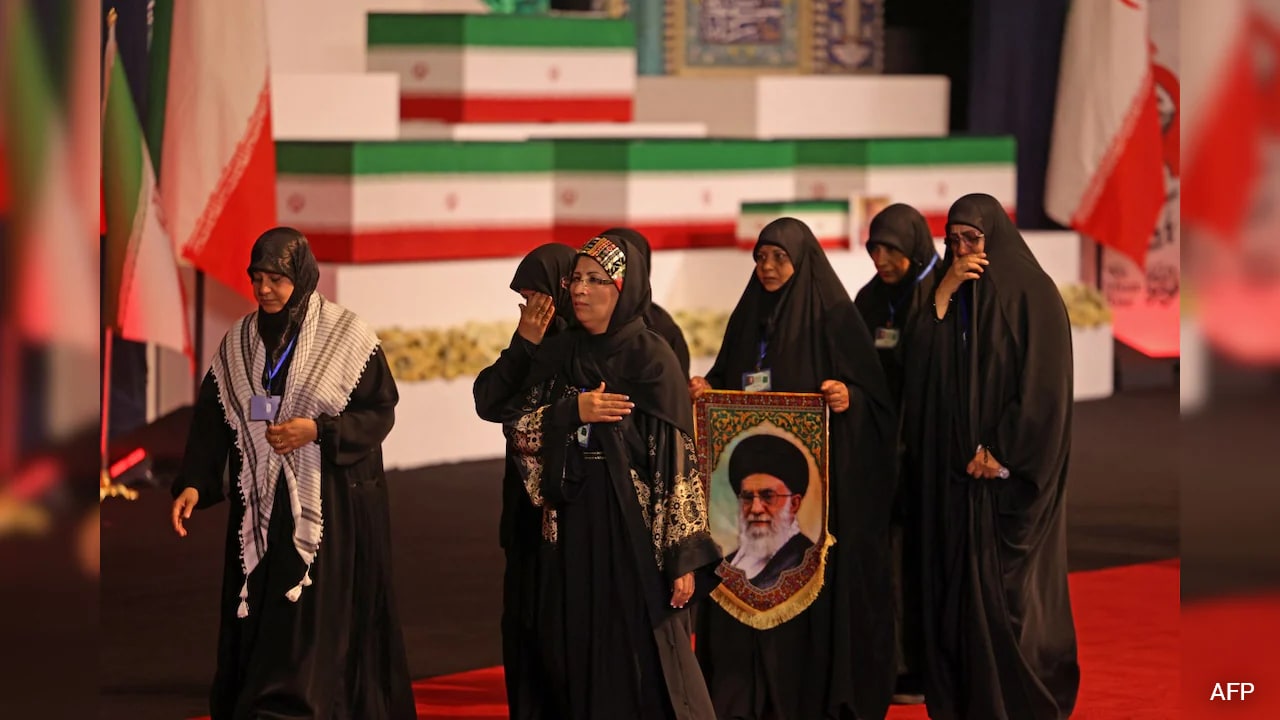
The international community loves to analyze the pageantry of authoritarian regimes. We watch the weeping crowds, the military escorts, and the elaborate biers, trying to read the tea leaves of a nation's future.
It is a useless exercise.
The funeral of Ayatollah Khamenei wasn't delayed because of logistical hiccups, grave preparation, or foreign threats. It was delayed because the regime needed time to stage a corporate merger under the guise of a national tragedy. The next time an authoritarian leader dies and the timeline stretches out unexpectedly, stop looking at the coffin. Look at the men standing just outside the frame, deciding who gets to speak next.


