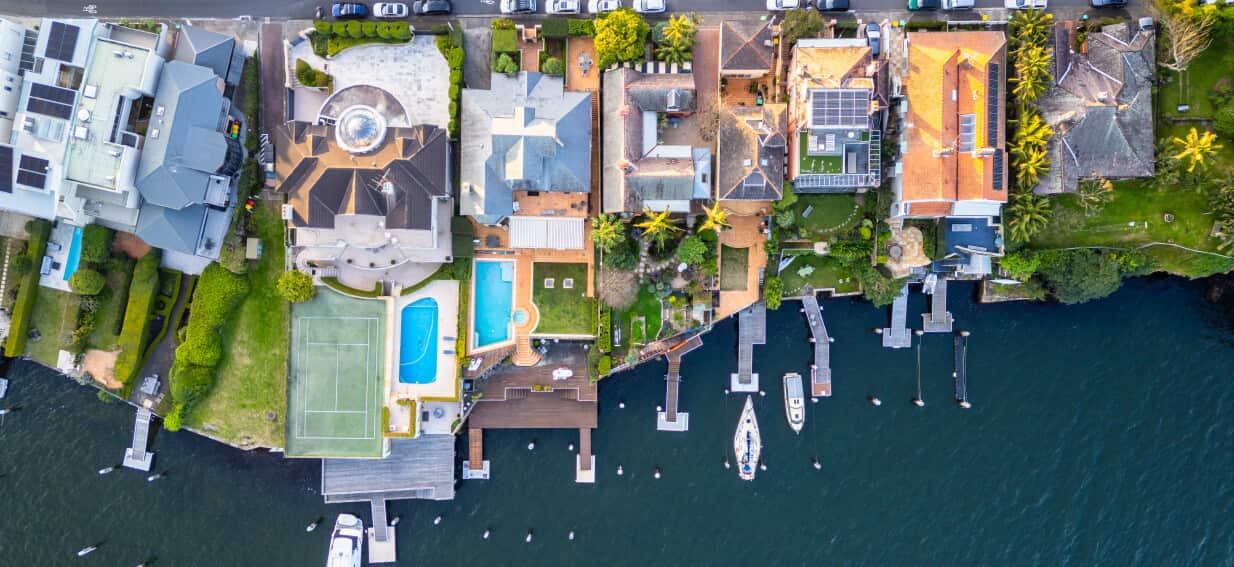
The coffee shop on the corner of a leafy Sydney suburb looks exactly as it did five years ago. The espresso machine still hisses with rhythmic certainty. The barista still remembers who takes oat milk and who wants extra foam. But look closer at the people waiting in line. The quiet guy in the faded linen shirt checking his phone isn’t just tracking a grocery list. He is watching a net worth ticker cross a threshold that, a generation ago, belonged exclusively to CEOs and lottery winners.
He is one of the new faces of wealth.
A quiet shifting of gears is happening across the Australian continent. According to recent global wealth data, more than 25,000 Australians crossed the threshold into millionaire status over the past year alone. They did not win a jackpot. They did not invent a revolutionary app. Most of them simply owned a piece of land, held a steady job, and watched the relentless machinery of global compounding do the heavy lifting while they slept.
They are part of a massive, surging global club. Yet, inside this club, the champagne isn't flowing. Instead, there is a strange, collective sense of vertigo.
To understand how we got here, consider a hypothetical couple named Sarah and David. Twenty years ago, they bought a modest, red-brick three-bedroom home in Melbourne's outer ring. David teaches high school math. Sarah manages logistics for a regional medical supplier. They lived within their means, dutifully paying down a mortgage that once felt like an anchor around their necks.
Then, the world changed around them.
Property values surged. Superannuation balances, fed by decades of mandatory employer contributions, quietly snowballed in the background of their lives. One morning, Sarah sat down with a calculator to update their net wealth spreadsheet. When the final tally flashed on the screen, she didn't cheer. She blinked.
$$1,240,000$$
The number was entirely real, backed by brick, mortar, and balanced funds. But their daily reality had not shifted by a single millimeter.
That is the central paradox of the modern Australian millionaire. The word "millionaire" historically carried a specific weight. It conjured images of yachts, private enclaves, and frictionless lives. Today, it frequently describes a school teacher and a logistics manager who still worry about the price of electricity and shop for groceries on sale.
The Mirage of the Million-Dollar Baseline
We have inherited a vocabulary that no longer fits our economic reality. The seven-figure mark was once a destination. Now, in cities like Sydney and Melbourne, it is increasingly just the price of admission for a stable, middle-class existence.
Consider the mathematics of shelter. When the median house price in a capital city hovers near or above the million-dollar mark, anyone who has successfully paid off a standard family home is, by definition, a millionaire. But you cannot buy groceries with a roof tile. You cannot pour a fraction of a concrete driveway into a petrol tank.
This is asset-rich, cash-constrained living.
The global surge in wealth creation is frequently framed as a triumph of economic resilience. Reports point to rising stock markets, strong employment figures, and the robust recovery of global trade. But this perspective overlooks the emotional friction experienced by those caught in the middle of the boom.
When everyone around you is gaining ground, standing still feels exactly like falling behind.
The growth isn't isolated to Australia. Across the United States, Europe, and parts of Asia, the club of seven-figure citizens is expanding at a pace never seen before in human history. The democratization of investing through digital platforms, combined with decades of property appreciation, has created an entirely new socioeconomic tier.
But this tide does not lift every boat equally.
The Generational Fracture
Step outside the suburban coffee shop and talk to the twenty-something barista pulling the shots. For her generation, the news of 25,000 new millionaires does not feel like a shared national victory. It feels like the door to security is being locked from the inside.
The gap between those who own assets and those who rent them is widening into a canyon.
In the past, hard work was the primary currency of advancement. You traded hours for wages, saved a portion, and built a life. Today, the velocity of asset growth vastly outpaces the velocity of wage growth. A home in a capital city can earn more in equity over a single twelve-month period than the person living inside it earns from their full-time salary.
That reality alters human behavior. It changes how people plan for the future, when they choose to have children, and whether they feel a sense of belonging in their own communities.
The real friction lies in the quiet conversations happening at kitchen tables across the country. Parents who have achieved millionaire status on paper are looking at their children and realizing that their own success cannot easily be replicated. The bank of mum and dad has transformed from an occasional helping hand into a structural necessity for the next generation of buyers.
Wealth is no longer just about personal comfort. It has become a defensive shield used to protect one's family from the volatile currents of the rental market.
The Invisible Weight of the Ledger
There is an underlying anxiety to this newfound status. When wealth is tied almost entirely to the volatile valuations of real estate and global equities, it feels fragile. A sudden shift in interest rates or a downturn in global markets can erase hundreds of thousands of dollars from a family balance sheet in a matter of weeks.
The numbers on the screen change, but the human being looking at them remains anxious.
We are learning that financial metrics are a poor shorthand for human well-being. Having a net worth of over a million dollars used to mean freedom from financial worry. Now, for many, it simply means managing a more complex set of financial risks.
The story of modern wealth is not a story of decadence. It is a story of adaptation. It is about ordinary people navigating an extraordinary economic landscape, trying to find a sense of permanence in a world where the goalposts are constantly being moved further down the field.
The sun sets over the suburban street, casting long shadows across the neatly manicured lawns of homes that are now worth small fortunes. Inside, the lights flick on one by one. Dinners are cooked. Homework is checked. The new millionaires of the world are washing the dishes, checking their bank apps, and wondering why security still feels so incredibly far away.


