Rewilding peatland is not a gentle pastoral hobby; it is a massive hydrological engineering project aimed at plugging the biggest terrestrial carbon leak on the planet. While standard conservation stories celebrate the return of rare wading birds and carnivorous sundews, the real story lies beneath the surface. Peatlands cover roughly three percent of the Earth's land surface, yet they hold more carbon than all the world's forests combined. When we drain them for agriculture, forestry, or fuel, that ancient organic matter oxidizes, turning a vital carbon sink into a relentless chimney of greenhouse gases. Restoring these bogs requires reversing centuries of land management policy, battling entrenched agricultural subsidies, and physically blocking thousands of miles of drainage ditches to bring the water table back to the surface.
The Architecture of a Broken Bog
To understand why peatland restoration is so difficult, you have to understand what peat actually is. It is not soil. It is partially decayed plant matter—primarily Sphagnum moss—that has accumulated over thousands of years in waterlogged, anaerobic conditions. Because the ground is saturated, bacteria and fungi cannot efficiently break down the dead vegetation. Instead, layer after layer of dead moss compresses under its own weight, locking away atmospheric carbon that was captured millennia ago.
When humans arrive with spades and excavators, that equilibrium collapses. For centuries, governments across Europe, North America, and Southeast Asia actively subsidized the drainage of wetlands. Bogs were viewed as unproductive wastelands, breeding grounds for disease, and obstacles to progress. Farmers dug deep trenches, known as grips, to lower the water table so sheep could graze or crops could grow. Timber companies drained vast tracts of blanket bog to plant non-native conifers. In places like Ireland, Scotland, and Finland, industrial excavators stripped the peat bare to burn it in power stations or bag it for backyard gardeners.
Once the water drains away, oxygen rushes into the peat profile. Aerobic microbes wake up and begin feasting on ten thousand years of preserved plant matter. The bog literally begins to rot and shrink. In heavily drained agricultural areas, like the East Anglian Fens in the United Kingdom or the peat swamps of Indonesia, the ground actually subsides, dropping by centimeters every year.
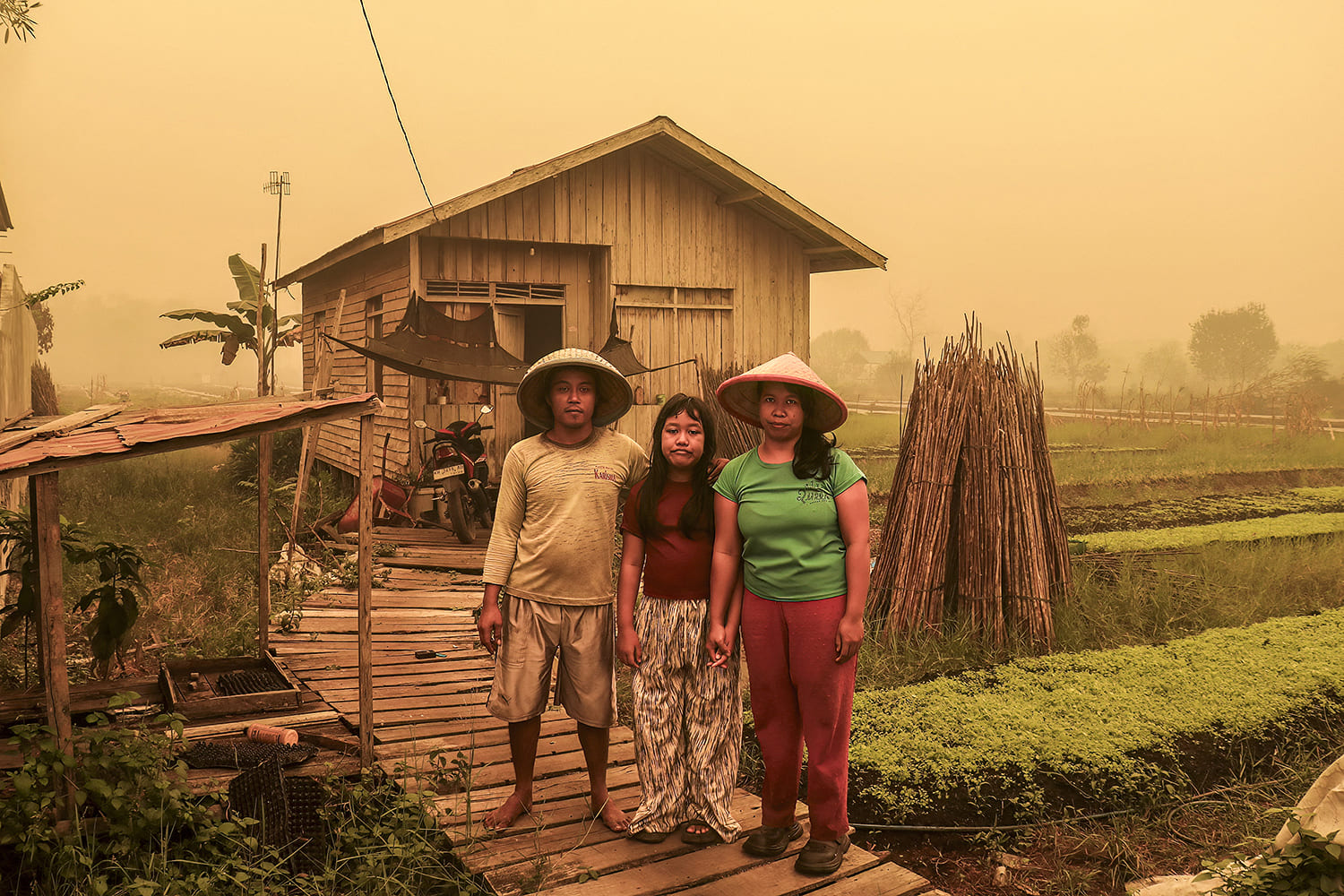
This degradation triggers a cascade of secondary failures. Dry peat becomes hydrophobic, meaning it repels water rather than absorbing it like a sponge. When heavy rains hit a degraded bog, the water sheets off the surface rapidly, carrying dark clouds of eroded peat into local rivers and exacerbating downstream flooding. Worse, dry peat is essentially fossil fuel lying exposed on the surface. When wildfires ignite on drained peatlands, they do not just burn the surface scrub; they burn underground, smoldering for months and releasing massive plumes of ancient carbon and toxic haze.
How Rewilding Actually Works on the Ground
Restoring a damaged bog requires far more than scattering seeds and walking away. You cannot plant a peatland the way you plant a forest. The hydrology must be fixed first, and that involves heavy machinery, precise topography mapping, and brute physical labor.
The primary objective of any peatland rewilding project is rewetting. Restoration teams start by mapping the network of historical drainage ditches using LiDAR technology from drones or aircraft. Once they understand how water is escaping the landscape, they move in with low-ground-pressure excavators—machines fitted with extra-wide tracks so they do not sink into the mire.
Operators build thousands of small dams along the length of the drainage grips. Depending on the terrain and budget, these dams are constructed from compressed peat, interlocking plastic piling, or locally sourced timber. In severely eroded areas where bare peat is exposed to wind and frost, teams have to reprofiling steep, gullied peat banks, grading them down to gentler slopes so vegetation can take hold without washing away.
After the water begins to pool behind the dams, the biological phase begins. Teams spread brash—chopped heather and brushwood harvested from healthy donor sites—across the bare peat. This acts as a protective mulch, shielding the ground from frost heave and erosion while trapping moisture. Mixed into that brash are fragments of live Sphagnum moss, often cultivated in specialized nurseries or harvested sustainably from intact bogs.
Sphagnum is the undisputed engine of peatland recovery. It can hold up to twenty times its dry weight in water, acidifies its surroundings to discourage competing vascular plants, and creates the exact waterlogged conditions needed to restart the peat-forming process. It is a slow-motion engineering marvel. Even under ideal conditions, healthy peat accumulates at a rate of roughly one millimeter per year. Rewilding a bog is a multi-generational commitment.
The Economic Collision Nobody Wants to Discuss
If the science of rewetting is straightforward, the politics and economics are a minefield. Most ambitious peatland restoration targets collide directly with private land ownership, rural livelihoods, and deeply embedded agricultural subsidies.
Consider the reality for a hill farmer or a lowland agricultural producer. For decades, policy frameworks paid them to maximize production on drained land. If an environmental agency or a rewilding charity approaches that landowner and asks them to block their drains and raise the water table, they are effectively asking them to destroy the agricultural value of their property. Wet land cannot support heavy machinery, standard row crops, or high-density livestock grazing.
In response, governments and conservation groups are experimenting with new financial models, primarily peatland carbon credits and public payments for ecosystem services. The pitch is simple: instead of paying farmers to produce food or timber on marginal peat soils, pay them to store carbon and filter water.
Yet this emerging carbon market is plagued by friction and skepticism. Measuring exact carbon fluxes on a restoring bog is notoriously complex. Furthermore, corporate buyers of carbon offsets often prefer tree-planting schemes because trees are visible, easily counted, and carry a simpler public relations narrative than a muddy bog. Convincing corporate boards to pour millions of dollars into blocking ditches in remote uplands requires rigorous verification standards that are still evolving.
There is also a sharp cultural divide. Rural communities often view large-scale rewilding initiatives—especially those driven by urban charities or wealthy private investors buying up estates for carbon offsetting—as a form of green colonialism. When traditional land uses like peat cutting for domestic fuel or rough grazing are curtailed, local resentment flares. Projects that fail to integrate local contractors, respect cultural ties to the landscape, and provide clear, long-term income alternatives routinely stall in local planning disputes or face outright sabotage.
The Methane Paradox and Scientific Gray Areas
Mainstream coverage of rewilding projects often presents ecological restoration as an unalloyed good, glossing over the messy biochemical trade-offs that occur when you flood dried land. In the case of peatlands, the biggest complication is methane.
While a drained peatland bleeds massive amounts of carbon dioxide, a newly rewetted peatland temporarily becomes a significant source of methane. Methane is a potent greenhouse gas, trapping far more heat per molecule over a twenty-year period than carbon dioxide, though it breaks down faster in the atmosphere.
When restoration teams block drains and raise the water table, the newly submerged vegetation decays anaerobically, feeding methane-producing microbes called methanogens. For the first few years—and sometimes for more than a decade—a rewetted bog can actually have a net warming effect on the climate as this methane spike plays out.
Climate scientists and peatland ecologists generally agree that rewetting is still overwhelmingly the right call over a fifty- to one-hundred-year timeframe. Stopping the continuous, multi-century bleed of carbon dioxide from oxidized peat outweighs the short-term methane pulse. However, acknowledging this nuance is critical. Poorly managed rewetting—for instance, flooding a nutrient-rich former agricultural field too deeply—can create a stagnant, open-water lagoon that pumps out extreme levels of methane for years without ever establishing a healthy Sphagnum carpet.
Precision matters. The goal of restoration is not to create a lake; it is to keep the water table hovering just at or slightly below the surface of the moss. Achieving that exact hydrological sweet spot across thousands of hectares of undulating terrain is an immense technical challenge, and early restoration projects often got the balance wrong.
The Forestry Mistake and the Timber Dilemma
Another major battleground in peatland rewilding involves trees. For much of the twentieth century, state forestry commissions planted millions of fast-growing conifers—such as Sitka spruce and lodgepole pine—directly onto deep peat bogs. At the time, it was hailed as a triumph of land utilization, turning "barren" moorland into a domestic timber reserve.
Today, ecologists recognize those plantations as an ecological disaster. Trees act like giant biological pumps, drawing massive amounts of water up through their roots and transpiring it into the atmosphere. Combined with the deep plow furrows cut to establish the saplings, commercial forestry plantations dry out deep peat rapidly, leading to massive carbon losses that far exceed the carbon stored in the growing timber.
Fixing this requires a radical, visually jarring intervention: forest-to-bog restoration. Rewilding teams have to clear-fell immature or commercially marginal conifer plantations, mulch the timber into the furrows, and block the forestry drains.
To the untrained eye, a forest-to-bog restoration site looks like a clear-cut wasteland. Critics frequently attack conservation groups for cutting down millions of trees in the middle of a climate crisis. Explaining to the public why destroying a forest is necessary to save a bog remains one of the toughest communications hurdles in modern conservation. Meanwhile, the timber industry pushes back against losing productive land area at a time when global demand for construction timber and wood fiber is surging.
The Rise of Paludiculture
If taking agricultural peatlands entirely out of production is politically and economically unviable at scale, the alternative is paludiculture—wet agriculture. Rather than draining the bog to fit conventional crops, paludiculture adapts farming to a high water table.
In regions like Germany, the Netherlands, and the UK, pilot projects are testing commercial crops that thrive in saturated peat soils. Farmers are cultivating cattails (typha) to produce sustainable insulation boards for the construction industry, harvesting reeds for traditional thatching, and growing Sphagnum moss in controlled wet beds to replace mined peat in commercial horticulture.
Paludiculture allows landowners to maintain a productive, revenue-generating enterprise while halting soil subsidence and slashing carbon emissions. Yet the barriers to scaling this model remain steep. Standard tractors cannot operate on saturated ground, requiring expensive, specialized tracked machinery. Supply chains for processing cattail fiber or reed biomass barely exist, meaning early adopters have to build their own markets from scratch. Until subsidies shift decisively away from drainage-based agriculture and toward wet-farming infrastructure, paludiculture will remain a niche experiment rather than a mainstream solution.
Following the Money and the Mud
The sudden surge of interest in rewilding peatlands is driven by cold arithmetic. Nations cannot hit their net-zero carbon targets without addressing land-use emissions, and degraded peatlands account for roughly four to five percent of all global human-caused greenhouse gas emissions. Plugging those leaks is vastly cheaper per ton of carbon saved than building direct air capture facilities or subsidizing unproven industrial technologies.
Yet money alone cannot rush biology. Throwing millions of dollars at restoration targets creates perverse incentives—contractors rushing to install dams on easy-to-reach lowland sites while ignoring remote, heavily degraded upland bogs, or planting inappropriate vegetation just to hit annual acreage metrics. True restoration requires decades of post-installation monitoring, repairing blown-out dams after extreme winter storms, managing invasive species like rhododendron or self-seeded conifers, and adjusting grazing levels so sheep and deer do not trample the fragile recovering moss.
When you stand on a successfully rewetted bog, there is no grand monument to see. There are no towering redwoods or dramatic herds of megafauna. There is just a vast, quiet expanse of glistening water, dark mud, and vibrant green and red carpets of Sphagnum moss, slowly locking away the atmosphere one millimeter at a time.