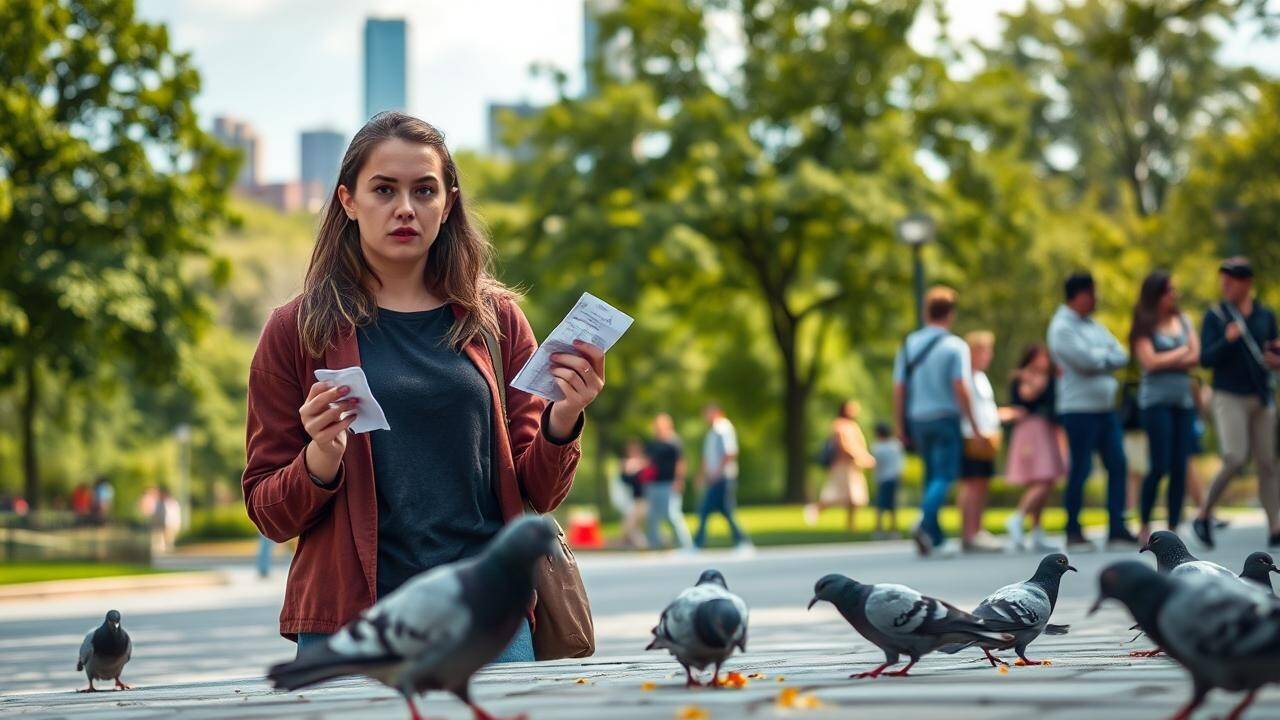
The air in Piccadilly Gardens usually carries a specific, metallic edge—a mix of bus exhaust, damp pavement, and the hurried energy of a city in a rush. On a Tuesday afternoon, it is the last place you would expect to find a moral crossroads. But for one woman, a quiet moment of supposed kindness turned into a stark lesson in the modern mechanics of urban discipline. She reached into a paper bag. She tossed a few crumbs toward a group of pigeons. Within seconds, the grace of the moment was shattered by the arrival of a high-visibility vest and a handheld computer.
The penalty was £150.
To some, that figure is a week’s worth of groceries. To others, it is a minor annoyance. But for anyone caught in the crosshairs of local council enforcement, it feels like an ambush. The "crime" was littering. The "criminal" was a grandmother who thought she was participating in a timeless, pastoral tradition. This is the friction point of the modern British city: the space where human impulse meets the cold, hard logic of municipal "Public Spaces Protection Orders."
The Invisible Nets We Walk Through
We tend to think of laws as giant, obvious barriers. We imagine they are there to stop the big things—theft, violence, reckless endangerment. However, the reality of living in a 21st-century metropole is that we are constantly navigating a web of invisible restrictions. These are the "micro-laws." They govern how loud you can play music, where you can stand with a protest sign, and, increasingly, what you can do with a handful of birdseed.
The woman in Manchester was stunned. Stupefied. She described the encounter as surreal, watching the officer tap away at a screen to generate a fine that cost more than a high-end dinner.
Manchester City Council doesn't see it as a war on grandmothers. They see it as a war on rats. From their perspective, every crumb left on the flagstones is an invitation to a different kind of guest. Pigeons, often derided as "rats with wings," create a mess that costs thousands of pounds to power-wash away. They carry diseases. They deter tourists. When you scale one person feeding one bird across a population of half a million people, you don't have a Disney movie. You have an infestation.
The Conflict of the Commons
Consider the park bench. It is perhaps the most democratic piece of furniture in existence. Anyone can sit there. For the price of nothing, you own a piece of the city for as long as your legs need the rest. This is the "commons." Historically, the commons were shared lands where anyone could graze their cattle or gather firewood.
But the commons are shrinking. Not physically, but legally.
When we are told we cannot feed birds, the city is asserting a specific kind of ownership over our behavior. It is saying that the park is not a place for "living" in the messy, unpredictable sense. It is a place for "transit." You are allowed to be there, but you must not leave a trace. You must not interact with the ecosystem. You must be a ghost in the machine.
The emotional core of this story isn't actually about the £150. It’s about the shock of being treated like a nuisance when you believe you are being a neighbor. There is a profound psychological weight to being "fined." It is a mark of shame delivered via a thermal-paper receipt. It tells the citizen: You do not understand the rules of your own home.
The Mathematics of Deterrence
Why £150? Why not £10? Or a warning?
The logic is rooted in a concept called "Broken Windows Theory," but updated for the era of austerity. The idea is that if you ignore the small things—litter, graffiti, bird feeding—the environment begins to feel lawless, which leads to larger crimes. But there is a more cynical math at play. Enforcement is expensive. To pay for the officers patrolling the gardens, the fines must be high enough to act as both a deterrent and a revenue stream.
If the fine were £5, people would treat it as a "feeding fee." They would pay the fiver and keep the bread. At £150, the city isn't asking you to stop. It is threatening you into submission.
Imagine a young professional on a lunch break, or an elderly man whose only social interaction of the day is the flutter of wings around his feet. Suddenly, the state intervenes. The "Fixed Penalty Notice" (FPN) is a tool designed for efficiency. It bypasses the messy nuance of a courtroom. It doesn't care if you've had a bad day, if you didn't see the sign, or if you were just trying to be kind to a creature that looked hungry.
The Vanishing Middle Ground
We have lost the art of the "reprimand." In the past, a park warden might have walked over and said, "Oi, love, don't do that, it brings the rats." The person would apologize, put the bag away, and the world would keep spinning. Today, we have replaced human conversation with automated enforcement. The officer in Manchester wasn't there to educate; they were there to process a violation.
This shift changes how we feel about our cities. It turns the public square into a minefield. You begin to look at the person in the high-vis vest not as a guardian of the peace, but as a predator waiting for a mistake.
Consider the "Invisible Stakes." This isn't just about one woman's bank account. It’s about the slow erosion of the "soft city"—the parts of urban life that aren't dictated by schedules and statutes. If we are too afraid to interact with our environment for fear of a fine, we become spectators in our own lives. We walk faster. We look at our phones more. We stop looking at the birds.
The True Cost of a Clean Square
There is a logical deduction we have to face: Do we want a clean city or a human city?
Ideally, we want both. But the Manchester incident suggests we are leaning heavily toward a sterile, controlled environment where the cost of a mistake is disproportionately high. The council argues that the money from these fines goes back into keeping the streets clean. It is a self-sustaining cycle of punishment and maintenance.
But what about the woman? She left the park that day feeling alienated from her own community. She felt "stunned," a word that implies a physical blow. That is the feeling of the social contract snapping. When the law feels arbitrary or cruel, it loses its authority. It becomes just another obstacle to be avoided, like a puddle or a traffic jam.
The facts remain:
- Feeding pigeons is technically littering under many local bylaws.
- Pigeons cause structural damage to historic buildings.
- Large fines are effective at reducing unwanted behavior.
Yet, those facts feel thin when weighed against the image of an elderly resident standing in a park, holding a crumpled piece of paper that demands a significant portion of her monthly income because she gave a crust of bread to a bird.
We are building cities that are increasingly efficient, undeniably cleaner, and remarkably lonely. We have solved the problem of the pigeon, but in doing so, we have created a much larger problem regarding the soul of the public square.
Next time you walk through a city park, look at the birds. Then look at the signs. Then look at the people around you. You will see a silent negotiation happening in every corner. People are deciding whether it is safe to be human, or whether it is better to simply keep their hands in their pockets and keep moving.
The birds will always be there, waiting for a crumb. The question is whether we can still afford to give it to them.
The officer’s printer whirred. The paper was handed over. The pigeons scattered, taking flight in a gray blur, leaving the woman alone in the gardens with a debt she didn't know she had incurred.