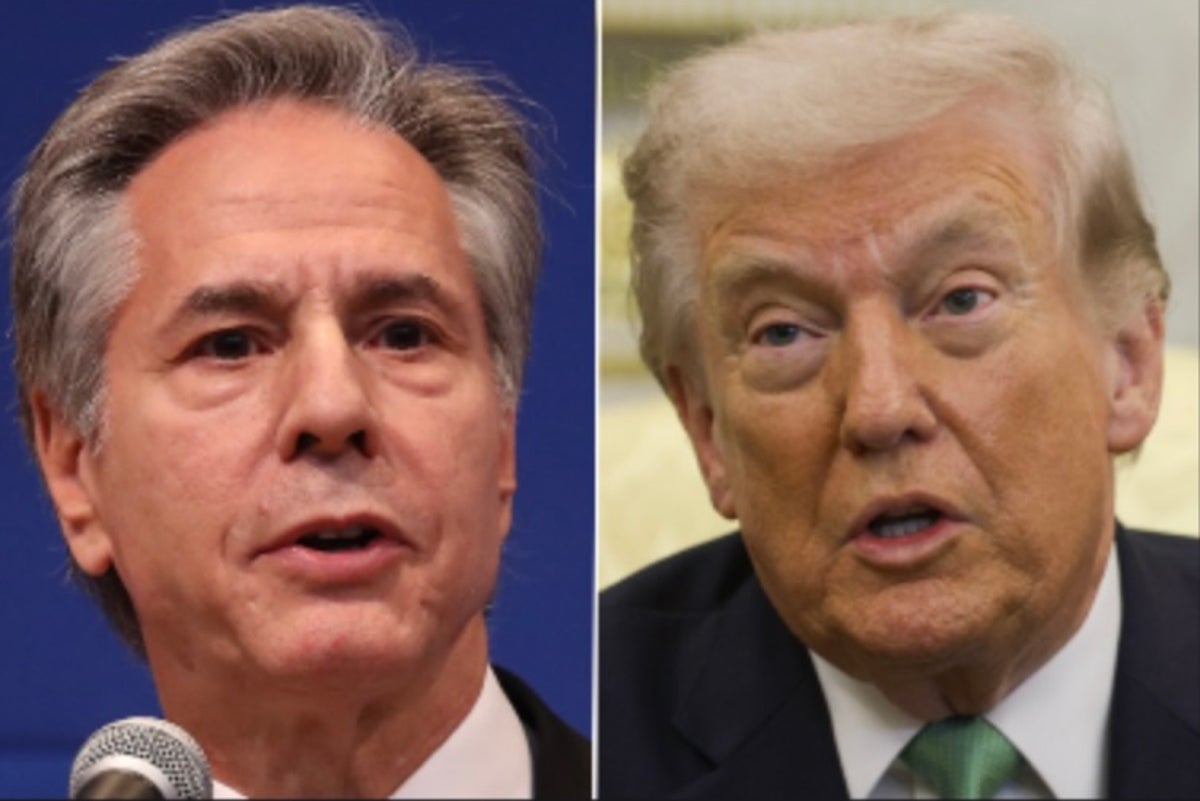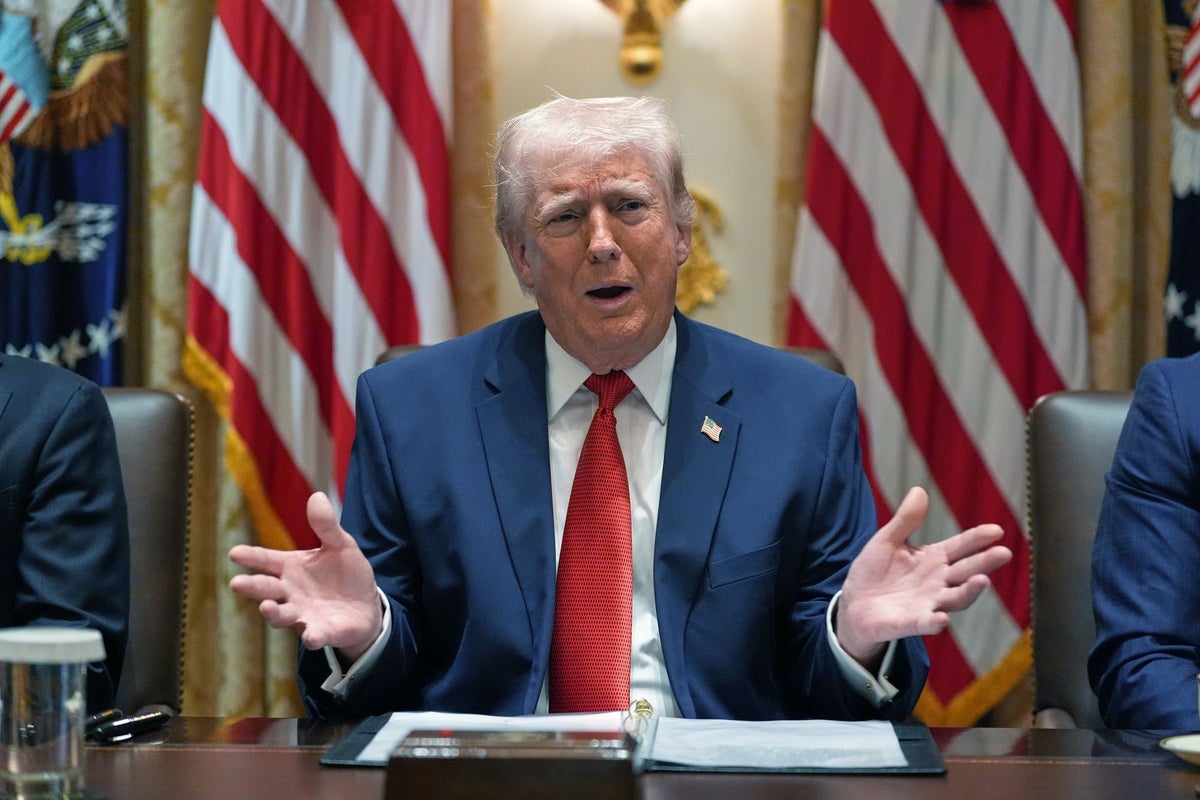
The media is obsessed with a snapshot. They see a Fox News interview, they see a "rambling" performance, and they check their favorite spreadsheets to confirm what they already believe. The consensus is lazy: the polls say one thing, the candidate says another, therefore the candidate is delusional.
It’s a neat, comfortable narrative. It’s also fundamentally wrong because it treats political popularity as a static metric rather than a dynamic, high-frequency data stream. If you’ve spent any time in the trenches of high-stakes data modeling, you know that the "top-line" number is almost always a lagging indicator. By the time a poll hits your screen, it’s a ghost. It’s a reflection of where the energy was three weeks ago, processed through a meat grinder of outdated weighting and landline-era methodology. Expanding on this idea, you can find more in: Why the Green Party Victory in Manchester is a Disaster for Keir Starmer.
The Margin of Error Is a Lie
Pollsters love to talk about a 3% margin of error. It sounds scientific. It gives the veneer of "robust" (a word I hate, but they love) accuracy. In reality, the margin of error only accounts for sampling randomness. It doesn’t account for the massive, systemic failure to reach the actual electorate.
I’ve seen campaigns burn through eight-figure budgets chasing "undecided" voters who don't actually exist. They are "unreachable," not undecided. When a candidate claims their popularity is at an all-time high despite a 42% approval rating in the New York Times, they aren't necessarily lying to themselves. They are looking at different data: digital engagement, small-dollar donor velocity, and crowd density. Experts at NPR have provided expertise on this trend.
These are the leading indicators. Traditional polling is the autopsy; engagement is the pulse. If you have 50,000 people showing up in a town of 10,000, your internal "popularity" metric is spiking, regardless of what a suburbanite in a different ZIP code told a stranger on the phone.
The Frequency Illusion
The "rambling" critique is the favorite weapon of the mid-wit. They look at a transcript and see chaos. They miss the frequency.
Political communication in the current era isn't about delivering a linear argument. It’s about pattern matching. It’s about "The Weave"—a rhetorical technique where the speaker drifts through four different topics only to tie them back to a singular emotional resonance. To the elite analyst, it’s a mess. To the base, it’s a symphony.
The misconception here is that "popularity" equals "agreement with policy." It doesn't. Popularity in the modern attention economy is a measure of intensity.
A candidate with 40% popularity and 90% intensity will beat a candidate with 55% popularity and 20% intensity every single time. Why? Because intensity drives the labor that wins elections. It drives the person who stands in the rain to vote and the person who convinces five neighbors to do the same. Polls measure preference; they rarely measure the will to act.
The Death of the "Median Voter"
The competitor article relies on the ghost of the Median Voter Theorem. This is the outdated idea that elections are won in the center. In a polarized, digital-first society, the center is a vacuum.
We are no longer in a world of persuasion; we are in a world of mobilization. When a candidate ignores "bad polls" to claim record-high support, they are signaling to their tribe that the external metrics are a form of psychological warfare. This isn't a "rambling" error; it's a strategic rejection of the enemy's scoreboard.
If you want to understand the truth, stop looking at the top-line approval ratings. Look at the Volatility Index.
$$V = \frac{\sum |P_t - P_{t-1}|}{n}$$
Where $V$ represents the rate of change in sentiment across fragmented digital platforms. If the volatility is high and the sentiment is polarized, the "average" poll number is mathematically useless. It’s like trying to find the average temperature of a room that has a furnace in one corner and a block of dry ice in the other. The "average" says it’s comfortable. In reality, you’re either burning or freezing.
The Hidden Cost of Being "Right"
The media's obsession with debunking "false claims" of popularity actually fuels the popularity they’re trying to diminish. It creates a feedback loop of distrust.
Every time a "fact-check" drops that uses a skewed poll to "prove" a candidate is unpopular, that candidate’s base views the poll as further evidence of institutional bias. The poll itself becomes a tool for radicalization.
I’ve seen this play out in the private sector too. Companies get obsessed with Net Promoter Scores (NPS) while their actual market share is being eaten by a competitor with a "cult" following and a terrible NPS among the general public. If you optimize for everyone, you represent no one.
Stop Asking if the Polls are Right
The question isn't whether the polls are "wrong." The question is whether they are relevant.
In an era of deep-fake audio, algorithmic suppression, and extreme balkanization, the idea that a sample of 1,200 people can represent the collective consciousness of 330 million is a fairy tale we tell ourselves so we can sleep at night.
The candidate isn't "rambling" because they’ve lost their grip. They are "rambling" because the old rules of structured, three-point-plan debate are dead. We are in the era of the Long-Form Rant. We are in the era of the 3-hour podcast. We are in the era where "vibe" beats "stat."
If you’re still counting "lies" and "gaffes," you’re playing checkers on a board where the other person is playing poker. They don't care about the pieces; they care about the pot.
The next time you see a headline screaming about how a candidate’s claims don't match the data, realize that the "data" is a comfort blanket for people who are terrified that they no longer understand how power works.
Popularity isn't a number. It's a fever. And you can't measure a fever with a yardstick.
Throw away the spreadsheet. Watch the crowd. Listen to the frequency. The polls aren't just lagging; they're lying by omission.
Go look at the local search volume for that "rambling" interview versus the "polished" rebuttal. That’s your real poll. The rest is just noise for the chattering class.