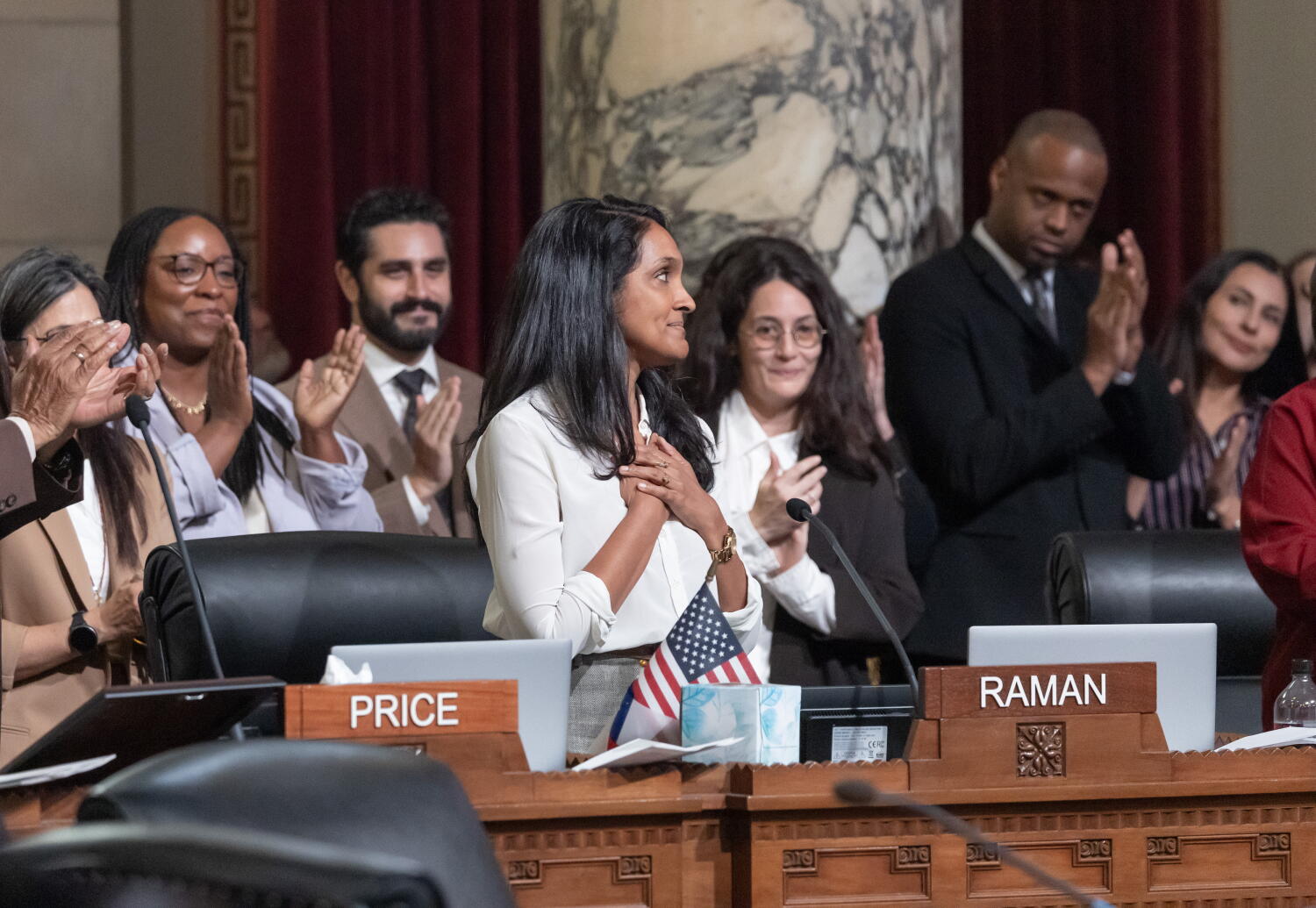
Nithya Raman just pulled off a massive political upset by defeating incumbent Karen Bass in the November 2026 Los Angeles mayoral race. Instantly, two completely opposite panic narratives took over local talk radio and social media. One side claims she's going to dismantle the Los Angeles Police Department overnight. The other insists she's sold out her progressive roots and won't change a single thing.
Both sides are wrong. Expanding on this topic, you can also read: What the Thomas Markle Mugshot Saga Really Means for Federal Bail Rules.
If you actually look at Raman's five-year voting record on the City Council, the Los Angeles City Charter, and the hard math of municipal budgeting, the reality is way more nuanced. Raman's election won't abolish the LAPD, nor will it preserve the status quo. Instead, it triggers a structural shift in how Los Angeles defines emergency response, manages police leadership, and spends billions of taxpayer dollars.
Here is what is actually going to happen inside Parker Center when Raman takes the oath of office on December 14, 2026. Observers at The Washington Post have also weighed in on this situation.
Why the Mayor Can't Just Snap Her Fingers and Fire the Chief
During the heated October 2026 debates, Raman didn't mince words about LAPD Chief Jim McDonnell. She openly stated she wants to replace him, specifically criticizing the department's handling of federal immigration enforcement in the city and transparency around neighborhood crime data.
Sounds dramatic, right? Yet the mayor of Los Angeles doesn't actually have the unilateral power to fire the police chief.
Under the Los Angeles City Charter, power over the LAPD is deliberately insulated from direct political whims. To remove McDonnell—whose five-year term runs until the end of 2029—Raman has to work through the five-member Board of Police Commissioners. Here is how that chess match actually plays out:
- Appointing the Commission: Raman gets to appoint new members to the Board of Police Commissioners, subject to City Council confirmation.
- The Commission Vote: That civilian board holds the legal authority to remove the chief. As city charter expert Raphael Sonenshein has noted, a Police Commission appointed by a mayor rarely retains a chief the mayor wants gone.
- The Council Override: Even if the commission votes to oust McDonnell, he has the right to appeal that decision directly to the City Council, where a two-thirds vote could theoretically reinstate him.
- The 2028 Olympics Factor: Los Angeles hosts the Summer Olympics in less than two years. During the campaign, Karen Bass argued that replacing the chief so close to a major national security event—where LAPD policing costs alone are projected to top $730 million—would throw the department into chaos. Raman carefully avoided committing to a pre-2028 firing timeline, saying it depends on conversations with other decision-making bodies.
Replacing McDonnell isn't a Day One executive order. It's a months-long institutional process that Raman will have to weigh against the massive logistical headache of securing the 2028 Games.
The Shift From Defund to 911 Triage Reform
If you haven't paid attention to Raman since her initial 2020 council run, your mental picture of her platform is outdated. Back in 2020, amid nationwide protests, she called for a smaller police department and used "defund the police" rhetoric. By 2026, her position evolved significantly.
Today, Raman explicitly states that the LAPD should remain at its current sworn staffing size. She isn't trying to shrink the force through layoffs. Instead, she wants to change what armed officers actually spend their shifts doing.
Right now, LAPD officers act as the default catch-all for every societal failure in Southern California. Mental health crisis on a bus? Send armed cops. Nonviolent dispute outside a shelter? Send armed cops. Someone sleeping in a doorway? Send armed cops.
Raman's core public safety plan revolves around taking those nonviolent calls off the LAPD's plate entirely. She plans to integrate unarmed crisis response directly into the 911 dispatch system across every neighborhood in the city. When you call 911 under a Raman administration, dispatchers will use standardized triage protocols based on risk level and call history to route nonviolent behavioral health or homelessness calls to multidisciplinary teams of medics, outreach workers, and behavioral health specialists.
We already have a proof of concept for this. During her time representing District 4, Raman championed the CIRCLE (Crisis and Incident Response through Community-Led Engagement) program in Hollywood and Los Feliz. Those unarmed teams handle nonviolent homelessness-related calls and coordinate with the 988 crisis line. Scaling that from a few neighborhoods to a sprawling 500-square-mile city is a massive operational lift, though. Dispatchers have to be retrained, liability protocols need ironclad rules for when civilian teams call for police backup, and non-emergency hold times—which currently leave some callers waiting up to an hour—have to be fixed first.
Fixing the Staffing Bottleneck Without Massive Hiring Sprees
One of the biggest myths in LA politics is that you can solve slow 911 response times simply by throwing money at police recruitment. The numbers don't back that up.
A 2025 RAND Corporation assessment of LAPD staffing laid bare a harsh reality: the department's academy hiring simply hasn't kept pace with retirements and departures. Even when City Hall approves massive recruitment budgets, the physical pipeline of qualified applicants isn't big enough to drastically swell the ranks overnight.
Raman's platform leans heavily on that exact RAND study to propose an administrative overhaul. Rather than burning budget on unrealistic sworn hiring targets, she wants to aggressively civilianize desk jobs.
Think about how many badge-carrying, pension-eligible sworn officers currently sit behind desks handling administrative paperwork, logistics, or data entry. By hiring civilian specialists for those critical support roles, the city can push already-trained officers back onto neighborhood patrol beats without waiting years for new academy classes to graduate. It's a pragmatic, operational fix that appeals to fiscal hawks just as much as police reformers.
How Civilianization Changes the Budget Math
Sworn police officers cost the city significantly more in salary, overtime, and long-term pension obligations than civilian municipal employees. When you combine civilianizing internal LAPD roles with routing nonviolent 911 calls to unarmed teams, you attack the overtime crisis from two angles. Officers stay focused on violent crime and emergencies, while civilian specialists handle the administrative and behavioral health workloads.
The Battle Over Oversight and Police Union Power
Let's be honest about the biggest obstacle Raman faces: the Los Angeles Police Protective League (LAPPL).
The police union is one of the most formidable political forces in California. In 2023, Raman was one of the few councilmembers who voted against the lucrative multi-year LAPD contract, arguing the city couldn't afford the massive pay raises without gutting other essential municipal services. The union hasn't forgotten that vote.
As mayor, Raman won't just be managing the department; she'll be negotiating with a union leadership that views her with deep skepticism. Her plans to empower the Office of the Inspector General and enforce strict public performance metrics through weekly "SafetyStat" reviews will likely trigger intense pushback from rank-and-file representatives.
There is also the tricky question of crime statistics. During the 2026 campaign, Bass and McDonnell pointed to declining violent crime rates as proof their approach was working. Raman countered that neighborhood-level data lacked transparency and that residents still felt unsafe due to slow response times and visible disorder. Once Raman owns the crime numbers in 2027, she won't be able to critique them from the sidelines anymore. Every spike in property crime or delayed patrol response will land squarely on her desk.
Prevention Over Reaction
Beyond the LAPD itself, Raman's election signals a major reallocation of public safety dollars toward root-cause prevention. Her background as an urban planner and homelessness advocate shapes how she views street safety.
You're going to see much tighter coordination between the LAPD, the Los Angeles County Department of Mental Health, and city housing agencies. Raman has pledged to expand community violence intervention programs using multi-year contracts, measuring those groups strictly on whether they actually interrupt cycles of retaliatory violence. She also wants to tackle repeat 911 callers—the small fraction of individuals and problem properties that generate a massive percentage of emergency dispatches—by forcing city departments to share data and resolve structural hazards before they turn into police emergencies.
What Angelenos Should Watch in the First 100 Days
If you live or work in Los Angeles, ignore the loud ideological battles and watch the mechanics of City Hall between December 2026 and March 2027. That window will tell you everything about how successful Raman's public safety overhaul will be.
Keep your eye on three specific moves:
- The Police Commission Appointments: Watch who Raman nominates to the Board of Police Commissioners. If she picks seasoned legal experts and civil rights veterans with deep management experience, she's serious about methodical reform and eventual leadership transition.
- The 911 Dispatch Overhaul: Look for concrete budget allocations to hire more non-emergency call takers and rewrite dispatch triage rules. Without fixing the dispatch center, unarmed response teams can't scale citywide.
- The Olympics Security Truce: Pay attention to the joint statements coming from the Mayor's Office, Chief McDonnell, and the U.S. Secret Service. If Raman decides to keep McDonnell through the 2028 Games to maintain operational stability, it will prove she prioritizes pragmatic governance over campaign applause lines.
Attend your local LAPD division's community police advisory board meeting or tune into the weekly Board of Police Commissioners livestreams on Tuesday mornings. Those public meetings are where dispatch protocols, use-of-force policies, and civilian staffing shifts actually get hammered out—long before they ever hit the evening news.