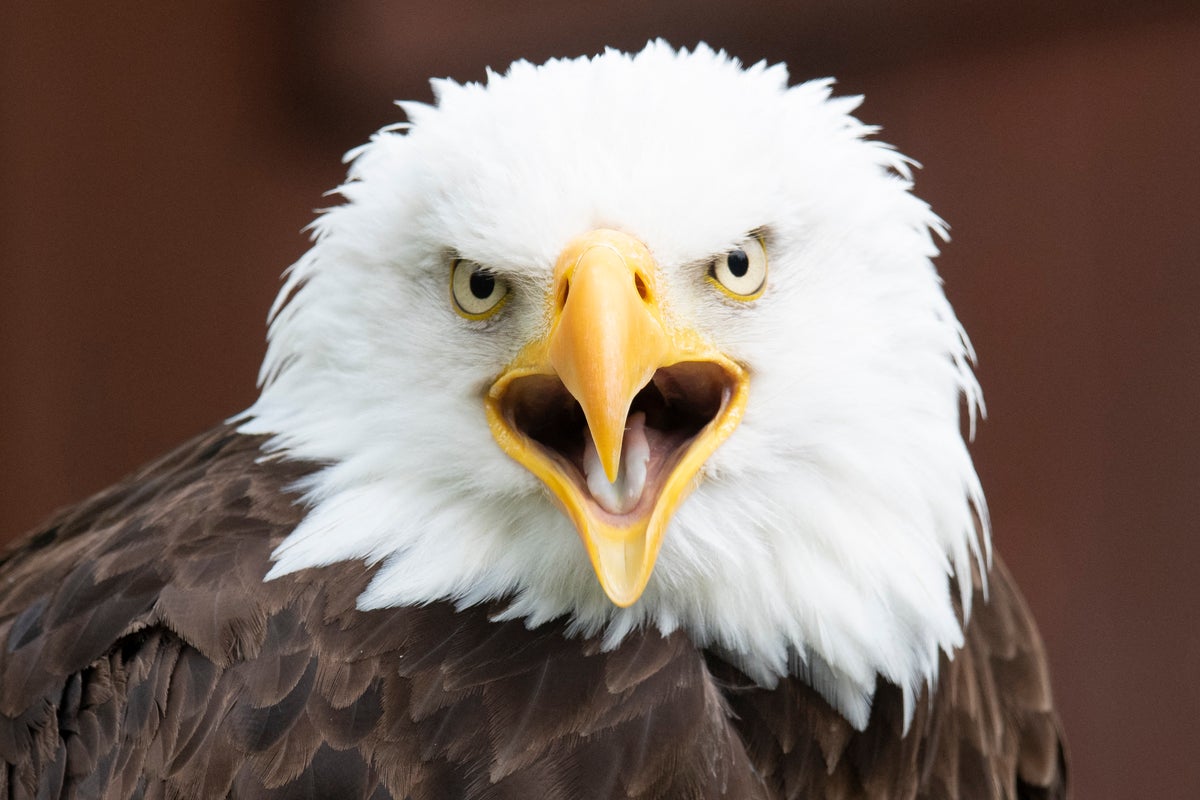
Shooting a national symbol carries heavy consequences. A 42-year-old Texas man just found this out the hard way after pulling the trigger on an American bald eagle in his own backyard.
Santos Guerrero, a resident of Porter, Texas, entered a guilty plea in federal court for shooting and causing the death of a protected species. The incident happened at his residence on October 11, 2024. Investigators rushed to the scene after receiving reports of gunfire and managed to secure video footage showing the majestic bird getting hit and tumbling straight out of a tree.
When federal and state authorities inspected Guerrero’s property, they matched the exact tree from the video. The eagle was still alive when they found it, but it was in terrible shape.
Emergency responders rushed the bird to an animal hospital. Unfortunately, the trauma was too severe. A necropsy later detailed the sheer destruction caused by the bullet and the subsequent fall. The projectile shattered the eagle's wing, while the impact of crashing to the ground caused liver fractures, severe internal bleeding, and a fractured leg. Veterinarians had no choice but to euthanize the animal to end its suffering.
On May 14, 2026, U.S. Magistrate Judge Peter Bray accepted Guerrero’s guilty plea. Now, the Porter resident faces up to a full year in federal prison and a maximum fine of $100,000. His formal sentencing is officially locked in for July 30, 2026.
The Common Misconception About Eagle Protections
A lot of folks think that once an animal comes off the endangered species list, it's open season. That is a massive mistake.
Bald eagles were officially delisted from the Endangered Species Act back in 2007 because their breeding pairs bounced back beautifully across North America. But removing them from the endangered list didn't strip away their legal armor. They are still fiercely protected under a completely different federal law.
The Bald and Golden Eagle Protection Act, originally passed by Congress in 1940 and expanded in 1962, makes it a federal crime to harm these birds. The statute goes way beyond just pulling a trigger. You can't kill, possess, sell, transport, export, or import any bald or golden eagle, dead or alive.
It gets even stricter. You can't even pick up a fallen feather in the woods, disturb an active nest, or take an egg. Unless you possess a highly specific federal permit, touching these birds in any capacity puts you in the crosshairs of the federal government.
Why Feds Don't Let Eagle Poaching Slide
The joint investigation between the U.S. Fish and Wildlife Service and Texas Parks and Wildlife shows how seriously investigators treat these cases. Federal prosecutors aren't handing out slap-on-the-wrist warnings for these violations.
Take a look at the black market data. Just this week, in a completely separate Texas case, 71-year-old John Patrick Butler of Humble, Texas, was sentenced after getting caught up in a massive multi-state eagle trafficking ring. He was buying bald and golden eagle parts via PayPal from poachers who explicitly boasted about going on "killing sprees" in Montana to harvest tail feathers. Butler ended up with five years of probation and a massive $77,500 restitution bill.
Whether it's a black market scheme or a reckless shot in a suburban backyard, the government tracks down violators through video feeds, anonymous tips, and ballistics.
If you ever happen to encounter an injured bald eagle or witness someone harming wildlife, don't try to handle the situation yourself. Your best move is to document what you see from a distance and immediately notify local authorities or report the incident directly through the U.S. Fish and Wildlife Service tip line.
The video Man who killed eagles on a Native American reservation gets nearly 4 years in prison highlights another serious federal case involving eagle poaching, showing the severe prison sentences individuals can face for violating these wildlife protection laws.